The PLA Southern Theater Command conducted combat readiness patrols in the territorial waters and airspace of China's Huangyan Dao, as well as in the surrounding sea and air areas on Sunday, the command said on its WeChat account. Huangyan Dao is China's inherent territory. Since May, PLA troops under the theater command have strengthened patrols and vigilance in the waters and airspace surrounding Huangyan Dao, effectively responding to various infringement and provocation activities, resolutely safeguarding China's national sovereignty and security, and firmly maintaining peace and stability in the South China Sea region.
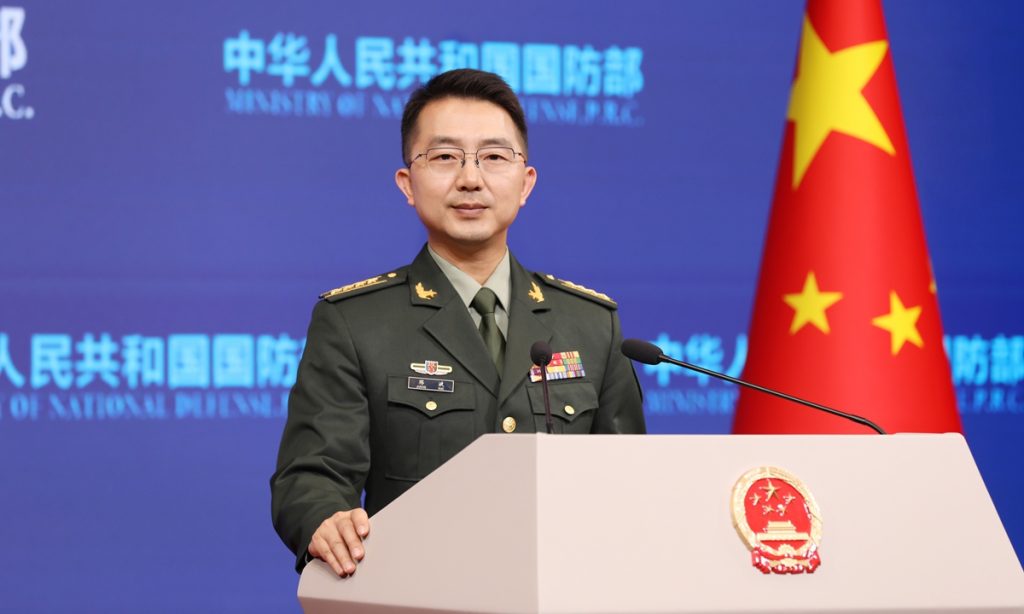
Regarding the recent widespread circulation on Chinese and international social media of a video showing a Chinese soldier remaining completely motionless as US President Donald Trump’s aircraft, Air Force One, roared past upon arriving in Beijing, earning praise from many netizens, Senior Colonel Jiang Bin, spokesperson for China’s Ministry of National Defense, said on Thursday that the unmoving soldier represents the countless members of the Chinese military and is a vivid embodiment of the confidence, composure, and resolve of a major power’s armed forces.
When in motion, Chinese People’s Liberation Army (PLA) soldiers strike like thunder; when still, they stand firm as a mountain. At all times, the Chinese PLA remains a heroic force fully trusted by the Party and the people, Jiang said.
More than 10 people were unaccounted for after heavy rain battered Yongchuan District in southwest China's Chongqing Municipality starting Saturday night, said local authorities.
According to the meteorological department, torrential rains struck parts of central and western Chongqing between 11 p.m. Saturday and 12 a.m. Sunday. Guankouwan and Hanjiagou Village in the district logged 296.7 mm and 256.9 mm of extraordinary rainstorms, respectively.
Given the short interval between the current and previous rounds of heavy rainfall, the continuous precipitation poses a higher risk of inducing geological disasters, including landslides, collapses, and debris flows, said the meteorological authorities.
Chongqing has activated a Level-III emergency response for geological disasters in Yongchuan District at 7 a.m. Sunday. The local relevant departments are carrying out emergency rescue work.
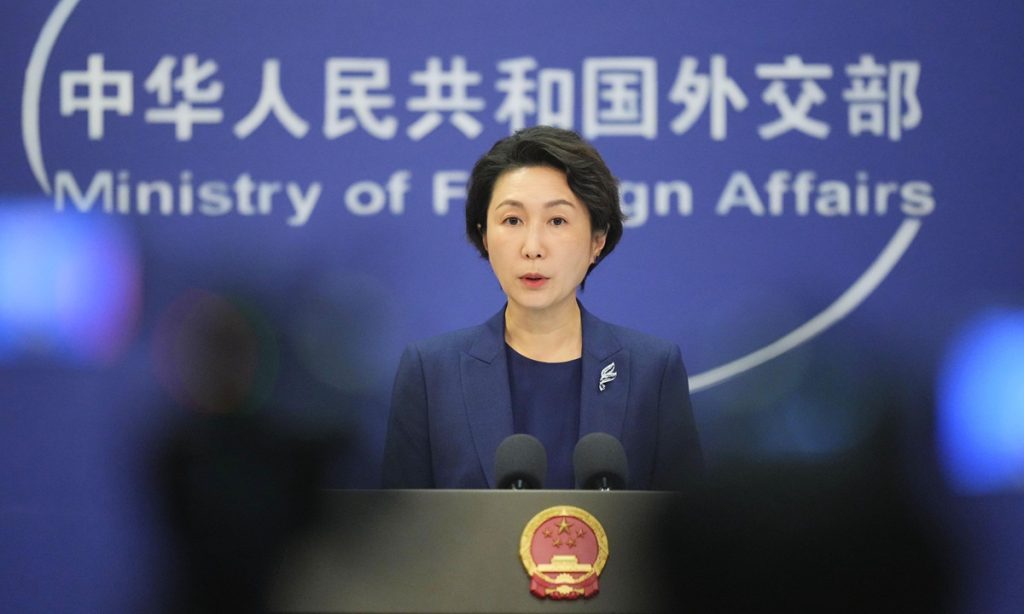
When asked whether China has played a diplomatic role in the process leading to the potential agreement between the US and Iran to stop the war in the Middle East, and what China expects from such an outcome, Chinese Foreign Ministry spokesperson Mao Ning said on Monday that China's position on the Iranian situation is very clear. This is a conflict that should never have happened and there is no need for it to continue, Mao said, adding that an earlier solution serves the interests of both the US and Iran, as well as regional countries and the world at large.
Mao said the recent potential ceasefire between the US and Iran and their exploration of a negotiated settlement have been welcomed by regional countries and the international community.
Mao said China has always believed that dialogue and negotiation is the right path, and that using force leads nowhere. Since the door to dialogue has been opened, it should not be shut again. It is important to sustain the momentum of de-escalation, stay committed to the direction of political resolution, and seek a solution through dialogue and consultation that accommodates the concerns of all parties, Mao added.
It is also imperative to reopen shipping lanes at an early date in response to the calls of the international community, jointly safeguard the stability and smooth operation of global industrial and supply chains, reach a comprehensive and lasting ceasefire as soon as possible, and facilitate an early return to peace and stability in the Middle East and the Gulf region, the spokesperson said.
Mao said since the outbreak of the conflict, China has been working relentlessly to end the fighting and advance peace. China will continue to work with the international community to provide greater support for peace talks and play a constructive role in ultimately achieving enduring peace in the Middle East, she added.
Chinese Ambassador to South Korea Dai Bing on Friday reposted South Korean President Lee Jae-myung's post on X, expressing appreciation for Lee's remarks denouncing a fake report about Chinese nationals buying apartments in droves in Seoul. The ambassador also urged people in South Korea to reject false information and inflammatory rhetoric to help strengthen mutual trust between the Chinese and South Korean people.
South Korean President Lee Jae-myung denounced a media report claiming that Chinese nationals had made a surprise purchase of 944 apartments in Seoul's Gangnam District as "clearly false," calling for strict accountability, according to South Korean media.
In a post on his X account, Lee wrote that Seoul Economic TV aired a fake video report titled "Chinese Nationals Suddenly Buy 944 Apartments in Gangnam, Seoul. Snapping Up Multi-Homeowners' Listings," which has now been deleted.
"Upon verification, it turns out to be an outright false report, with only 5 purchases by Chinese nationals of collective buildings in Gangnam between January and April. It's suspected to be a deliberately fabricated fake news article intended to be used as material for anti-China agitation. Even a media outlet, and an economic one at that - how on earth does stirring up Sinophobia help the country and its people? They should be held strictly accountable, don't you think?" read the post.
On Friday, Chinese Ambassador to South Korea Dai Bing reposted Lee's post on X, writing in both Korean and Chinese that he highly appreciates Lee's remarks and hopes all sectors in South Korea will discern right from wrong, "consciously resisting the practices of fake information, discrimination, and incitement, so as to enhance the mutual objective understanding, trust, and friendly sentiments between the Chinese and Korean people."
Ambassador Dai later wrote in Chinese and Korean on X that, for some time, a small number of South Korean media outlets have fabricated and spread fake news about China to attract attention or serve ulterior political motives. He said such outlets have magnified individual cases into a broader narrative, disguised prejudice as fact, deliberately tarnished the image of China and Chinese nationals in South Korea, and interfered with the improvement and development of China-South Korea relations.
"Some media have publicly apologized under pressure, but others remain keen on publishing inaccurate reports and commentaries on China-related issues," Dai wrote. "Freedom of speech is not freedom to spread rumors. We hope the relevant media will adhere to journalistic ethics, conduct China-related reporting based on facts, do more things that are conducive to enhancing mutual understanding, trust, and friendly sentiments between the Chinese and Korean people, and stop fooling their readers," the ambassador wrote.
On Thursday evening, Seoul Economic TV issued an apology on its website over its previous report on Chinese apartment buyers, saying it "deeply apologize[s] to viewers who felt discomfort and concern."
"The content was produced to report on foreign buying trends in the real estate market, but its title and wording were framed in a way that could create a negative perception of a specific nationality. We sincerely apologize for causing offense and confusion to many people," read the statement.
The outlet claimed it had no intention of inciting hatred toward or disparaging any particular country or people, but acknowledged that the production team had shown poor judgment by being overly focused on views and attention, and that its internal review system had failed to adequately screen the content.
Compared with his predecessors, Lee has taken a more forceful and frequent stance against anti-China rhetoric in South Korea. This contrast also underscores how anti-China sentiment in the country surged to an unprecedented level under the previous Yoon Suk-yeol administration, far exceeding that of previous periods and inflicting serious damage on the development of China-South Korea relations, Zhan Debin, director and professor of the Center for Korean Peninsula Studies at the Shanghai University of International Business and Economics, told the Global Times on Friday.
Lee has placed importance on South Korea's relations with China. Since taking office, he has stepped up efforts to combat disinformation, pushing back against false China-related reports and anti-China rhetoric by some conservative media outlets, which are driven by ulterior motives. Anti-China words and deeds do nothing to benefit either country or bilateral relations, while claims such as "China's interference in South Korean elections" are baseless and absurd, said Zhan.
According to the Chosun Daily, a media outlet previously reported that Chinese nationals had concentrated their purchases on properties sold by multiple-home owners in Gangnam, Songpa, and Yongsan just before the reinstatement of the heavy transfer tax on multiple-home owners.
The Ministry of Land, Infrastructure and Transport later refuted the report, stating it was untrue. According to the ministry, among 592 foreign buyers who applied for ownership transfer registration for collective buildings in Seoul from January to April this year, 218 were Chinese nationals, and only five Chinese nationals purchased collective buildings in Gangnam District, per Chosun Daily.
South Korean media The Financial News also reported on Thursday that the previous day, during a State Council of South Korea meeting that also served as an Emergency Economic Review Meeting, Lee had already ordered relevant ministries to respond firmly to similar reports on real estate policy, calling them "clear manipulation and distortion."
At the time, Lee criticized the article claiming that Chinese nationals had bought up units dumped by multi-home owners, asking, "Why write such a false article?" and saying it was done intentionally to fuel anti-Chinese sentiment, according to the report.
Also, in September 2025, Lee also condemned recent rallies and demonstrations targeting tourists from China, describing them as "not freedom of expression, but disturbance," Yonhap News Agency reported.
Presiding over a Cabinet meeting at the presidential office in Yongsan, Lee referred to a series of reported protests held in Seoul's Myeong-dong area, where groups insulted foreign visitors. "If someone cursed me as an ugly Korean and pointed fingers at me, I would never visit (that tourist spot) again. They were doing such things in Myeong-dong," Lee said, criticizing the behavior as deliberately aimed at worsening bilateral ties, Yonhap reported.
Zhan noted that Lee's public stance has given support to those in South Korea who favor an objective understanding of China and oppose fake news, strengthening their confidence to speak out. It may also help push government agencies to pursue accountability in accordance with the law and curb attempts by some media outlets to spread China-related rumors under the disguise of so-called "freedom of speech."
Some South Korean media outlets, including Yonhap News and South Korea's Korea Economic Daily, also covered the developments. For example, a Chosun Daily report on Friday highlighted Ambassador Dai Bing's expression of high appreciation for President Lee's criticism of fake news that fuels anti-China sentiment, while also reviewing the issue in detail. A JoongAng Ilbo report gave detailed coverage of Ambassador Dai's related posts on Friday.
Some South Korean netizens left comments under related news reports, with many calling for punishment for those who spread fake news. Netizen @Guijeong-y9t wrote, "Media outlets that publish such false reports are dividing public opinion. They must be held accountable and shut down." Another netizen, @Bae Young-hee-d1i, wrote, "Fake news should be punished severely. Far-right channels and media outlets that cross the line with fake news should face strict punishment."
While netizen @hyeshin_7 wrote that "fake news is a very serious problem. And for an economic media outlet to spread fake news that incites anti-China sentiment is even more outrageous. Even though it has now been deleted, it still makes me angry. Still, it is a great relief that the president is able to cross-check and monitor such issues in this way."
Zhan also said greater efforts are needed to oppose fake news aimed at fueling anti-China sentiment. South Korea needs to break the toxic atmosphere in which any objective voice on China is easily labeled "pro-China," so that scholars, media professionals and others can speak more frankly, help foster a healthier public opinion environment and contribute to the development of bilateral ties, he said.
China's state security authorities recently found that a foreign intelligence agency had used domestic routers in China as "proxies" and phishing emails to target personnel at key institutions to steal sensitive data, while affected users remained unaware, experiencing only slower internet speeds, frequent disconnections and unexpected reboots, according to China's Ministry of State Security (MSS).
Investigations found that the foreign intelligence agency had taken control of multiple routers within China and used them as platforms to send phishing emails disguised as invitations to participate in review work or traffic violation payment notices, targeting staff at key institutions, the MSS disclosed on its WeChat public account on Wednesday.
Once users clicked the links and entered their passwords on fake login pages, they were tricked into re-entering credentials after being told the password was incorrect, before being redirected to legitimate-looking pages to avoid arousing suspicion. After obtaining login credentials, the attackers periodically accessed the email accounts to steal sensitive messages.
State security authorities have since guided relevant personnel to properly secure their email accounts and carried out technical inspections of the compromised routers, with follow-up work ongoing, according to the MSS.
Investigations found that users of the affected routers were unaware that their devices had been compromised, noticing only issues such as slower internet speeds, frequent disconnections and unexpected reboots, per MSS.
In fact, the compromised routers typically shared common factors, including discontinued or outdated models, as well as improper configurations such as the continued use of weak or default administrator passwords and the enabling of high-risk functions like remote management, all of which significantly increased the risk of cyber intrusion.
The MSS reminded internet users, especially network operations personnel, to strengthen security awareness and implement proper protection measures, including using reliable devices that are still receiving security support, setting strong and regularly updated passwords for both the admin interface and Wi-Fi, keeping firmware up to date while disabling unnecessary functions such as remote management, and staying alert to abnormal behavior such as unexplained redirects, unexplained configuration changes, or unusual login activity.
If such issues occur, the device should be disconnected, reset to factory defaults, and promptly reported through official channels, the MSS said.
Chinese Premier Li Qiang on Thursday met here with representatives of the U.S. business community accompanying President Donald Trump on his visit to China.
The talks between President Xi Jinping and President Trump this morning have set a strategic direction for China-U.S. relations, Li noted.
Amid rising global instability and uncertainty, he said, maintaining candid and open communication as well as a stable and sound China-U.S. relationship is not only significant for both countries but also essential for global peace and development.
China stands ready to work with the United States to implement the important consensus reached by the two heads of state and strive for more tangible results to benefit both peoples and the world, the premier said.
"A steadily growing Chinese economy will provide more opportunities for companies from all countries, including U.S. enterprises," he told the representatives.
Noting that China is implementing its 15th Five-Year Plan (2026-2030), Li said that the scale, growth potential, and stability of the Chinese market remain evident, with new demand being unleashed at a faster pace, new drivers of growth constantly strengthening, and the economy continuing to improve steadily.
He pledged that China will stay committed to expanding high-standard opening up, provide quality services to foreign-funded enterprises, improve policies and efficiency, listen to their concerns, help solve their difficulties, and enable them to plan and grow with confidence.
"A stable and open policy environment is the long-standing and unwavering commitment of the Chinese government," said Li, who expressed hope that more U.S. companies will continue to deepen their engagement in the Chinese market and facilitate communication between the two nations.
Representatives of the U.S. business community said that the successful meeting between the two heads of state has injected new impetus into bilateral economic and trade cooperation and provided certainty for the world economy.
Speaking highly of China's efforts to advance high-standard opening up and build a world-class business environment, they said the U.S. business community is optimistic about China's development prospects and willing to expand cooperation with China.
"All we want right now is to feel safe," travel vlogger Jake Rosmarin said in a tearful message from the MV Hondius cruise ship - one of the first public videos from a passenger as the ship became mired in anxiety over a hantavirus outbreak that led to three deaths this month.
"What's happening right now is very real for all of us here. We're not just a story. We're not just headlines. We're people," Rosmarin said in the video he posted online on May 4.
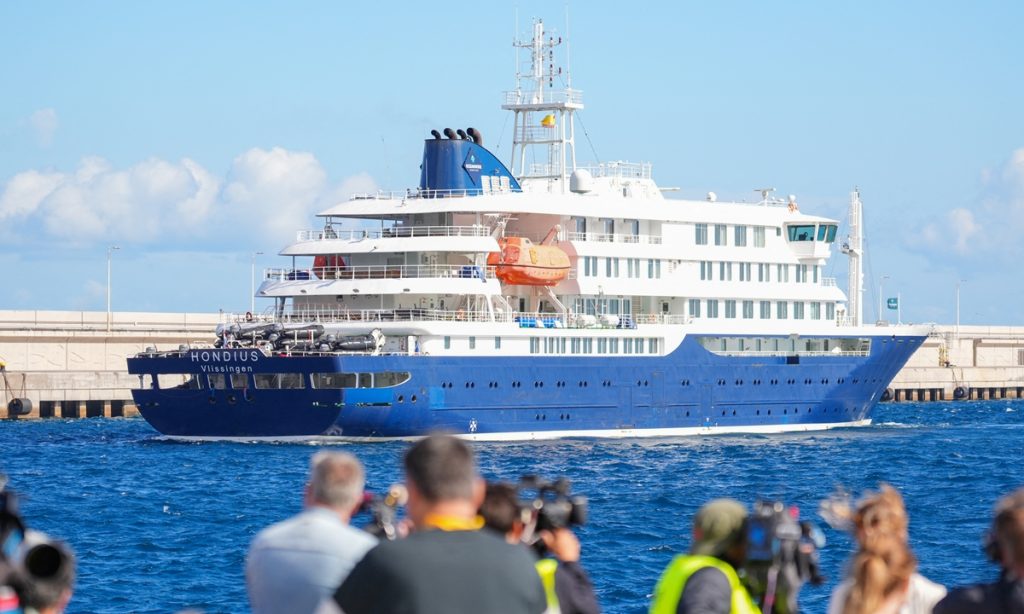
While not everyone aboard shared the same sentiment, the journey proved far more difficult than the 147 passengers and crew from 23 countries had imagined when they boarded the sleek Dutch-flagged expedition vessel MV Hondius, operated by Oceanwide Expeditions, for what was supposed to be a premium bird-watching and Antarctic expedition.
Passengers paid top dollar for a dream voyage but instead found themselves stranded in the vast, windswept expanse of the South Atlantic before the ship was eventually rerouted and allowed to dock in Tenerife in Spain's Canary Islands. Health officials from several countries involved have said the ship's passengers, who started evacuating the vessel on Sunday, will be closely monitored upon returning to their home countries.
The World Health Organization said on Wednesday that 11 confirmed cases of hantavirus infection linked to the MV Hondius have been identified, including three deaths (case fatality ration 27 percent).
Health experts contacted by the Global Times responded to public concerns, pointing out that the possibility of large-scale transmission of the virus remains low.
Yet many people following the unfolding crisis continue to worry about the potential for further spread and what practical steps passengers can take to safeguard their health, especially on long-haul journeys.
'Patient Zero'
Seventy-year-old Dutch ornithologist Leo Schilperoord has been identified as the likely "Patient Zero" behind the hantavirus outbreak on the MV Hondius.
He developed symptoms around April 6 and died on board on April 11. His 69-year-old wife, Mirjam Schilperoord, also Dutch, disembarked later and died in South Africa after her condition worsened during a flight to Johannesburg, International Business Times (IBT) reported.
Three deaths have been linked to the outbreak so far. In addition to the Dutch couple, a German national died on May 2 aboard the ship.
The tragedy is likely to be traced to a municipal landfill near the southern Argentine city of Ushuaia. The landfill, about four miles outside of the Argentina city, is a site which local residents often avoid due to the sprawling waste facility, but the place remains popular among global birdwatchers for the opportunities to photograph the rare white-throated caracara, a species first documented by Charles Darwin.
On March 27, the Schilperoord couple visited the municipal landfill. Four days later, they boarded the vessel.
It started out as an idyllic trip. Aboard the MV Hondius, 59 crew members looked after 88 passengers - most of them amateur birdwatchers aged 60 and older. Turkish travel vlogger Ruhi Cenet, who boarded the ship on April 1, described the voyage in an interview with AFP.
Things turned strange on the morning of April 12, when the captain announced over the microphone that a passenger had died. The captain initially described the death as due to natural causes, according to Cenet.
Argentine health authorities suspect the couple was exposed while navigating the rubbish mounds. Investigators believe they inhaled aerosolised particles from the feces of long-tailed pygmy rice rats dwelling in the trash. These rodents carry the Andes strain of hantavirus, as per the IBT.
As to why the Andes virus was suspected as the target, Wang Xinyu, deputy director of the Infectious Disease Department of the Shanghai-based Huashan Hospital of Fudan University, analyzed in an article published on WeChat public account that unlike the viruses carried by the common house rats found almost everywhere across the Eurasian continent, the Andes virus has a highly "picky" host - the long-tailed pygmy rice rat. This small rodent is mainly distributed in the Patagonia region of southern South America, and Ushuaia lies at the very heart of this area.
The first records of human-to-human transmission of the virus date back to 1996 in Argentina, where doctors discovered that several family members who had never visited the wilderness were infected. Human-to-human transmission was ultimately confirmed through viral genome sequencing, Wang wrote in the article.
For a Chinese traveler surnamed Chen, the outcome was far more fortunate.
"Chen has shown no related symptoms for 39 days since disembarking. All hantavirus nucleic acid test results have been negative. After expert assessment, Chen poses no infection risk and no risk of community transmission," read an announcement by the Yibin Center for Disease Control and Prevention on May 9.
On March 31, this Chinese citizen was fortunate to leave the MV Hondius cruise ship in time. The very next day, the ship's first hantavirus case boarded. The two had no overlap in time or space. Origin of a name
Lu Hongzhou, president of Shenzhen Third People's Hospital and director of the Training and Research Cooperation Center for Newly Emerging Infectious Diseases Clinical Diagnosis and Treatment at the WHO, told the Global Times that hantavirus was first isolated in 1978. By 2018, the International Committee on the Taxonomy of Viruses had recognized 36 species of hantavirus capable of infecting mammals.
According to a report from The Korea Herald, the hantavirus was first isolated by South Korean virologist Lee Ho-wang from a rodent captured near the Hantan River. Thus, it was named after the river as the Hantaan virus at the beginning and became known more broadly as hantavirus later.
The natural hosts of hantaviruses are predominantly rodents such as rats and mice. Large amounts of the virus may be present in the feces, urine and saliva of rodents like rats. These excreta can form aerosols. In relatively enclosed spaces or with close contact, people may inhale the aerosols through the respiratory tract and become infected, Li Tongzeng, chief physician with the Infectious Diseases Department of Beijing You'an Hospital, told the Global Times.
According to Li, infection can also occur when rodents contaminate human food with their feces, urine or saliva, and people then consume the contaminated food. Another route of infection is direct scratches or bites from rodents, as well as direct contact with their excreta.
According to the WHO, symptoms typically occur from 1-6 weeks after initial exposure to the virus. However, symptoms may appear as early as one week and as late as eight weeks following exposure.
Cenet, who disembarked from the ship on April 24 along with about 20 other passengers, told AFP that he was startled to see that, at the beginning, "everyday life continued" on the ship following the captain's announcement." To be safe, he and his cameraman chose to self-isolate.
Hantavirus infections are associated with a case fatality rate of between 1 and 15 percent in Asia and Europe and up to 50 percent in the Americas, according to the WHO. In specific, fatality rate of the Andes variant could reach about 30-50 percent, Li said.
"The disease progresses rapidly once entering the cardiopulmonary phase, and cardiopulmonary failure and life-threatening conditions may occur within 24 to 48 hours," he said.
Lu said that it usually requires the infected individual to shed the virus during the acute phase to transmit the Andes virus to another person. But the Andes virus is generally not shed in large quantities in the respiratory tract, making human-to-human transmission often unlikely. Further observation required
Based on current evidence, this incident is a spillover event involving an ancient virus from its natural habitat. It is not the first time this virus has spilled over - it has simply occurred in a different setting, health experts pointed out.
"Whether the event will end in the near term depends on whether returning cruise passengers develop symptoms during their subsequent six-week home isolation period and whether any second-generation cases appear. So far, no cases have emerged outside of controlled monitoring," Zhang Wenhong, a leading infectious disease expert and professor at Huashan Hospital affiliated with Fudan University, wrote in the article published on the hospital's WeChat account on Sunday.
In an interview with Yicai, Zhang stressed that climate change is reshaping infectious disease risks in more subtle and systematic ways. "Throughout history, many major infectious disease crises have occurred because pathogens in nature have persistently tried to breach species barriers and enter human society," he said.
Zhang noted that the root causes of these outbreaks are often closely linked to human activities, environmental changes, and the process of globalization.
This outbreak also highlighted vulnerabilities at the intersection of tourism, the wilderness, and emerging infectious diseases.
On Tuesday, the vessel Ambition arrived in Bordeaux carrying 1,233 passengers, most of them British or Irish nationals. About 50 people were showing symptoms of norovirus, French health officials said, according to a report from the Guardian.
The cruise industry has previously faced scrutiny over COVID outbreaks. In February 2020, the Diamond Princess remained at anchor outside the port of Yokohama for over a month due to more than 700 cases of COVID-19 infection.
"The Andes virus is fundamentally different from COVID-19. The coronavirus was indeed a completely new virus at that time, whereas there is already a wealth of research data on the Andes virus," Li said.
He suggested that whether traveling domestically or abroad, people should proactively learn about local endemic infectious diseases. If any symptoms develop within two months after returning from travel, people must not take it lightly.
Medical institutions in various countries have also been taking action. In China, many institutions like Beijing You'an Hospital have launched travel medicine clinics, providing travelers with consultations, physical examinations and other services before and after trips.
In an interview with the US morning TV program Today on Tuesday, Rosmarin, who is still in quarantine, appeared to have moved past his initial anxiety. "I feel good right now," he told the co-hosts.
South Korean President Lee Jae Myung on Wednesday met with Chinese Vice Premier He Lifeng at the presidential office in Seoul.
During the meeting, He Lifeng noted that the heads of state of China and South Korea have conducted reciprocal visits since the end of last year, leading the bilateral relations into a new stage of improvement and development.
China is willing to work with South Korea to well implement the important consensus reached by the two leaders, strengthen communication, enhance mutual trust, deepen exchanges and cooperation, and effectively safeguard and develop the strategic cooperative partnership, He said.
For his part, Lee said that exchanges and cooperation between South Korea and China in various fields, including economy and people-to-people exchanges, have remained active recently.
Lee expressed the hope that the two sides will further strengthen exchanges and cooperation, enhance the amity between the two peoples, enable the development of the relations to better benefit the two peoples and play an important role in regional peace and stability.
During the visit, He Lifeng also met with South Korean Deputy Prime Minister and Minister of Economy and Finance Koo Yun-cheol on Tuesday. The two sides had an in-depth exchange of views on strengthening bilateral economic and trade cooperation.
China has no natural hosts of the hantavirus strain involved in this outbreak, and no human infection cases have been reported in the country, Chinese Center for Disease Control and Prevention (CDC) said on Friday.
On May 2, the World Health Organization reported an outbreak of hantavirus infections aboard a polar expedition cruise ship that departed from Argentina on April 1. Since April 6, eight people have fallen ill, and as of May 7, three deaths had been reported, triggering widespread concern. According to an article published on the CDC WeChat account.
Since the hantavirus is also present in China, when answered could a similar situation occur in China, the CDC said that hantavirus infections are distributed worldwide, with an estimated 200,000 cases reported globally each year. In recent years, the incidence of hemorrhagic fever with renal syndrome in China has shown a year-on-year decline.
In the Americas, 200 to 300 cases are reported annually, with the overall trend on the rise. The Andes virus involved in this outbreak has no known natural host distribution in China, and no human infection cases have been reported in the country, the CDC article noted.
Human hantavirus infection is primarily acquired through contact with the urine, faeces, or saliva of infected rodents. It is a rare but severe disease that can be fatal. Although uncommon, limited human-to-human transmission has been reported in previous outbreaks of Andes virus, a specific hantavirus species, according to Xinhua.
Based on available information and current understanding of the virus, the WHO assesses the risk to the global population from this event as low, saying it will continue to monitor the epidemiological situation and update its risk assessment.
Hantavirus infections generally do not result in human-to-human transmission, and ordinary social interactions or routine contact in public places do not spread the virus, according to CDC.
The center said that hantavirus pulmonary syndrome caused by the Andes virus in this cruise ship outbreak has previously been linked to isolated cases of person-to-person transmission. In particular, limited transmission may occur among people living together for extended periods in confined spaces, through close contact or inhalation of pathogen-containing aerosols expelled by infected individuals.
The CDC said reducing contact with rodents is the primary strategy for preventing hantavirus infection, urging the public to maintain clean living and working environments, properly store food and water, and avoid direct contact with rodents, their droppings and carcasses.
It also advised people working or camping outdoors to stay away from wild animals and rodent-infested areas, while recommending protective measures such as masks, gloves and disinfectants when cleaning long-unused buildings to avoid inhaling contaminated aerosols. Workers in high-risk sectors including agriculture, forestry, sanitation and field exploration are encouraged to receive hemorrhagic fever vaccinations.