Chinese football fans, restaurants and bars get ready for World Cup; FIFA senior official commends Chinese audience ‘central to the global success’ of tournament

By 2 am, Sanlitun, one of Beijing's busiest nightlife districts, had largely quieted down. But inside Cafe Groove, owner Sui Jinpeng and his staff were still moving through the restaurant, testing upgraded audio equipment and large screens ahead of the World Cup's opening match early Friday morning.

Sui said he expects this year's tournament to draw fans out of their homes and back into bars, cafés and restaurants, where the experience of watching football becomes something collective. "People can drink, talk and cheer together," he told the Global Times. "This kind of atmosphere is actually quite rare."

The first match, between Mexico and South Africa, is scheduled to kick off at 3 am Friday Beijing time at Mexico City's Azteca Stadium. Although China's men's national team has been absent from the World Cup since 2002, the tournament remains a major event for Chinese fans, whose enthusiasm has endured despite late-night broadcasts and their team's long absence from the field.

This year's World Cup had a shorter commercial warm-up in China, with CCTV finalizing broadcast rights only about a month before the opening match. Analysts said the late deal left advertisers and merchandisers with less time to build momentum, helping explain the relatively subdued atmosphere so far.

Time zones are also working against the party. As the tournament is being held in the US, Canada and Mexico, many matches will air in China in the early morning or late morning, with some kicking off between midnight and 4 am — hardly prime time for bars and barbecue joints built around dinner crowds.

But restaurants are not sitting out the tournament. The Global Times found during recent visits that many venues have adjusted their opening hours and stocked up on food and drinks, betting that even a 3 am kick-off can still draw a crowd when the World Cup is on.

Romy Gai, FIFA's Chief Business Officer, told the Global Times on Thursday via email that China has one of the largest viewership bases in the world and the Chinese audience is central to the global success of the FIFA World Cup.

Aside from various support by Chinese sponsors to the tournament's multiple aspects including AI and video review, Gai said China remains deeply connected to the FIFA World Cup and plays an important role in delivering the tournament to a truly global audience.

"Brands such as Lenovo, Mengniu and Hisense bring innovation, scale and local relevance, helping us enhance fan experiences — from cutting-edge technology in areas like AI and video review to initiatives that make our tournaments more inclusive and accessible through sensory rooms in the stadiums," Gai added.

Preparation outside the pitch

Sui, from Northeast China, has often organized offline viewing events since his restaurant opened last October. He expects overall revenue during the World Cup to increase by roughly 60 percent. He predicted that for high-profile matches involving teams such as Argentina, Brazil, and England, peak periods could even reach two to three times the normal level. 

Zhang, a 50-year-old waitress at a restaurant on Beijing's Guijie dining street, told the Global Times that to prepare for this year's games, her workplace has doubled its inventory of crawfish and beer.

In Ningbo, East China's Zhejiang Province, the Laowaitan pedestrian street has launched a 39-day consumption campaign. The operator told the Global Times that a 4-meter-wide high-definition screen has been installed to broadcast matches throughout the tournament. In addition to beer and snacks, the street will also feature a food market with dishes from previous World Cup host countries.

In Shanghai's Laowaijie leisure street, a parking lot has been converted into a new viewing plaza capable of holding around 300 people. According to marketing director Qin Qijing, around 70 percent of customers are foreigners, and foot traffic is expected to rise by 30 to 50 percent during the tournament.

As of Wednesday noon, data shows that on Thursday - the opening day of the 2026 World Cup - hotel audiovisual room bookings on the Tongcheng Travel platform increased by 47 percent year-on-year, according to a statement sent to the Global Times on Thursday. 

During the first weekend of the event, from June 12 to 13, audiovisual rooms recorded their highest occupancy levels, with demand rising by more than 90 percent compared with the previous weekend, far outpacing other themed accommodation products on the platform over the same period.

The waitress surnamed Zhang said based on her experience from the previous two editions of World Cups, "it [World Cup] does bring customer traffic. When there are more people, there is naturally more consumption," she said, noting that if football games started earlier, there would be more customers this year.

Unlike a one-day surge in traffic for events like the UEFA Champions League finals, the World Cup is an operational test that lasts nearly 40 days, Sui said, adding that his restaurant's operating rhythm is relatively fixed: a busy period in the evening, another rush after midnight, and some breathing time during the day. "But during the World Cup, that pattern is likely to be disrupted." 

Sui noted that about 70 percent of matches will fall outside traditional business hours, leading his restaurant to extend operations to nearly 24-hour service. Sui said that even for matches involving less popular teams, his restaurant still welcomes customers.

Fans' passion and choices

Beyond commercial venues, football fans themselves remain central to the World Cup experience. In a sports brand store in Sanlitun, Yisimayili, a 20-year-old student from Northwest China's Xinjiang Uygur Autonomous Region now studying in Beijing and a fan of the Portugal national team, said that interest in and discussion around this year's World Cup have not declined but have instead increased. "More people around me are talking about the upcoming matches," he said.

In the past, he used to watch matches in his dormitory or at nearby bars and restaurants with friends. "Watching and discussing games together with my friends is part of the enjoyment of the World Cup," he said.

Crystal Li has been a football fan for more than two decades. Although some matches will kick off in the early hours of the morning, that does little to dampen her enthusiasm. "I'll stay up to watch, then survive the next day on Americanos," she said with a laugh. She has even been arranging her work schedule in advance to make room for the tournament.

Liu, a football fan from East China's Zhejiang Province, said,"I think the last tournament was very exciting despite the pandemic. This year, with the expansion from 36 to 48 teams, some matches may be less thrilling, so my expectations are not as high," he said.

Even so, Liu believes that attention to this World Cup remains, and he has created a new social media account to post video clips from past tournaments, hoping to attract more like-minded fans.

China's 'World Cup economy'

China's engagement with the World Cup runs far deeper than fan enthusiasm alone — it extends into broadcasting rights, e-commerce, and a vast merchandise supply chain.

CCTV reported on May 15 that the China Media Group, its parent company, reached an agreement with FIFA to broadcast the 2026 World Cup in China, ending uncertainty and ensuring Chinese audiences can watch the tournament.

Aside from the state broadcaster, social media platform Xiaohongshu has also acquired the broadcasting rights of the 2026 World Cup. Liu Dingding, a veteran industry analyst, told the Global Times that its participation aims to expand beyond its predominantly female user base by leveraging the World Cup's massive male audience, underscoring a unique cooperation pattern.

The World Cup is also deeply integrated with the Chinese market through live broadcasting, e-commerce consumption, and merchandise supply chains, all closely tied to China's manufacturing and consumer ecosystem, said Liu.

World Cup-themed merchandise stores have begun popping up in shopping malls across Beijing. At Hopson One, a shop assistant said products linked to popular contenders such as Argentina, France and Portugal have been selling especially well. "Portugal fan and player jerseys sold out earlier, and we are restocking them now. France jerseys also just sold out and had to be urgently replenished," the assistant said.

Li Mufan, store manager of the World Cup IP store at Beijing's Chaoyang Joy City, said that compared with professional football products like jerseys, dolls and plush keychains are more popular with female consumers and family shoppers, demonstrating that World Cup IP is extending to non-traditional fan groups in China.

Zhejiang Beilei Textile Co obtained official licensing rights for World Cup merchandise last year. Yang Yating, a company representative, told the Global Times that this marked a major breakthrough. Best-selling products include Argentina's "goat" plush toy, England lion dolls, and Portugal-themed neck pillows. These products are packed in Yiwu and shipped via Ningbo Port to global markets, Yang said.

According to FIFA, total revenue over the four-year cycle for this World Cup is expected to reach $13 billion, representing an increase of more than 70 percent compared with the Qatar World Cup cycle, according to a report by the Securities Times. 

Experts said the 2026 World Cup will also spur related consumer spending in China, as the country's sports economy has been thriving in recent years with multiple grassroots football leagues springing up across the country.

China strengthens human rights protection on all fronts

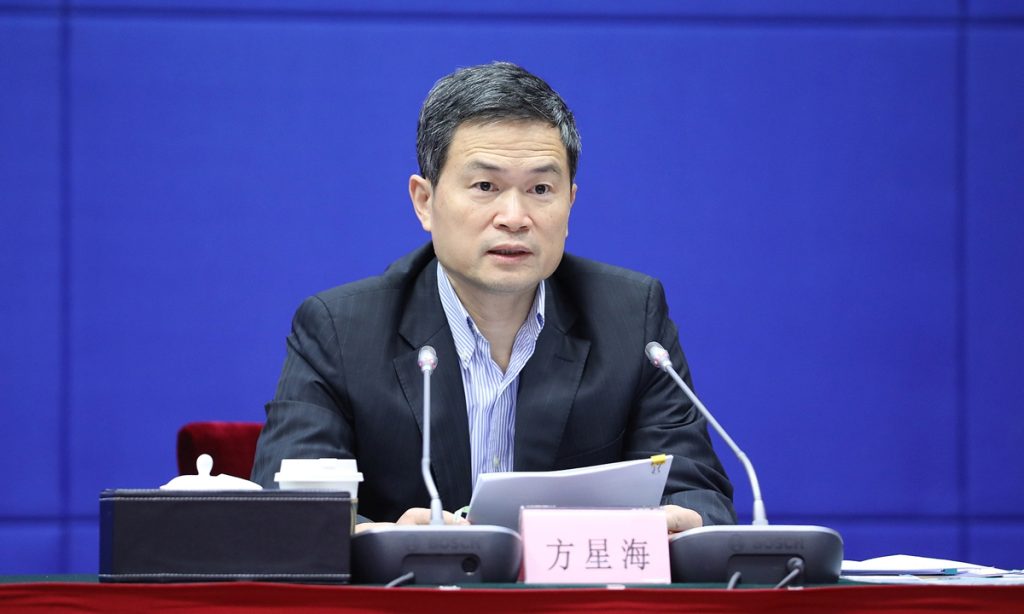
China has comprehensively bolstered its human rights protection capability, according to an evaluation report jointly released on Friday by the China Society for Human Rights Studies and 20 national human rights education and training bases in the country.

The report assesses the implementation of the National Human Rights Action Plan of China (2021-2025), which was issued in September 2021.

China has fully implemented the five-year action plan, accomplishing all 181 tasks outlined in it, the report says.

It notes that China has advanced human rights through development, with the country completing the building of a moderately prosperous society in all respects and eliminating absolute poverty.

China now has the world's largest education, social security and healthcare systems. Meanwhile, solid progress has been made toward common prosperity for all, laying a stronger material foundation for the continued advancement of human rights in China, the report says.

It also highlights that China has been developing whole-process people's democracy, strengthening legal protection for human rights, and improving the system of institutions through which the people run the country.

The report highlights China's advances in environmental protection. The Ecological and Environmental Code has beefed up the legal framework for environmental protection, while improved environmental quality has helped better safeguard people's environmental rights.

According to the report, China has strengthened protection of the rights and interests of all groups, ensuring that people from various sectors participate in economic and social development, exercise their democratic rights, and benefit from the outcomes of modernization on an equal basis. In addition, the rights of women, children, the elderly and people with disabilities have been better safeguarded.

China has actively promoted human rights education and awareness, fostering greater public understanding of and commitment to respecting and protecting human rights, the report notes.

China follows the principles of equality, mutual trust, inclusiveness, mutual learning, win-win cooperation and common development, and it fulfills its international human rights obligations with a strong sense of responsibility, the report states.

There is always room for progress in human rights protection, the report says, adding that China still faces imbalanced and insufficient development, while sci-tech development and industrial transformation are also giving rise to new demands for rights. The report expresses the expectation that China will respond to these challenges and further advance human rights during the 15th Five-Year Plan period (2026-2030).

The full report is available in both Chinese and English on the official website of the China Society for Human Rights Studies.

The action plan spanning the period 2021-2025 was the fourth national human rights plan released and implemented by the Chinese government.

Chinese FM slams Nagasaki museum plan to downplay the Nanjing Massacre by using term ‘incident’

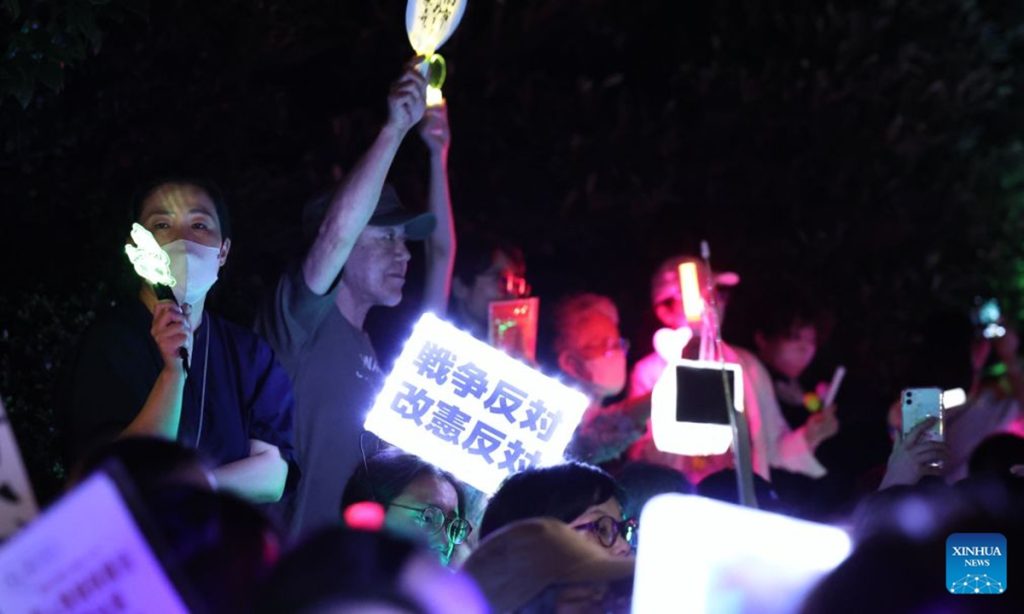
China on Friday urged Japan to deeply reflect on its war crimes and make a clean break with militarism, saying history must not be overturned after reports that the city of Nagasaki planned to alter references to the "Nanjing Massacre" as "Nanjing Incident" in the updating of display panels at the Nagasaki Atomic Bomb Museum.  

According to Japanese broadcaster Nagasaki Bunka Hoso (NCC), the proposal was presented by the Nagasaki city government to the museum's operating advisory council on Thursday as part of preparations for a renovation project scheduled to begin in September 2026. Under the revision plan, a timeline entry currently stating "Occupation of Nanjing, Nanjing Massacre occurs" would be changed to "Nanjing Incident." 

Responding to the reported revision at Friday's regular press conference, Foreign Ministry spokesperson Mao Ning said there is abundant evidence for the Nanjing Massacre—a horrendous war crime of Japanese militarists that shall never be erased. The Tokyo Trials ruled in black and white that the wartime atrocities of the Japanese army in Nanjing were a "massacre", not a mere "incident". 

The Judgement of the International Military Tribunal for the Far East dedicated a special chapter to detail "the Rape of Nanking". With numerous survivors' testimonies, records of third-country witnesses and Japanese army files, the judgement, in the form of the ruling of international justice, made it very clear that the Japanese army who invaded China committed the heinous crime of the Nanjing Massacre. The Massacre's chief perpetrator Iwane Matsui was sentenced to death by hanging as a class-A war criminal. 

The verdict of history must not be overturned. I noted that many survivors of the atomic bombs in Japan, Nagasaki citizen groups and people with insights have called for fully and accurately depicting the crimes and history of Japanese militarists as victimizers, according to the spokesperson. 

"We urge the Japanese side to deeply reflect on its war crimes and make a clean break with militarism," Mao said.

The Nanjing Massacre remains one of the most horrific chapters of Japan's invasion of China. According to the People's Daily, on December 13, 1937, invading Japanese troops occupied Nanjing. Over the following six weeks or more, more than 300,000 innocent civilians and disarmed Chinese soldiers were brutally killed. Approximately 20,000 cases of rape occurred in the city, and about one-third of the buildings were burned down, creating the shocking Nanjing Massacre that stunned the world. 

Terminology used to distort history

The manipulation of historical terminology is intended to beautify Japan's history of aggression, and reflects the lingering influence of militarism, Lü Chao, a research fellow at the Liaoning Academy of Social Sciences, told the Global Times on Friday. He noted that Japan has long distorted historical facts through the manipulation of terminology, for example by avoiding the term "surrender" in favor of "end of the war" or "defeat."

Such practices, Lü said, are part of a broader pattern among right-wing forces of denying the Nanjing Massacre and refusing to reflect on Japan's wartime aggression. He said they seriously hurt the feelings of victims and people in affected countries, and constitute a form of deliberate provocation.

It not only runs counter to abundant historical evidence and the international consensus, but also hampers Japan's ability to become a truly normal country and achieve genuine reconciliation with its neighbors, he added.

The planned move also recalls what scholars have described as the deliberate political use of the term "incident" in Japan's wartime narrative. Zhang Sheng, a professor at the School of History at Nanjing University, previously told the Global Times that newly uncovered archives belonging to William F. Webb, president of the International Military Tribunal for the Far East, showed Japan's use of the term was far from neutral.

During the Tokyo Trial, Akira Muto, a Class-A war criminal who bore significant responsibility for the Nanjing Massacre, acknowledged that Japanese authorities had consciously chosen to describe the war of aggression against China as an "incident" rather than a war in an attempt to deny its status as a formal war and avoid the constraints of international law. Webb explicitly pointed out this intention in his personal archives, Zhang said.

Such practices carry important implications for efforts today to shape historical discourse and ensure accurate historical representation, Zhang noted.

Deep divisions in Japanese society

While the proposed change in terminology on the Nanjing Massacre has drawn criticism from both within Japan and abroad, including from civic groups urging the city not to downplay the country's wartime atrocities, Japanese media coverage has largely focused on another aspect of the draft revision, highlighting that the new exhibition panels explicitly identify the "invasion" by the former Japanese army as the cause of the war. 

According to the Yomiuri Shimbun on Friday, the draft revision includes a description of the process through which the September 18th Incident developed into the Japanese war of aggression against China, stating that Japan "further advanced its invasion into North China." The report, citing a city official, explained that the reason for the wording was that, after examining junior high and high school textbooks, the term "invasion" was found to be the most frequently used expression, the Yomiuri Shimbun reported.

Although one committee member expressed the view that the term "invasion" may be inappropriate because its meaning can vary depending on standpoint and era, another member stated that the international community at the time recognized it as an act of invasion and therefore saw no issue, the Yomiuri Shimbun reported.

Experts noted that this reflects deep divisions within Japanese society over historical memory. While some voices within Japan's academic and civil circles call for confronting historical facts, the official mainstream stance remains ambiguous and at times dismissive of Japan's aggression against China. Narratives emphasizing Japan as a victim of the war tend to blur the distinction between aggressor and victim, thereby distorting public understanding of history, they stressed.

"Genuine peace education must be based on complete and honest historical facts. It should remember all victims, while also facing up to the responsibility for aggression. Only in this way can we avoid repeating cycles of distorted history rooted in selective memory," Lü added.

China’s Beinao No.1 BCI system completes 16 implantations, nationwide hospital trials planned for 2027: report

China's domestically developed semi-invasive brain-computer interface (BCI) system "Beinao No.1" has completed 16 implantations and is expected to be piloted in qualified Grade-A tertiary hospitals nationwide in 2027, while "Beinao No.2" is set to begin clinical validation in the second half of 2026, Zhao Jizong, a neurosurgery expert and academician of the Chinese Academy of Sciences, said at an academic exchange event, according to Beijing Daily on Tuesday.

Zhao said Beijing has built a full-chain research and development system for BCI. At present, "Beinao No.1" has 16 research centers and has completed 16 implantations. The longest implantation has lasted more than one year, and the system has operated safely for more than 55,000 hours, helping patients achieve mind-controlled robotic-arm operation and motor-function reconstruction.

According to the plan, "Beinao No.1" will complete 36 implantations in 2026, while clinical validation of "Beinao No.2" will be advanced in the second half of the year. By 2030, China is expected to complete BCI clinical guidelines and technical standards, forming a replicable Chinese solution, according to the Beijing Daily.

Zhao said the current core bottleneck lies in the shortage of specialized talent, as post-operative rehabilitation for patients lacks dedicated personnel with relevant expertise. Beijing has taken the lead in launching training for clinical BCI adaptation specialists to fill the talent gap and support the implementation of the technology.

A BCI creates a direct communication pathway between the brain and an external device. By recording and interpreting brain signals, BCI allows the brain to "talk" directly to machines, enabling patients to control assistive devices, according to the Xinhua News Agency.

As a frontier technology in human-computer interaction, BCI has been driving a new wave of technological and industrial transformation. China has introduced a series of policies to strengthen BCI research and industrial deployment. The BCI sector has been designated as a future industry in this year's government work report, per Xinhua.

Grammy Award-winning rapper Ye’s Haikou concert draws global spotlight to Hainan

Grammy Award-winning rapper Ye, formerly known as Kanye West, performed a sold-out show for his album series "Vultures" in Haikou, South China's Hainan Province, on Sunday night, marking the start of the Mid-Autumn Festival holidays of the tropical island.

The “Vultures Listening Experience World Tour Listening Party - Haikou” marked Ye’s first performance in the Chinese mainland since 2008, aligning with Hainan’s efforts to position itself as a hub for world-class music events.

Sporting a T-shirt that featured Chinese characters "告诉过你" (I told you so), Ye brought out all his family members, including his four children, to the stage at the packed Wuyuan River Sports Stadium, where all 42,000 tickets, ranging from 680 yuan ($96) – 2,000 yuan, sold out in minutes as 96.5 percent of the tickets were purchased by people living outside the island. The cities with the highest number of buyers were Shanghai, Guangzhou, Shenzhen, Hangzhou, Beijing and Chengdu, according to Hainan Daily.
"Ye performed many of his classic songs, singing along with the audience. At one point of the party, he said, 'I love you, Haikou.' The live atmosphere was absolutely electrifying, especially since the show lasted for three hours. At one point, he even sang along with the crowd,” a 20-year-old fan surnamed Li, who flew from Beijing to attend the show, told the Global Times on Monday.

Prior to the show, Ye shared on his social media account a childhood photo of himself in Nanjing, East China’s Jiangsu Province, with the caption: "BACK."

Ye lived in China for a year when he was about 10 years old. His mother was an English professor and worked as a visiting scholar at the Nanjing University in 1987.

As one of China’s top tourist destinations, Hainan has been committed to boosting its tourism sector by promoting cultural events. Local authorities even offer financial incentives to attract international performers.

Since 2023, local authorities have been promoting large-scale concerts and music festivals in Hainan as part of a new "performance tourism" model, aimed at revitalizing the tourism industry, according to a statement released by the Hainan Provincial Department of Tourism, Culture, Radio, Television, and Sports in February.

Introducing internationally renowned concerts or music festivals can enhance Hainan’s image and international influence as a tourist destination while driving the “cultural and entertainment” transformation of the local tourism industry. This approach is expected to attract younger consumers, shifting Hainan’s tourism focus from primarily older visitors to a more youthful demographic, Sun Xiaorong, a member of the national tourism reform and development advisory committee, told the China News Weekly.

In May, Hainan released several measures to further promote the integration of culture, sports, tourism, and exhibitions to expand consumption. The policy offers a one-time reward of 3 million yuan for events that meet specific criteria: featuring international or top-tier domestic acts, selling at least 100,000 tickets, generating over 50 million yuan in ticket revenue, and attracting more than 50 percent of the audience from outside the island.

Since July 30, overseas travelers with regular passports from countries that have diplomatic relations with China can enjoy visa-free entry to Hainan for up to 144 hours. This is applicable after they have visited Hong Kong or Macao special administrative regions and joined a tour group of at least two people arranged by a legally registered travel agency in those regions.

The move is part of broader efforts to make Hainan a global tourism hub and increase its openness to international visitors.

Biased media reports expose West’s malicious politicization, stigmatization of China’s Silk Roads archaeological efforts

Editor's Note:

"Cognitive Warfare" has become a new form of confrontation between states, and a new security threat. With new technological means, it sets agendas and spreads disinformation, to change people's perceptions and thus alter their self-identity. Launching cognitive warfare against China is an important means for Western anti-China forces to attack and discredit the country.

Some politicians and media outlets have publicly smeared China's image by propagating false narratives in an attempt to incite and provoke dissatisfaction with China among people in certain countries. These means all serve the US strategy to contain China's rise and maintain its hegemony. The Global Times is publishing a series of articles to reveal the intrigues of the US and its allies' China-targeted cognitive warfare and expose its lies and vicious intentions.

In the 16th installment of the series, the Global Times examines a new angle in the West's smear campaign against China: Archaeology. Through analysis of recent stories by Western media outlets that defame China's archaeological field and the viewpoints of front-line Chinese archaeologists in Central Asia and Xinjiang Uygur Autonomous Region, this installment aims to expose the absurd narrative that politicizes and stigmatizes China's archaeological efforts in Silk Road-related areas, as well as the long-standing Western biases against Chinese archaeology.

For decades, some people in the West have been slandering against China under guises like "trade" "security" and "human rights," regardless of how baseless and false their claims may be.

And now, these malicious storytellers have stretched their evil hands to a new field - archeology.

In recent months, articles from mainstream Western media outlets were discovered to be sensationalizing the "politicization" and "weaponization" of Chinese archaeology, viciously depicting China's archaeological work in its Xinjiang Uygur Autonomous Region or overseas as part of efforts to serve the country's political propaganda, aid in sovereignty claims, or intensify international political competition.

Such move aim to taint pure academic field through disinformation against China. This is a new form of cognitive warfare campaign targeting China, warned Jia Chunyang, executive director of the Center for Economic and Social Security Studies at the China Institutes of Contemporary International Relations.

"By challenging China's historical academic research on Silk Roads, they (some Western media outlets) are attempting to deny China's history and current policy propositions in this area," Jia told the Global Times. "This intention is extremely malicious."

'No moral bottom line'

One of the latest stories to anger the Chinese archaeological community was a bilingual piece by the Wall Street Journal (WSJ) published in late July.

"The country's archaeologists are striking out along the Silk Road(s) to trace the reach of ancient Chinese civilization, disputing long-held beliefs," the story wrote in its deck. It mainly introduced one of China's major overseas Silk Road archaeological works in Uzbekistan, the discovery of the ruins of Greater Yuezhi (an ancient nomadic kingdom) led by archaeologist Wang Jianxin, a leading figure in China's research on ancient civilizations in Central Asia.

However, the story gave a strange interpretation of the work conducted by Wang's team, stating that China's overseas archaeological efforts are probably in aid of its geopolitics claims or for the sake of "disputed" territories.

Although in this article, Wang refuted the question of "whether Beijing could use the Yuezhi to make territorial claims" and dismissed the notion as "absurd." Nonetheless, the author still insidiously hinted at a nonexistent connection between Wang's Yuezhi archaeological work in Uzbekistan, and China's influence in the country through its Belt and Road Initiative (BRI) projects there. "…there are concerns that China will simply be the newest great power to impose itself on the region," it wrote.

In interviews with Chinese scholars, a few Western media personnel attempt to dig "traps" and later deliberately distort and misinterpret the interviewees' views in their stories, as proof of the "fact," Jia pointed out.

"This shows that some people in the West have spared no effort in order to discredit China," Jia told the Global Times. "They have no moral bottom line."

Lothar von Falkenhausen, a professor at the Cotsen Institute of Archaeology at the University of California, Los Angeles, was quoted in the story as well. "He looked at things differently and is now helping others see things differently and make new discoveries," Falkenhausen told the WSJ.

Falkenhausen later wrote to the Global Times, noting that the journalists writing for the WSJ might have misrepresented the importance of the archaeological dimension of the subject.

But the academic expert, who specializes in archaeology, said on WeChat that he does not blame the journalists for potentially misunderstanding the depth of the archaeological subject matter. "They are experts in something else - politics," he remarked, emphasizing his own focus on the academic and collaborative aspects of the research.
Who weaponizes archaeology?

In recent years, China has stepped up its archaeological efforts along the overland and maritime Silk Roads both at home and abroad.

In its Northwest Xinjiang Uygur Autonomous Region, it discovered excavation sites reflecting ancient political power and a rare offshoot of a Christian sect, and that was among the top six new archaeological discoveries in China in 2023. Chinese archaeologists have also been to regions including the South China Sea, Central Asia, and Africa, to explore the ties between the Chinese civilization and crucial moments in world history. China has also enhanced international cooperation in this field.

However, some Western media outlets continue to depict China's Silk Roads archaeological work as a BRI "accessory," or a tool to serve its "political and governing purposes."

In a bombastic article titled "China is using archaeology as a weapon" on July 11, The Economist accused China of "unearthing ancient justifications for its rule over Xinjiang." Without rhyme or reason, the story claimed that Chinese archaeologists' discovery of Mo'er Temple ruins in Kashi, Xinjiang - the earliest large-scale, earthen-structured, ground-level Buddhist temple site in the westernmost part of China - was being used by the Chinese government "to justify its brutal rule over Xinjiang."

This story was replete with offensive lies. It tenuously linked an archaeological achievement in Xinjiang to the West's favorite groundless accusations of "brutal rule" or "cultural genocide," and tried to mislead its readers by claiming that solid historical evidence "hardly means Xinjiang was culturally or politically part of China" by citing one-sided views of a Georgetown University scholar.

It was an incredibly far-fetched, amateurish, and biased article, archaeology insiders said. Chen Ling, a professor at the School of Archaeology and Museology, at Peking University, emphasizes that Xinjiang has been an integral part of China since ancient times.

Chen points out that the cultural orientation of this area has always been toward the East due to geographical conditions, even before the establishment of modern states and civilizations, which can be proven by recent archaeological discoveries.

It is these Western media outlets that are "using academia as a political tool," Chen told the Global Times.

Similarly, when China announced a deep-sea excavation plan in June 2023, which involved more than 900 pieces of cultural relics being retrieved from two ancient shipwrecks discovered in the South China Sea, The Economist claimed in a subsequent article that China's underwater archaeology "has military and strategic uses," and it serves the country's maritime territorial claims.

It is clearly to see that it is not China, but entities in the West, that is trying to "weaponize" archaeology.

"Their goal is to give the international community the false impression that the Xinjiang region, Central Asia, and some areas along the Silk Roads have little historical connection to China, so as to slander China for 'falsifying' history," said Jia.

"By denying China's history, they deny China's current policies based on said history," Jia noted.

Two-way interaction

The fact is that China is making significant achievements in archaeology along the Silk Roads, with increasingly close connections and collaborations with relevant countries and regions.

In April 2023, the Collaborative Research Center for Archaeology of the Silk Roads was established in Xi'an, Southwest China's Shaanxi Province, an outcome of the second China + Central Asia (C+C5) foreign ministers' meeting in May 2021.

Wang, chief scientist at the center, has repeatedly stressed the importance of including an "Eastern perspective" in Silk Road archaeological work. "The concept [of the Silk Road] was initiated by Western academia, so a majority of research focuses on how the West influenced others," Wang told the Global Times in a previous interview in October 2022. "We do overseas research like this to change these centralized interpretations and contribute to the comprehensive study of the Silk Road."

Chen criticizes the West's tendency to promote a monolithic viewpoint, stating that the world is moving toward diversity, not away from it.

"Now the West does not want to allow the East to propose a global perspective, and such move is an attempt to rule the world with a single narrative, replacing the diversity of the world with a single value system," he said.

As one of the Chinese archaeologists participating in the earlier joint archaeology project between China and Uzbekistan, Chen believes that understanding human civilization requires the accumulation of knowledge from various points, and only when these points converge can we accurately present the tapestry of world history.

He told the Global Times that this ancient network of trade routes, stretching from China to the Mediterranean, is not merely a historical artifact, but a living testament to the fluid exchange of cultures, goods, and ideas that have shaped our world.

"Cultural exchange is no longer a one-way street, but a two-way interaction," noted Chen. "China respects the political systems and religious beliefs that align with the unique cultural characteristics of each country, promoting mutual learning and breaking the old world cultural order dominated by the so-called 'universal values' that Western countries force other countries to follow."

75th anniversary of adoption of 1949 Geneva Conventions

The Embassy of Switzerland in China held an event to commemorate the 75th anniversary of the adoption of the 1949 Geneva Conventions at the Embassy of Switzerland residence in Beijing on August 12.
In his address, Swiss Ambassador to China Jürg Burri said, "If we look around the world today, 75 years later, we note that we are still far from achieving the goal of ending the pains of armed conflict. However, this should not lead us to accept war as inevitable. We should still condemn war as a means prohibited by the UN Charter. And even more importantly, it should not make us give up on the commitment to 'humanize war' and lessen the misery it causes."

Over the decades, the Geneva Conventions have provided a vital bulwark against the atrocities of war, saving millions of lives.

At the event, Balthasar Staehelin, Personal Envoy of the International Committee of the Red Cross (ICRC) President to China and Head of the ICRC Regional Delegation for East Asia, delivered a speech.

Wang Ping, Vice-President of the Red Cross Society of China, also delivered an opening speech.

China was one of the first countries to accede to the Geneva Conventions and their Additional Protocols, and attaches great importance to compliance with international humanitarian law (IHL). The China National Committee on IHL was established in 2007 to promote the dissemination and implementation of the IHL, with the Red Cross Society of China as its secretariat.

"The ever more complex global development and security situation has resulted in an upsurge of humanitarian needs. Dissemination and compliance with the IHL are more relevant than ever before," said Wang.

The Geneva Conventions were adopted in 1949 and are now universally ratified, representing a universal acknowledgment that war needs rules to limit its devastating impact on humanity.

Culture Beat: Origin and Innovation: Art Biennale in Tianjin

Showcasing the creations of over 100 artists from across the country, an exhibition titled Origin and Innovation - (China) Western Art Biennale kicked off on Friday in North China's Tianjin Municipality.

Hosted by the Tianjin Academy of Fine Arts, the exhibition is being held at three major venues: the Tianjin Art Museum, Tianjin Academy of Fine Arts Museum, and Tianmei Art District. It brings together works by more than 100 artists from cities such as Beijing, Tianjin, Xi'an, Hohhot and Shenzhen, covering a variety of mediums including painting, sculpture, installation art, technological art, and animation.

According to the organizers, the exhibition closely connects the rich cultural heritage of China's western regions with the artistic ecosystems of eastern and coastal areas. During the exhibition, a series of academic forums are also being held. Experts and scholars will discuss topics such as urban cultural development, the current state of contemporary art and social aesthetic education.

Reading boosts my mind power, cultivates passion for life

"Read ten thousand books, and your pen will be guided as if by the gods" is an ancient Chinese idiom that can be seen in students' textbooks. China's Ministry of Education has published an action plan to further promote reading among students across the nation. With new and diverse book recommendations, the reading scene is expected to be revived not only at schools, but also across society. To contribute to this endeavor, the Global Times launched "My Reading Life" essay contest for middle school students.

Please pick up a pen and share your stories with us at reading@globaltimes.com.cn

Participants will be rewarded once the article has been selected.

Throughout my life, reading has been an integral part of my personal and intellectual development. It has bestowed upon me infinite pleasure while expanding my horizons and amplifying my lexical resources. In this essay, I aim to discuss the impact of reading on my life, the multiple forms of literature I enjoy, and the reasons why I firmly believe that reading is an indispensable component of everyone's life.

First and foremost, reading has brought me much happiness. I have always loved delving into the magical realms that exist between a book's pages. I feel proud and fulfilled after finishing a book and understanding it completely.

When I was younger, I enjoyed reading comics, adventure novels, and fairy tales. These stories captivated my attention and gave me an opportunity to temporarily escape the strain of everyday life, which are too great for a child to handle. I developed an appreciation for more complex literature as I got older, including novels, poems, and essays. I tried to feel what the characters are feeling and to sympathize with them. These pieces continue to intellectually and emotionally challenge me even now.

Reading has made it possible for me to understand and sympathize with the hardships and victories of people from a variety of backgrounds. For example, I was able to understand the inequality that prevailed in the US in the 1930s after reading Harper Lee's To Kill a Mockingbird.

Through the character development in this novel, I gained a deep understanding of the discrimination and oppression faced by African Americans in the society during that time. This work made me aware of the importance of racial equality and justice, and sparked my reflection on social fairness and equality.

Reading has enhanced my vocabulary repository and linguistic competencies, which enables me to cultivate a comprehensive understanding of various contexts, fostering my analytical abilities.

As I encountered new words and phrases in my reading materials, I learned their meanings and applications in my writing and conversations which has yielded a tremendously advantageous impact, particularly in relation to my academic endeavors and the preparation for various kinds of English exams.

By incorporating those newly learned vocabulary and phrases into my writing and oral communication, the quality of my expression had been elevated, and the recognition from my mentor was gained. Additionally, reading has opened up numerous personal and academic opportunities for me by improving my language skills.

Moreover, reading has shaped my values and worldview. Through the wisdom and insights of prominent thinkers, I have gained a deeper understanding of ethics, philosophy, and social issues. Reading has equipped me with encyclopedic knowledge and unwavering motivation that aren't accessible through other means, endowing me with the competence and fortitude to navigate social life and contribute meaningfully to the world.

In conclusion, reading has had a transformative force in my life. It has brought me joy, expanded my vocabulary, enhanced my global outlook.

I firmly believe that reading is essential for everyone, as it has the power to offer individuals inspiration and a pleasurable psychological experience. In today's fast-paced world, where technology and social media dominate our lives, reading remains a timeless and invaluable pursuit. It is my will that more people will embrace the joys of reading and discover the immense benefits it offers.

The author is a student at the Experimental High School attached to Beijing Normal University