Poll shows 76% in Japan support upholding Three Non-Nuclear Principles; Japanese society’s anti-nuclear sentiment remains strong despite Tokyo’s push to loosen policy: expert

Seventy-six percent of people in Japan support upholding the country's Three Non-Nuclear Principles of not possessing, not producing, and not permitting the introduction of nuclear weapons into its territory, Kyodo News reported Sunday, citing a nationwide opinion poll, according to the Xinhua News Agency. 

A Chinese expert said the poll shows that the majority of the Japanese public remains highly wary of and firmly opposed to any form of nuclear armament or "nuclear sharing," reflecting that the country's Three Non-Nuclear Principles have become deeply rooted in Japanese society as a broad consensus for peace and a fundamental security red line.

According to the poll, which targeted 3,000 people aged 18 and above, conducted in June and July by the nationwide opinion poll organization Japan Association for Public Opinion Research, which is affiliated with Kyodo News, in addition to 76 percent of respondents said Japan should continue to uphold its Three Non-nuclear Principles, 77 percent said Japan should not pursue "nuclear sharing," under which US nuclear weapons would be deployed in Japan and jointly operated, the Ryukyu Shimpo reported on Sunday.

As debate continues over whether the Three Non-Nuclear Principles should be reviewed, the survey suggested that public opinion in Japan remains broadly in favor of maintaining Japan's non-nuclear stance, reflecting the country's identity as the world's only nation to have experienced atomic bombings in wartime, per the Ryukyu Shimpo. 

Xiang Haoyu, a Chinese international affairs expert, told the Global Times on Sunday that Japanese society's strong anti-nuclear sentiment is deeply rooted in its historical memory as the world's only country to have experienced atomic bombings in wartime. The devastation of Hiroshima and Nagasaki has made the Three Non-Nuclear Principles not only a cornerstone of Japan's postwar pacifist principles, but also a safeguard against the country once again becoming a frontline in nuclear confrontation.

"As some right-wing politicians push to loosen defense restrictions and promote US-led 'nuclear sharing,' many Japanese fear such moves would undermine, rather than strengthen, the country's security," he said. 

The poll result was released about two weeks after Japanese Defense Minister Shinjiro Koizumi made highly dangerous and provocative remarks on July 17 in a Japanese internet TV program "Genron TV," claiming that while nuclear weapons are a difficult issue for Japan to discuss, they are one the country cannot avoid addressing, and that Japan must discuss and "advance all policies without taboos." Japanese English media outlet the Japan Times also pointed to Koizumi's claims as "a rare instance of a sitting Cabinet member broaching the highly contentious issue."

In response to Koizumi's claims, both China's Foreign Ministry and Ministry of National Defense issued strong responses. Foreign Ministry spokesperson Lin Jian said it is extremely rare, provocative and dangerous after WWII for a sitting Japanese defense chief to make such remarks. Those running the Japanese government no longer hide the wild ambition to end the three non-nuclear principles and challenge the postwar international order.

Jiang Bin, spokesperson for China's Ministry of National Defense, said Japan's attempt to break away from its three non-nuclear principles seriously violates its international legal obligations under the Treaty on the Non-Proliferation of Nuclear Weapons, severely undermines the international nuclear non-proliferation regime, and poses a grave threat to the outcomes of the victory in World War II and the postwar international order.

Both spokespersons mentioned that Japan is an internationally recognized nuclear threshold state. It has long been deliberately maintaining the capability for a rapid nuclear breakout, stockpiling approximately 44.4 metric tons of separated plutonium - enough to produce a large number of nuclear warheads.

Tomoko Tamura, chairperson of the opposition Japanese Communist Party, urged Prime Minister Sanae Takaichi during a Lower House Budget Committee session on July 27 to clearly commit to upholding Japan's Three Non-Nuclear Principles, citing what she described as the government's apparent moves toward reviewing the policy as it revises its three national security documents. Takaichi reportedly declined to say whether the principles would be maintained, claiming it would be premature to prejudge the outcome of the review, and stopped short of committing to uphold the three non-nuclear principles, according to the party's website.

Tamura also referred to Takaichi's remarks at an Audit Committee of the House of Councillors meeting, where the prime minister said she would put on the table a proposal by the Japan Innovation Party to allow the introduction of nuclear weapons under Japan's Three Non-Nuclear Principles. Tamura said that permitting the introduction of nuclear weapons would turn Japan into a base for US nuclear strikes, making such a move absolutely unacceptable. 

Xiang said the sharp contrast between the poll results and the Japanese authorities' recent dangerous moves exposes the ruling authorities' and right-wing forces' attempt to break away from the postwar framework, despite strong public support for peace and the Three Non-Nuclear Principles. By promoting discussions on nuclear weapons and "nuclear sharing" under the pretext of the so-called "security threats," Tokyo wants to loosen postwar constraints and advance its remilitarization. 

Such moves, which run counter to the anti-nuclear views of more than 70 percent of the public, undermine the legitimacy of Japan's policymaking, challenge the international nuclear non-proliferation regime, and heighten regional security risks, Xiang said. 
Chinese FM urges US to properly manage differences, address China's legitimate concerns

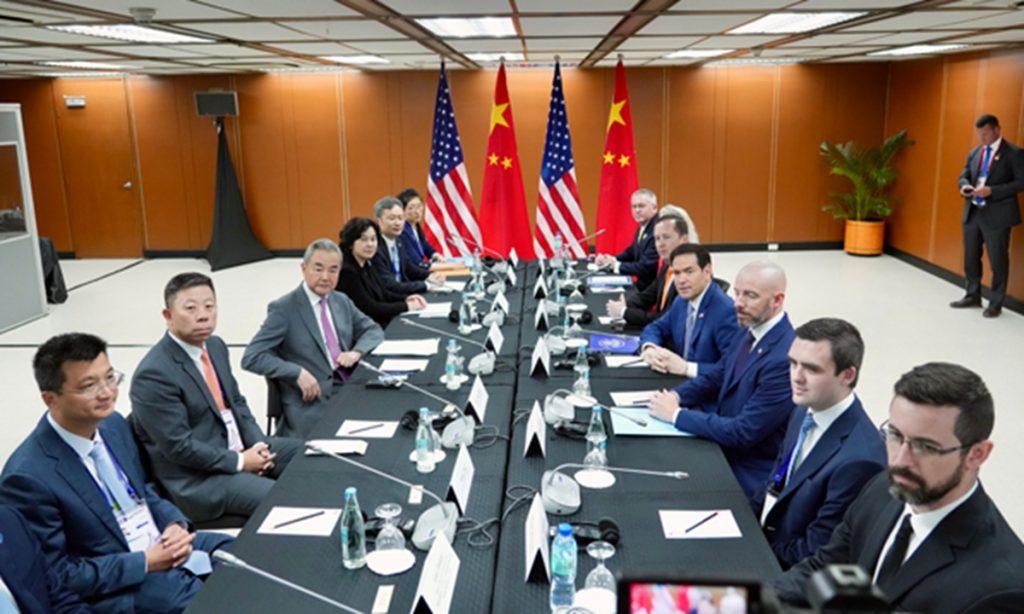
Pushing back against a series of recent negative US remarks and actions, Chinese Foreign Minister Wang Yi on Wednesday urged the US side to respect China's core interests, uphold the one-China principle, properly manage differences, and address China's legitimate concerns.

Wang, also a member of the Political Bureau of the Communist Party of China Central Committee, made the remarks when meeting with US Secretary of State Marco Rubio in Manila, the Philippines.

Wang said this year marks a pivotal moment for China-US relations, following a historic summit in Beijing where the two heads of state set the course for a constructive China-US relationship of strategic stability.

This, he said, represents important progress in the two major powers' exploration of peaceful coexistence, serving the fundamental interests of both peoples and meeting the shared expectations of the international community.

The task of both sides now is to stay on the track laid out by the two heads of state by overcoming distractions and obstacles to turn their consensus into understanding and concrete action across government and sectors, Wang said.

Wang called for joint efforts to promote world peace and security through bilateral strategic stability and provide a strong impetus for international cooperation through constructive interactions between China and the US.

The two sides also exchanged views on international and regional hotspot issues.

Both sides viewed Wednesday's meeting as practical, positive and constructive. They agreed to give play to the role of political and diplomatic channels, make good preparations for the next stage of China-US high-level exchanges, and advance substantive progress in building a constructive China-US relationship of strategic stability.

China repatriates US fugitive suspected of committing serious violent crimes to US

At the request of US law enforcement authorities, Chinese police on Thursday repatriated a US national wanted for serious violent crimes to US authorities at Shanghai Pudong International Airport. The fugitive was escorted back to the US by relevant US law enforcement personnel. The repatriation marks another outcome of law enforcement cooperation between China and the US, China Central Television (CCTV) News reported on Thursday.

In 2004, the US fugitive was wanted by US law enforcement authorities for allegedly committing serious violent crimes, including sexually assaulting a minor girl and shooting his wife to death. In August 2005, the International Criminal Police Organization (INTERPOL) issued a Red Notice for the individual. Subsequently, at the request of the US side, Chinese public security authorities carried out meticulous investigations and eventually apprehended the fugitive.

To implement the important consensus reached by heads of state of China and the US, law enforcement agencies of the two countries have recently carried out a series of practical cooperation in areas including counternarcotics, repatriation of illegal immigrants, fugitive pursuit, combating telecom and online fraud, and anti-money laundering.

Chinese police will uphold the principles of mutual respect and professionalism and pragmatism, deepen practical cooperation with police forces of other countries, and crack down on all types of transnational crimes in accordance with the law, per CCTV.

Former vice chairman of China’s securities watchdog Fang Xinghai under probe

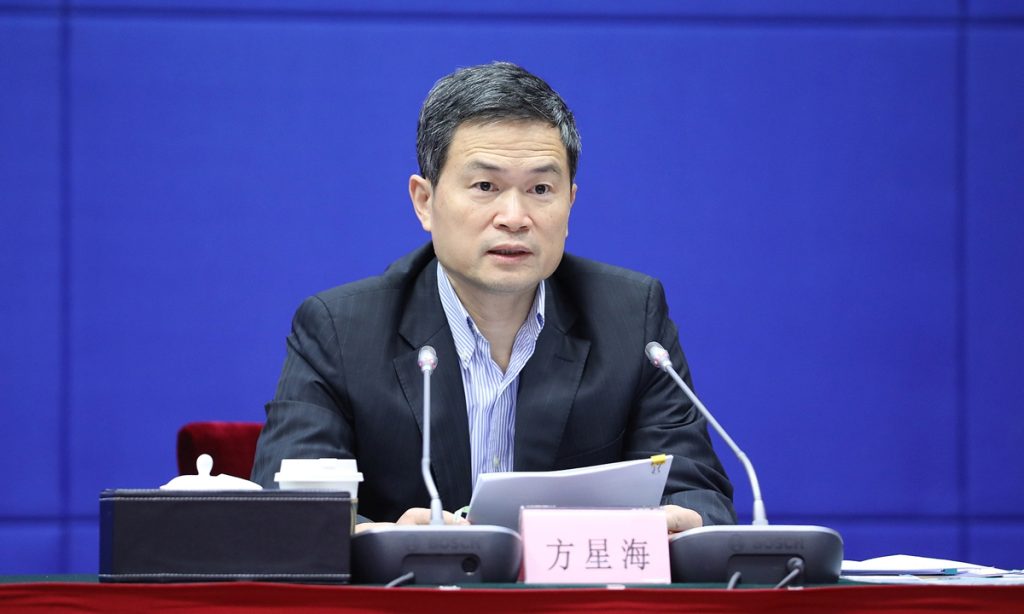
Fang Xinghai, former member of the China Securities Regulatory Commission (CSRC) Party Committee and Vice Chairman of the CSRC, is suspected of severe violations of discipline and the law and is currently undergoing disciplinary review and supervisory investigation by the CPC Central Commission for Discipline Inspection (CCDI) and the National Commission of Supervision, according to the website of the CCDI on Friday.

45 rescued by Chinese side after Vietnamese ship sinks in South China Sea; joint rescue efforts highlight China's role in providing regional maritime public goods: expert

According to the Sansha authorities in South China's Hainan Province, a Vietnamese vessel, the KHOI NGUYEN 18, sank after encountering distress in waters near Yongshu Reef in the Nansha Islands on July 25. As of now, 45 people have been rescued, with the latest rescued by the Chinese side at 1:42 pm on Sunday, Sansha authorities told the Global Times.

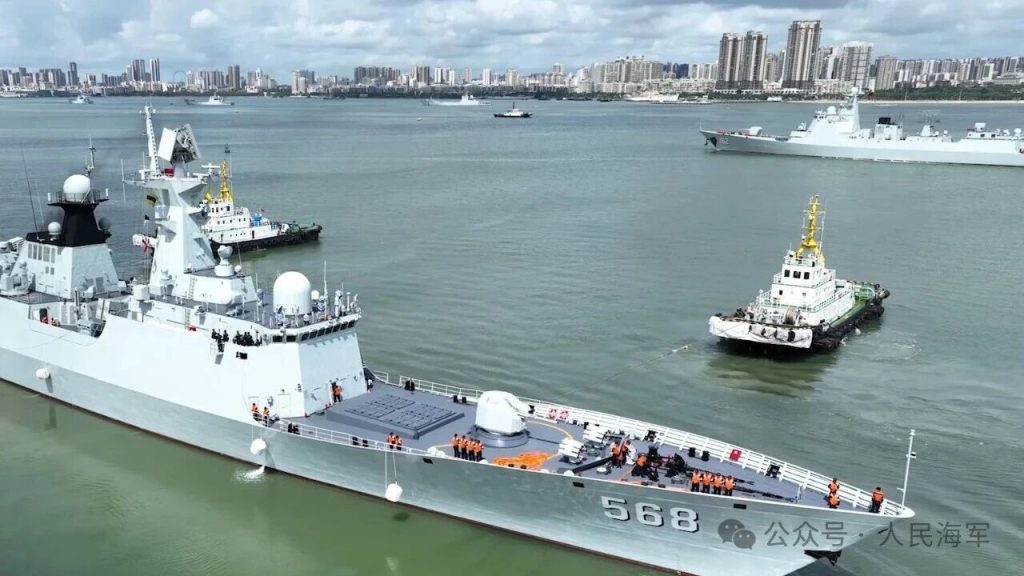
China has dispatched six vessels and one rescue helicopter to assist in the operation, and seven Vietnamese ships are now also participating in the on-site search and rescue effort.

According to the Sansha maritime search and rescue authorities, the distressed vessel was the Vietnamese-flagged KHOI NGUYEN 18, measuring 69.9 meters in length and 10.8 meters in width, with 62 people on board.

As of 8:05 pm on Sunday, 41 of the rescued Vietnamese individuals onboard the distressed KHOI NGUYEN 18 have been safely transferred to Vietnamese ships, and the remaining four will be transferred tomorrow, Sansha maritime search and rescue authorities told the Global Times.

Leading the efforts

China and Vietnam have set up a joint, unified search and rescue command system. The Chinese rescue vessel Nanhai Jiu 115 is serving as the on-site commander. Rescue forces from both countries have demonstrated strong overall coordination, regional synergy, and efficient collaboration, according to Sansha authorities.

Global Times learned more details of the rescue from Sansha maritime search and rescue authorities on Sunday at noon.

On Saturday, at 6:53 pm, the research and rescue authorities received an alert from the Hainan Provincial Maritime Search and Rescue Center, which stated that at 6:23 pm the same day, the Chinese rescue vessel Nanhai Jiu 115, while sailing back to Sanya, spotted a life raft and rescued 29 Vietnamese nationals on board.

According to the rescued individuals, the distressed vessel was the Vietnamese-flagged ship KHOI NGUYEN 18. The vessel sank after encountering distress on Friday night in waters approximately 220 nautical miles east of Khanh Hoa Province, Vietnam.

There were 62 Vietnamese nationals on board who urgently required assistance.

Upon receiving the alert, the Sansha maritime search and rescue authorities immediately activated their emergency plan. A unified search and rescue command system was quickly established with Vietnamese vessels on site, enabling coordinated deployment of forces, regional collaboration, and highly efficient cooperation.

The center also notified relevant military, police, and civilian units and set up a three-level command linkage mechanism involving provincial, city, and district levels.

The Nanhai Jiu 115 was designated as the on-scene command vessel, coordinating with the Nanhai Jiu 113, rescue helicopters, coast guard vessels, and other forces to conduct search-and-rescue operations.

Navigational alerts were issued to alert nearby vessels, coordinating their participation in the rescue efforts. Additionally, the South China Sea Forecasting Center under the Ministry of Natural Resources was asked to produce drift prediction models for personnel in the water to guide the search plan.

Satellite imagery was also used to help locate survivors, while passing ships were reminded to maintain a sharp lookout and report any sightings immediately.

Search-and rescue-operations are still underway.

In response to a question from Global Times reporters, a staff member from the Sansha maritime search and rescue authorities revealed that six more Vietnamese vessels had joined the rescue efforts as of Sunday noon, and fortunately, the typhoon Noul has not impacted the rescue operation.

Yang Linxiang, an official responsible for coordination, information transmission, and the formulation of rescue plans with the Sansha maritime search and rescue authorities, told the Global Times that he had been working round the clock since after 7 pm on Saturday until past 11 am on Sunday.

As of Sunday noon time, China and Vietnam had together located 46 Vietnamese nationals from the distressed vessel. Chinese rescue forces had saved 45 people, while Vietnamese forces rescued two - one survivor and one fatality, Yang told the Global Times.

In a thank-you note written by Nguyễn Văn Toàn, a rescued Vietnamese mechanician, he said "You did everything you could to rescue me, which allowed my two friends and me to survive. For this, I sincerely thank you. From the bottom of my heart, I am deeply grateful to the ship owner and all the brothers and sisters on board. It was you who gave me a second chance at life. My friends and I would like to express our heartfelt gratitude to you."

Later on Sunday afternoon, the rescued Vietnamese crewmembers gathered together and expressed their gratitude by saying "Xie xie Zhong guo"("Thank you, China") in Chinese.

Global Times also learned that the survivors had been provided with meals aboard the Chinese rescue vessels and were recovering well.

Search and rescue operations would continue in the afternoon, with rescue efforts and the handover of survivors proceeding simultaneously.

Much-needed public products

Ding Duo, director of the Center for International and Regional Studies at the National Institute for South China Sea Studies, told the Global Times on Sunday this joint rescue effort is the latest example among countless emergency search and rescue operations in the vast waters of the South China Sea. It clearly demonstrates the core elements required for effective maritime search and rescue under complex sea conditions and sudden emergencies: rapid response capabilities based on a clear legal framework and emergency mechanisms, the humanitarian and public welfare nature that transcends maritime disputes, and efficient multi-party, multi-level coordination, he noted.

More importantly, it once again confirms China's irreplaceable role and undeniable efforts as a responsible major country and major coastal state in fulfilling its international obligations in the South China Sea, providing international public goods, and promoting functional maritime cooperation, Ding said.

According to the expert, China has long regarded safeguarding navigation safety in the South China Sea as an important responsibility. Through the establishment of search and rescue coordination institutions such as the Sansha and Nansha maritime search and rescue centers, the optimization of rescue force deployment, and the gradual building of a three-dimensional air-sea emergency rescue system, China is committed to providing maritime public services and navigation safety guarantees for ships from neighboring countries, regional waters, and international shipping lanes.

This precisely shows that any discourse that ignores concrete practice, disregards the actual contributions of major providers of public goods, and attempts to obscure the common need for non-traditional security cooperation through one-sided narratives runs counter to the fundamental goal of safeguarding navigation safety and humanitarian values in the South China Sea, he noted.

China honors outstanding scientists, sci-tech innovations

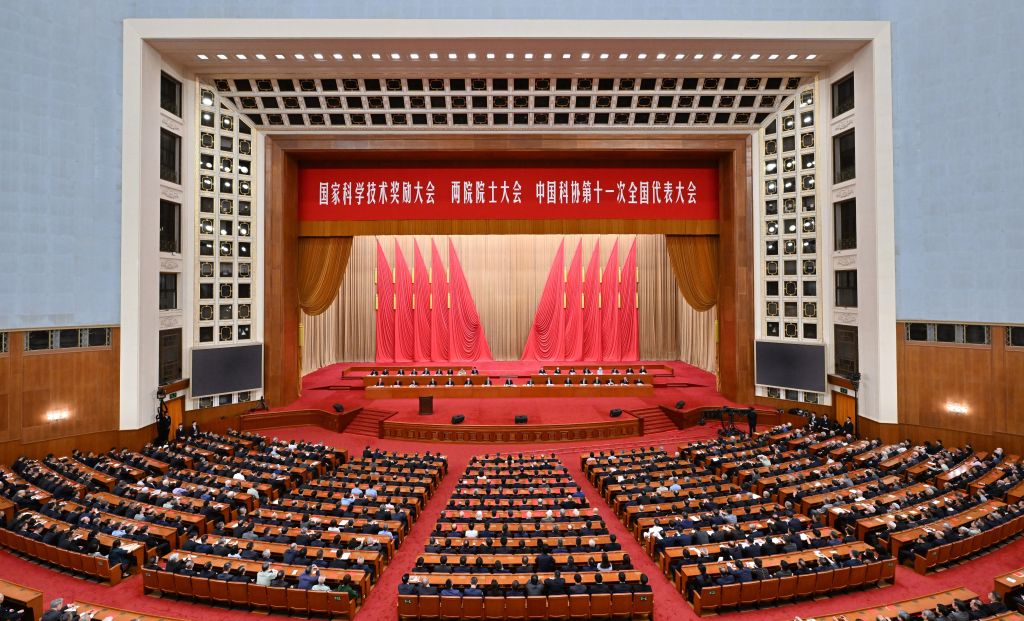
Two veteran scientists won China's top sci-tech award for the year 2025 on Wednesday for their groundbreaking contributions to the fields of lithium batteries and radar technology, respectively, as the country honored 258 projects and 11 experts for scientific and technological achievements.

Chen Liquan, 86, a researcher at the Institute of Physics under the Chinese Academy of Sciences (CAS) and an academician of the Chinese Academy of Engineering (CAE), and Ben De, 88, a researcher at the China Electronics Technology Group Corporation and also a CAE academician, received the nation's highest scientific honor at a meeting in Beijing.

Chen, born into a rural family in southwest China's Sichuan Province, grew up in the dim light of kerosene lamps, which sparked his lifelong pursuit of bringing electricity to the people. He is widely recognized as the founder, pioneer and leader of China's lithium battery sector.

Chen built China's first solid-state ionics laboratory from scratch. His team produced China's first lithium-ion battery and established the country's first pilot production line using entirely homegrown technology, equipment and raw materials.

He pioneered and realized the in-situ solidification battery technology approach, advancing sodium-ion batteries from fundamental research to commercial-scale deployment, and cementing China's strategic lead in next-generation battery technologies.

Ben, born in a farming family in northeast China's Jilin Province, entered Harbin Institute of Technology, located in Heilongjiang Province in the northeast, in 1957. He is acclaimed as the founder of China's airborne pulse Doppler radar technology, a major pioneer of phased array radar technology, and a forerunner of space-based surveillance radar technology.

Ben successfully developed China's first airborne pulse Doppler fire-control radar and its first large-scale long-range phased array early-warning radar. The two fundamental modern radar technologies he pioneered, pulse Doppler and phased array, have guided the development of China's land, sea, air and space early-warning and detection systems.

Wednesday's meeting conflated the national science and technology award conference, the general assemblies of the members of the CAS and the CAE, and the 11th national congress of the China Association for Science and Technology.

In addition to the two top honorees, 51 projects received the State Natural Science Award, 58 projects the State Technological Invention Award, and 149 projects the State Scientific and Technological Progress Award. Meanwhile, nine foreign experts were presented with the International Science and Technology Cooperation Award.

AWARDS HIGHLIGHT INNOVATION DRIVE

This year's awards tell a compelling story about where Chinese science is heading.

For the first time since 1999, three first prizes of the State Natural Science Award were presented, which is a clear sign that the country's strategic drive to bolster basic research and original innovation is paying off.

Take the single-atom catalysis project, for example. The original concept was first proposed by Chinese researchers and has since gained global recognition across fields including catalysis, chemical engineering, materials, biology and energy.

Another winning project precisely measured the strength of a single hydrogen bond using a quantum approach, opening up entirely new possibilities in condensed matter physics, while in the information field, researchers developed a phosphor-free pure-chip LED technology that has produced micro-displays and the world's first yellow-light AR glasses.

Many award-winning projects are also directly tied to national strategic needs. One team developed a system that recreates extreme space conditions right here on Earth, using electrostatic, ultrasonic and electromagnetic fields to simulate microgravity and pioneering new ways to process high-temperature metals.

Another project pushed the limits of ultra-deep drilling, retrieving 8,187 meters of continuous terrestrial rock cores from the Cretaceous period in northeast China's Songliao Basin. It is the world's most complete record of its kind. The findings have helped Chinese scientists establish a high-precision, multi-disciplinary system for geological dating and paleoclimate reconstruction.

There are also the innovations that touch people's daily lives. In agriculture, researchers tackled long-standing bottlenecks in hybrid rice seed production by developing new parent lines with superior outcrossing performance and super-high-yield hybrid varieties, while also advancing mechanized, high-efficiency seed production techniques.

The breakthroughs directly address the challenges of low per-unit yields, insufficient seed production capacity, and high seed costs, helping to secure China's food security at the very foundation of the supply chain.

In healthcare, researchers developed a specialized bedside MRI device for stroke diagnosis, along with new methods to suppress complex flow signals around cerebral vessel walls. The system has slashed confirmation time for acute stroke from 40 minutes to under 10 minutes, enabling rapid, accurate diagnosis even at primary-level hospitals. This breakthrough has fundamentally changed the international diagnostic paradigm for acute stroke.

China issues action plan for carbon peaking during 15th Five-Year Plan period

China's State Council has issued an action plan for carbon peaking during the 15th Five-Year Plan period (2026-2030), outlining key tasks and measures to achieve the goal.

By 2030, China's carbon dioxide emissions per unit of GDP will be reduced by 17 percent from the 2025 level, and the share of non-fossil energy consumption will reach 25 percent, according to the plan.

These measures aim to ensure the timely achievement of a carbon peaking goal and lay a solid foundation for meeting the country's nationally determined contributions target for 2035 and advancing carbon neutrality.

The plan outlines key tasks across five areas, including accelerating the adjustment and optimization of the energy structure, promoting green and low-carbon industrial development, and deepening the green and low-carbon transition in key sectors.

To accelerate the optimization of energy structure, China will vigorously advance the development of non-fossil energy, promote clean substitution of coal consumption, and continuously optimize the structure of oil and gas consumption.

Efforts will be made to advance energy conservation and carbon-reduction transformation in traditional industries, accelerate the construction of zero-carbon parks and zero-carbon factories, promote the green and low-carbon transformation of computing infrastructure, and leverage the circular economy to reduce carbon emissions.

The plan also highlights carbon reduction in buildings, public institutions, and transportation, as well as the enhancement of ecosystem carbon sinks.

On the policy front, the plan emphasizes improving laws, regulations and standards; enhancing the carbon emissions statistical and accounting system; increasing financial backing; and refining pricing and market-based mechanisms.

The document urges local governments to fulfill their responsibilities, calls for broader public participation in green and low-carbon initiatives, and pledges to deepen international cooperation.

China has set the dual carbon goals of peaking carbon dioxide emissions before 2030 and achieving carbon neutrality before 2060.

Fox News apologizes for airing claims linking data center opponents to China; rare apology cannot offset damage of habitual blameshifting: expert

Fox News issued an apology over the weekend for airing unsubstantiated claims made by businessman and television personality Kevin O’Leary who alleged opponents of a data center project he is involved in are proxies for the Chinese government, according to US media reports. 

A Chinese expert noted though FOX made a rare apology for this case, it cannot offset the negative impacts of the habitual blameshifting and invoking China at every turn – a mentality prevalent yet misleading in the US.

O’Leary made certain claims relating to the opponents of his project. He has now corrected the record and explained he has “no evidence” that the Alliance for a Better Utah, Josh Kantor or Taylor Knuth (opponents to the project) are funded by China, according to the statement, which was read by anchors on a number of Fox shows, reported the Hill. 

Fox News Media is “likewise aware of no evidence that they are funded by, or acting in the direction of, or in coordination with Chinese interests in opposing Mr. O’Leary’s project,” the network said, adding that “Fox News Media also apologizes for the error,” The Hill reported. 

The 40,000-acre artificial intelligence data center campus in Utah has sparked major pushback over the project’s scale and environmental concerns from local residents. O'Leary made the accusation against China in May and wrote in a Facebook post on June 25 local time that he had no evidence that the opponents he called out on Fox, which included the Alliance for a Better Utah and Elevate Strategies, are working with China, according to The Hill. 

A Chinese expert who requested to remain anonymous told the Global Times on Tuesday that blaming China for domestic problems has increasingly become a habitual response of many people in the US. They tend to cite China as excuses for both matters they support and those they oppose, which in turn leads to a kind of internal cognitive confusion. 

For the US itself, this is also something that warrants vigilance, as it is very detrimental to forming a rational public opinion environment domestically. The issue of computing power centers is entirely a matter of internal interest distribution and strategic gaming, and has nothing to do with China at all, the expert added. 

Such mentality has become so prevalent in the US that when FOX apologizes for one data center, there are loads of other groundless accusations within the framework of “China threat” remain unaddressed and keep misleading the public, experts said. 

The US media outlet’s apology over false claims linking China to data center development reflects a growing recognition that attributing domestic problems to China is an increasingly untenable narrative, another Chinese expert who requested to keep anonymous told the Global Times on Tuesday. 

This incident also reflects changes in segments of US public opinion, media, and some elites in how they perceive China’s development process as well as the US’ own internal problems. The tendency to blame China for domestic issues risks undermining media credibility, deepening the divide between elites and the public, and weakening the US’ capacity for self-reflection and governance reform, the expert said. 

The expert also said that apologies on China-related issues by the US media are rare, and this case stood out because the claims were seen as so far removed from common sense that a correction was necessary to avoid undermining credibility.