China strengthens human rights protection on all fronts

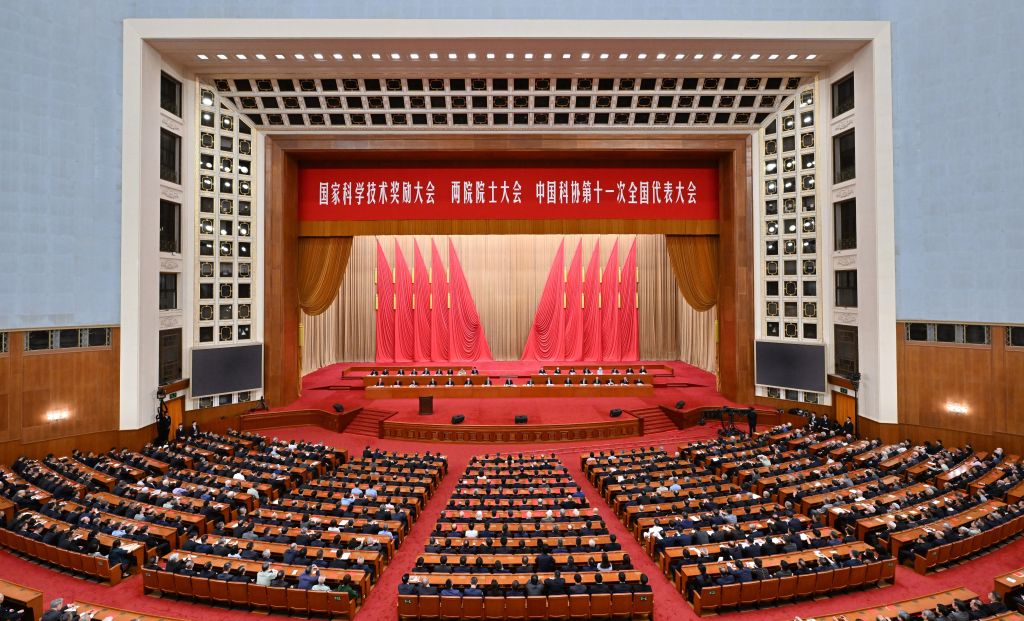
China has comprehensively bolstered its human rights protection capability, according to an evaluation report jointly released on Friday by the China Society for Human Rights Studies and 20 national human rights education and training bases in the country.

The report assesses the implementation of the National Human Rights Action Plan of China (2021-2025), which was issued in September 2021.

China has fully implemented the five-year action plan, accomplishing all 181 tasks outlined in it, the report says.

It notes that China has advanced human rights through development, with the country completing the building of a moderately prosperous society in all respects and eliminating absolute poverty.

China now has the world's largest education, social security and healthcare systems. Meanwhile, solid progress has been made toward common prosperity for all, laying a stronger material foundation for the continued advancement of human rights in China, the report says.

It also highlights that China has been developing whole-process people's democracy, strengthening legal protection for human rights, and improving the system of institutions through which the people run the country.

The report highlights China's advances in environmental protection. The Ecological and Environmental Code has beefed up the legal framework for environmental protection, while improved environmental quality has helped better safeguard people's environmental rights.

According to the report, China has strengthened protection of the rights and interests of all groups, ensuring that people from various sectors participate in economic and social development, exercise their democratic rights, and benefit from the outcomes of modernization on an equal basis. In addition, the rights of women, children, the elderly and people with disabilities have been better safeguarded.

China has actively promoted human rights education and awareness, fostering greater public understanding of and commitment to respecting and protecting human rights, the report notes.

China follows the principles of equality, mutual trust, inclusiveness, mutual learning, win-win cooperation and common development, and it fulfills its international human rights obligations with a strong sense of responsibility, the report states.

There is always room for progress in human rights protection, the report says, adding that China still faces imbalanced and insufficient development, while sci-tech development and industrial transformation are also giving rise to new demands for rights. The report expresses the expectation that China will respond to these challenges and further advance human rights during the 15th Five-Year Plan period (2026-2030).

The full report is available in both Chinese and English on the official website of the China Society for Human Rights Studies.

The action plan spanning the period 2021-2025 was the fourth national human rights plan released and implemented by the Chinese government.

Chinese FM slams Nagasaki museum plan to downplay the Nanjing Massacre by using term ‘incident’

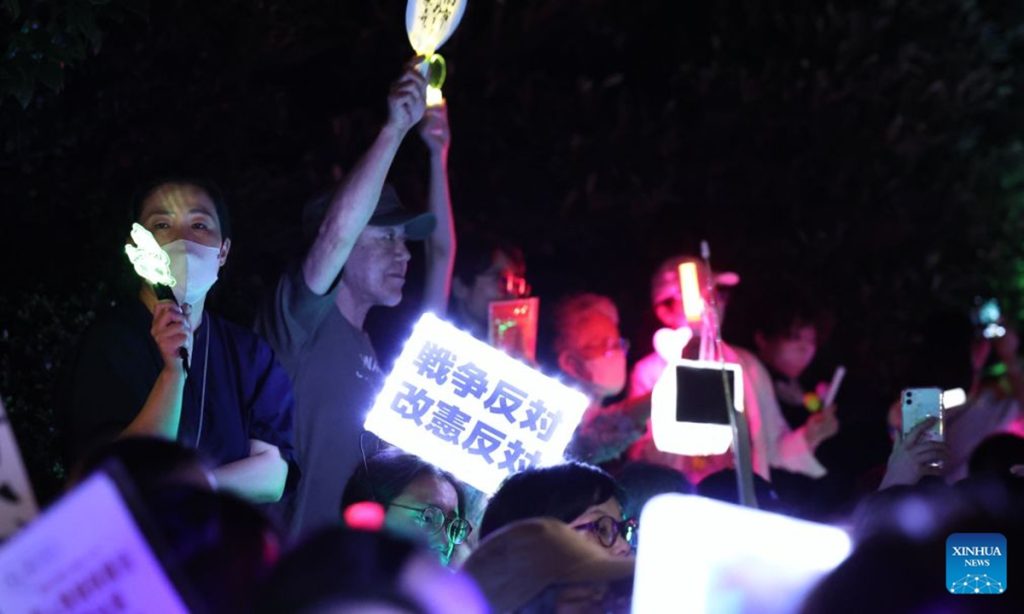
China on Friday urged Japan to deeply reflect on its war crimes and make a clean break with militarism, saying history must not be overturned after reports that the city of Nagasaki planned to alter references to the "Nanjing Massacre" as "Nanjing Incident" in the updating of display panels at the Nagasaki Atomic Bomb Museum.  

According to Japanese broadcaster Nagasaki Bunka Hoso (NCC), the proposal was presented by the Nagasaki city government to the museum's operating advisory council on Thursday as part of preparations for a renovation project scheduled to begin in September 2026. Under the revision plan, a timeline entry currently stating "Occupation of Nanjing, Nanjing Massacre occurs" would be changed to "Nanjing Incident." 

Responding to the reported revision at Friday's regular press conference, Foreign Ministry spokesperson Mao Ning said there is abundant evidence for the Nanjing Massacre—a horrendous war crime of Japanese militarists that shall never be erased. The Tokyo Trials ruled in black and white that the wartime atrocities of the Japanese army in Nanjing were a "massacre", not a mere "incident". 

The Judgement of the International Military Tribunal for the Far East dedicated a special chapter to detail "the Rape of Nanking". With numerous survivors' testimonies, records of third-country witnesses and Japanese army files, the judgement, in the form of the ruling of international justice, made it very clear that the Japanese army who invaded China committed the heinous crime of the Nanjing Massacre. The Massacre's chief perpetrator Iwane Matsui was sentenced to death by hanging as a class-A war criminal. 

The verdict of history must not be overturned. I noted that many survivors of the atomic bombs in Japan, Nagasaki citizen groups and people with insights have called for fully and accurately depicting the crimes and history of Japanese militarists as victimizers, according to the spokesperson. 

"We urge the Japanese side to deeply reflect on its war crimes and make a clean break with militarism," Mao said.

The Nanjing Massacre remains one of the most horrific chapters of Japan's invasion of China. According to the People's Daily, on December 13, 1937, invading Japanese troops occupied Nanjing. Over the following six weeks or more, more than 300,000 innocent civilians and disarmed Chinese soldiers were brutally killed. Approximately 20,000 cases of rape occurred in the city, and about one-third of the buildings were burned down, creating the shocking Nanjing Massacre that stunned the world. 

Terminology used to distort history

The manipulation of historical terminology is intended to beautify Japan's history of aggression, and reflects the lingering influence of militarism, Lü Chao, a research fellow at the Liaoning Academy of Social Sciences, told the Global Times on Friday. He noted that Japan has long distorted historical facts through the manipulation of terminology, for example by avoiding the term "surrender" in favor of "end of the war" or "defeat."

Such practices, Lü said, are part of a broader pattern among right-wing forces of denying the Nanjing Massacre and refusing to reflect on Japan's wartime aggression. He said they seriously hurt the feelings of victims and people in affected countries, and constitute a form of deliberate provocation.

It not only runs counter to abundant historical evidence and the international consensus, but also hampers Japan's ability to become a truly normal country and achieve genuine reconciliation with its neighbors, he added.

The planned move also recalls what scholars have described as the deliberate political use of the term "incident" in Japan's wartime narrative. Zhang Sheng, a professor at the School of History at Nanjing University, previously told the Global Times that newly uncovered archives belonging to William F. Webb, president of the International Military Tribunal for the Far East, showed Japan's use of the term was far from neutral.

During the Tokyo Trial, Akira Muto, a Class-A war criminal who bore significant responsibility for the Nanjing Massacre, acknowledged that Japanese authorities had consciously chosen to describe the war of aggression against China as an "incident" rather than a war in an attempt to deny its status as a formal war and avoid the constraints of international law. Webb explicitly pointed out this intention in his personal archives, Zhang said.

Such practices carry important implications for efforts today to shape historical discourse and ensure accurate historical representation, Zhang noted.

Deep divisions in Japanese society

While the proposed change in terminology on the Nanjing Massacre has drawn criticism from both within Japan and abroad, including from civic groups urging the city not to downplay the country's wartime atrocities, Japanese media coverage has largely focused on another aspect of the draft revision, highlighting that the new exhibition panels explicitly identify the "invasion" by the former Japanese army as the cause of the war. 

According to the Yomiuri Shimbun on Friday, the draft revision includes a description of the process through which the September 18th Incident developed into the Japanese war of aggression against China, stating that Japan "further advanced its invasion into North China." The report, citing a city official, explained that the reason for the wording was that, after examining junior high and high school textbooks, the term "invasion" was found to be the most frequently used expression, the Yomiuri Shimbun reported.

Although one committee member expressed the view that the term "invasion" may be inappropriate because its meaning can vary depending on standpoint and era, another member stated that the international community at the time recognized it as an act of invasion and therefore saw no issue, the Yomiuri Shimbun reported.

Experts noted that this reflects deep divisions within Japanese society over historical memory. While some voices within Japan's academic and civil circles call for confronting historical facts, the official mainstream stance remains ambiguous and at times dismissive of Japan's aggression against China. Narratives emphasizing Japan as a victim of the war tend to blur the distinction between aggressor and victim, thereby distorting public understanding of history, they stressed.

"Genuine peace education must be based on complete and honest historical facts. It should remember all victims, while also facing up to the responsibility for aggression. Only in this way can we avoid repeating cycles of distorted history rooted in selective memory," Lü added.

China’s Beinao No.1 BCI system completes 16 implantations, nationwide hospital trials planned for 2027: report

China's domestically developed semi-invasive brain-computer interface (BCI) system "Beinao No.1" has completed 16 implantations and is expected to be piloted in qualified Grade-A tertiary hospitals nationwide in 2027, while "Beinao No.2" is set to begin clinical validation in the second half of 2026, Zhao Jizong, a neurosurgery expert and academician of the Chinese Academy of Sciences, said at an academic exchange event, according to Beijing Daily on Tuesday.

Zhao said Beijing has built a full-chain research and development system for BCI. At present, "Beinao No.1" has 16 research centers and has completed 16 implantations. The longest implantation has lasted more than one year, and the system has operated safely for more than 55,000 hours, helping patients achieve mind-controlled robotic-arm operation and motor-function reconstruction.

According to the plan, "Beinao No.1" will complete 36 implantations in 2026, while clinical validation of "Beinao No.2" will be advanced in the second half of the year. By 2030, China is expected to complete BCI clinical guidelines and technical standards, forming a replicable Chinese solution, according to the Beijing Daily.

Zhao said the current core bottleneck lies in the shortage of specialized talent, as post-operative rehabilitation for patients lacks dedicated personnel with relevant expertise. Beijing has taken the lead in launching training for clinical BCI adaptation specialists to fill the talent gap and support the implementation of the technology.

A BCI creates a direct communication pathway between the brain and an external device. By recording and interpreting brain signals, BCI allows the brain to "talk" directly to machines, enabling patients to control assistive devices, according to the Xinhua News Agency.

As a frontier technology in human-computer interaction, BCI has been driving a new wave of technological and industrial transformation. China has introduced a series of policies to strengthen BCI research and industrial deployment. The BCI sector has been designated as a future industry in this year's government work report, per Xinhua.

Multiple regions update gaokao security rules, smart glasses banned on penalty of cheating

With the 2026 national college entrance examinations (gaokao) approaching, examination authorities across multiple Chinese provinces have tightened security checks at exam sites. The enhnced measures aim to ensure that cheating devices cannot be brought into examination venues, used during exams, or employed to transmit information. Authorities have placed special emphasis on detecting smart glasses and other high-tech cheating devices, which are prohibited from exam rooms and will be treated as cheating if discovered.

According to the Ministry of Education (MOE), a total of 12.9 million candidates have registered for this year's gaokao, which will begin on June 7. In an announcement on Wednesday, the ministry and relevant government agencies said they have directed local authorities to enhance exam administration and candidate services, with the goal of ensuring a safe and orderly examination process. 

Guangdong Province on Tuesday issued a notice, saying that gaokao candidates wearing or carrying glasses must remove them during entrance security checks under video surveillance and place them on a desk for inspection by proctors, The Paper reported.

Education examinations authorities in Shanghai, Fujian and other regions have also issued notices for candidates, emphasizing that those wearing framed glasses must cooperate with proctors for inspection. Exam staff have also received training to identify new types of smart glasses, with particular attention paid to the size, shape and other characteristics of candidates' eyewear, according to The Paper. 

Under China's  measures for handling violations of national education examinations, any candidate found carrying a device capable of transmitting or receiving information is considered to have cheated, resulting in the cancellation of their scores for all subjects and stages of the examinations they have registered. 

The MOE on Tuesday warned that bringing mobile phones, smartwatches, smart bands, smart glasses, or other devices into gaokao exam rooms constitutes cheating, regardless of whether the devices are actually used. 

North China's Inner Mongolia Autonomous Region has adopted a zero-tolerance policy toward smart glasses. The local education examination authority has advised gaokao candidates who rely on smart eyewear in daily life or for study to prepare suitable conventional prescription glasses before the exams, warning that smart glasses will not be permitted in exam venues and any resulting impact on exam performance will be the candidate's own responsibility, The Paper reported. 

An official from the Examinations and Admissions Authority of Guizhou Province told the Global Times on Wednesday that the requirement permitting only ordinary optical glasses at examination sites comes directly from the MOE. Guizhou is implementing the policy through a combination of smart security gates and manual inspections in line with unified national regulations and requirements.

Recently, the Henan provincial education examinations authority issued pre-exam guidance and introduced a "silent entry" system for the gaokao, requiring candidates to pass smart security gates and metal detector checks without triggering alarms before entering exam zones and test rooms, Henan Fabu, the official WeChat account of the local government said on Wednesday.  

Shenzhou-22 return capsule touches down, astronauts all sound

The return capsule of the Shenzhou-22 spaceship, carrying the Shenzhou-21 astronauts Zhang Lu, Wu Fei and Zhang Hongzhang, touched down at the Dongfeng landing site in north China's Inner Mongolia Autonomous Region on Friday.

The three astronauts are all in good health condition, the China Manned Space Agency said, noting that the Shenzhou-21 spaceflight mission is a complete success.

PLA Southern Theater Command holds combat readiness patrols around Huangyan Dao

The PLA Southern Theater Command conducted combat readiness patrols in the territorial waters and airspace of China's Huangyan Dao, as well as in the surrounding sea and air areas on Sunday, the command said on its WeChat account. Huangyan Dao is China's inherent territory. Since May, PLA troops under the theater command have strengthened patrols and vigilance in the waters and airspace surrounding Huangyan Dao, effectively responding to various infringement and provocation activities, resolutely safeguarding China's national sovereignty and security, and firmly maintaining peace and stability in the South China Sea region.

Motionless PLA soldier before Air Force One embodies countless Chinese military members: MND spokesperson

Regarding the recent widespread circulation on Chinese and international social media of a video showing a Chinese soldier remaining completely motionless as US President Donald Trump’s aircraft, Air Force One, roared past upon arriving in Beijing, earning praise from many netizens, Senior Colonel Jiang Bin, spokesperson for China’s Ministry of National Defense, said on Thursday that the unmoving soldier represents the countless members of the Chinese military and is a vivid embodiment of the confidence, composure, and resolve of a major power’s armed forces. 

When in motion, Chinese People’s Liberation Army (PLA) soldiers strike like thunder; when still, they stand firm as a mountain. At all times, the Chinese PLA remains a heroic force fully trusted by the Party and the people, Jiang said.

Over 10 unaccounted for after heavy rain lashes SW China's Chongqing

More than 10 people were unaccounted for after heavy rain battered Yongchuan District in southwest China's Chongqing Municipality starting Saturday night, said local authorities.

According to the meteorological department, torrential rains struck parts of central and western Chongqing between 11 p.m. Saturday and 12 a.m. Sunday. Guankouwan and Hanjiagou Village in the district logged 296.7 mm and 256.9 mm of extraordinary rainstorms, respectively.

Given the short interval between the current and previous rounds of heavy rainfall, the continuous precipitation poses a higher risk of inducing geological disasters, including landslides, collapses, and debris flows, said the meteorological authorities.

Chongqing has activated a Level-III emergency response for geological disasters in Yongchuan District at 7 a.m. Sunday. The local relevant departments are carrying out emergency rescue work.

Door to dialogue should not be shut again once opened: Chinese FM on US-Iran potential ceasefire deal

When asked whether China has played a diplomatic role in the process leading to the potential agreement between the US and Iran to stop the war in the Middle East, and what China expects from such an outcome, Chinese Foreign Ministry spokesperson Mao Ning said on Monday that China's position on the Iranian situation is very clear. This is a conflict that should never have happened and there is no need for it to continue, Mao said, adding that an earlier solution serves the interests of both the US and Iran, as well as regional countries and the world at large.

Mao said the recent potential ceasefire between the US and Iran and their exploration of a negotiated settlement have been welcomed by regional countries and the international community.

Mao said China has always believed that dialogue and negotiation is the right path, and that using force leads nowhere. Since the door to dialogue has been opened, it should not be shut again. It is important to sustain the momentum of de-escalation, stay committed to the direction of political resolution, and seek a solution through dialogue and consultation that accommodates the concerns of all parties, Mao added.

It is also imperative to reopen shipping lanes at an early date in response to the calls of the international community, jointly safeguard the stability and smooth operation of global industrial and supply chains, reach a comprehensive and lasting ceasefire as soon as possible, and facilitate an early return to peace and stability in the Middle East and the Gulf region, the spokesperson said.

Mao said since the outbreak of the conflict, China has been working relentlessly to end the fighting and advance peace. China will continue to work with the international community to provide greater support for peace talks and play a constructive role in ultimately achieving enduring peace in the Middle East, she added.

SK President Lee denounces fake news on Chinese apartment buyers; Chinese envoy expresses appreciation, stressing ‘freedom of speech is not freedom to spread rumors’

Chinese Ambassador to South Korea Dai Bing on Friday reposted South Korean President Lee Jae-myung's post on X, expressing appreciation for Lee's remarks denouncing a fake report about Chinese nationals buying apartments in droves in Seoul. The ambassador also urged people in South Korea to reject false information and inflammatory rhetoric to help strengthen mutual trust between the Chinese and South Korean people.

South Korean President Lee Jae-myung denounced a media report claiming that Chinese nationals had made a surprise purchase of 944 apartments in Seoul's Gangnam District as "clearly false," calling for strict accountability, according to South Korean media.

In a post on his X account, Lee wrote that Seoul Economic TV aired a fake video report titled "Chinese Nationals Suddenly Buy 944 Apartments in Gangnam, Seoul. Snapping Up Multi-Homeowners' Listings," which has now been deleted.

"Upon verification, it turns out to be an outright false report, with only 5 purchases by Chinese nationals of collective buildings in Gangnam between January and April. It's suspected to be a deliberately fabricated fake news article intended to be used as material for anti-China agitation. Even a media outlet, and an economic one at that - how on earth does stirring up Sinophobia help the country and its people? They should be held strictly accountable, don't you think?" read the post.

On Friday, Chinese Ambassador to South Korea Dai Bing reposted Lee's post on X, writing in both Korean and Chinese that he highly appreciates Lee's remarks and hopes all sectors in South Korea will discern right from wrong, "consciously resisting the practices of fake information, discrimination, and incitement, so as to enhance the mutual objective understanding, trust, and friendly sentiments between the Chinese and Korean people."

Ambassador Dai later wrote in Chinese and Korean on X that, for some time, a small number of South Korean media outlets have fabricated and spread fake news about China to attract attention or serve ulterior political motives. He said such outlets have magnified individual cases into a broader narrative, disguised prejudice as fact, deliberately tarnished the image of China and Chinese nationals in South Korea, and interfered with the improvement and development of China-South Korea relations.

"Some media have publicly apologized under pressure, but others remain keen on publishing inaccurate reports and commentaries on China-related issues," Dai wrote. "Freedom of speech is not freedom to spread rumors. We hope the relevant media will adhere to journalistic ethics, conduct China-related reporting based on facts, do more things that are conducive to enhancing mutual understanding, trust, and friendly sentiments between the Chinese and Korean people, and stop fooling their readers," the ambassador wrote.

On Thursday evening, Seoul Economic TV issued an apology on its website over its previous report on Chinese apartment buyers, saying it "deeply apologize[s] to viewers who felt discomfort and concern."

"The content was produced to report on foreign buying trends in the real estate market, but its title and wording were framed in a way that could create a negative perception of a specific nationality. We sincerely apologize for causing offense and confusion to many people," read the statement.

The outlet claimed it had no intention of inciting hatred toward or disparaging any particular country or people, but acknowledged that the production team had shown poor judgment by being overly focused on views and attention, and that its internal review system had failed to adequately screen the content.

Compared with his predecessors, Lee has taken a more forceful and frequent stance against anti-China rhetoric in South Korea. This contrast also underscores how anti-China sentiment in the country surged to an unprecedented level under the previous Yoon Suk-yeol administration, far exceeding that of previous periods and inflicting serious damage on the development of China-South Korea relations, Zhan Debin, director and professor of the Center for Korean Peninsula Studies at the Shanghai University of International Business and Economics, told the Global Times on Friday.

Lee has placed importance on South Korea's relations with China. Since taking office, he has stepped up efforts to combat disinformation, pushing back against false China-related reports and anti-China rhetoric by some conservative media outlets, which are driven by ulterior motives. Anti-China words and deeds do nothing to benefit either country or bilateral relations, while claims such as "China's interference in South Korean elections" are baseless and absurd, said Zhan.

According to the Chosun Daily, a media outlet previously reported that Chinese nationals had concentrated their purchases on properties sold by multiple-home owners in Gangnam, Songpa, and Yongsan just before the reinstatement of the heavy transfer tax on multiple-home owners.

The Ministry of Land, Infrastructure and Transport later refuted the report, stating it was untrue. According to the ministry, among 592 foreign buyers who applied for ownership transfer registration for collective buildings in Seoul from January to April this year, 218 were Chinese nationals, and only five Chinese nationals purchased collective buildings in Gangnam District, per Chosun Daily.

South Korean media The Financial News also reported on Thursday that the previous day, during a State Council of South Korea meeting that also served as an Emergency Economic Review Meeting, Lee had already ordered relevant ministries to respond firmly to similar reports on real estate policy, calling them "clear manipulation and distortion."

At the time, Lee criticized the article claiming that Chinese nationals had bought up units dumped by multi-home owners, asking, "Why write such a false article?" and saying it was done intentionally to fuel anti-Chinese sentiment, according to the report.

Also, in September 2025, Lee also condemned recent rallies and demonstrations targeting tourists from China, describing them as "not freedom of expression, but disturbance," Yonhap News Agency reported.

Presiding over a Cabinet meeting at the presidential office in Yongsan, Lee referred to a series of reported protests held in Seoul's Myeong-dong area, where groups insulted foreign visitors. "If someone cursed me as an ugly Korean and pointed fingers at me, I would never visit (that tourist spot) again. They were doing such things in Myeong-dong," Lee said, criticizing the behavior as deliberately aimed at worsening bilateral ties, Yonhap reported.

Zhan noted that Lee's public stance has given support to those in South Korea who favor an objective understanding of China and oppose fake news, strengthening their confidence to speak out. It may also help push government agencies to pursue accountability in accordance with the law and curb attempts by some media outlets to spread China-related rumors under the disguise of so-called "freedom of speech."

Some South Korean media outlets, including Yonhap News and South Korea's Korea Economic Daily, also covered the developments. For example, a Chosun Daily report on Friday highlighted Ambassador Dai Bing's expression of high appreciation for President Lee's criticism of fake news that fuels anti-China sentiment, while also reviewing the issue in detail. A JoongAng Ilbo report gave detailed coverage of Ambassador Dai's related posts on Friday.

Some South Korean netizens left comments under related news reports, with many calling for punishment for those who spread fake news. Netizen @Guijeong-y9t wrote, "Media outlets that publish such false reports are dividing public opinion. They must be held accountable and shut down." Another netizen, @Bae Young-hee-d1i, wrote, "Fake news should be punished severely. Far-right channels and media outlets that cross the line with fake news should face strict punishment."

While netizen @hyeshin_7 wrote that "fake news is a very serious problem. And for an economic media outlet to spread fake news that incites anti-China sentiment is even more outrageous. Even though it has now been deleted, it still makes me angry. Still, it is a great relief that the president is able to cross-check and monitor such issues in this way."

Zhan also said greater efforts are needed to oppose fake news aimed at fueling anti-China sentiment. South Korea needs to break the toxic atmosphere in which any objective voice on China is easily labeled "pro-China," so that scholars, media professionals and others can speak more frankly, help foster a healthier public opinion environment and contribute to the development of bilateral ties, he said.