China treats over 10 million hectares of desertified land in past five years, aims to restore nearly 6.7 million hectares by 2030: authority

On the occasion of the 32nd World Day to Combat Desertification and Drought, the Global Times learned from the National Forestry and Grassland Administration on Wednesday that the country has cumulatively treated 152 million mu (about 10.13 million hectares) of desertified land and 29.32 million mu (about 1.95 million hectares) of rocky desertification-affected land over the 14th Five-Year Plan period (2021-25), and the overall level of desertification has continued to decline while ecological conditions in desert regions have steadily improved.

In recent years, China has made the battle against desertification a key priority by advancing the Three-North Shelterbelt Forest Program (TSFP). It is an afforestation program launched in 1978 to tackle desertification in northwestern, northern and northeastern parts of the country.

Since the launch of the TSFP, the central government has allocated a total of 88.9 billion yuan ($12.4 billion) in funding, supported the implementation of 544 major projects, and completed ecological restoration and construction tasks covering 244 million mu (about 16.3 million hectares), according to the administration. 

In 1978, China launched this landmark ecological project, which has become the world's largest afforestation endeavor, according to the Xinhua News Agency. 

China has also strengthened its policy framework for desertification control. Authorities have issued a national desertification prevention and control plan and a photovoltaic desertification-control plan for the Three-North desert and Gobi regions, revised the overall plan for the TSFP, introduced management measures for the program's implementation, and released 10 industry standards, including technical specifications for desertification control. 

Pilot programs for ecological compensation in desert ecosystems have also been launched, further improving the country's policy and regulatory system for combating desertification.

Meanwhile, China has accelerated the construction of desert ecosystem observation stations and ground-based sandstorm monitoring stations, laying the foundation for a nationwide desert ecological monitoring network.

The country has also pursued innovative desertification-control model. Across the Three-North region, local authorities have steadily promoted the "photovoltaic-plus-desertification-control" model, spurring the treatment of 5.3 million mu of land. Efforts to combat desertification through transportation infrastructure have also been expanded, with more than 3,500 kilometers of highways built across sandy areas, contributing to the rehabilitation of 6.8 million mu of degraded land.

At the same time, China has strengthened the role of science and technology in desertification control. Authorities have divided the Three-North region into 136 ecological management zones, developed a number of new drought-resistant, cold-resistant and saline-alkali-tolerant tree and grass varieties, and raised the adoption rate of improved species to more than 75 percent. New equipment and technologies have increased desertification-control efficiency by more than threefold, according to official data.

To date, China's desertified land area has continued to shrink. The trend has reversed from an average annual expansion of 5.15 million mu at the end of the 20th century to an average annual reduction of 10 million mu today, the administration said. 

The total volume of wind-induced soil erosion across China's eight major deserts and four major sandy lands has declined by approximately 40 percent compared with 2000. The average vegetation coverage in desert regions has reached 21.17 percent, up 2.84 percentage points from a decade ago, it noted. 

Within the TSFP area, forest and grassland coverage has risen to 40.76 percent, while 67.82 percent of treatable desertified land has been brought under effective management and restoration, the administration said. 

As a party to the United Nations Convention to Combat Desertification, China has actively fulfilled its obligations under the Convention with guidance from the country's national coordination group for combating desertification, while continuously deepening international cooperation in desertification prevention and control.

Going forward, China will focus on achieving the goals set out in relevant plans, adhere to differentiated conservation and region-specific governance approaches, and promote comprehensive treatment of desertified land in key areas. The country will also appropriately develop green industries in desert regions.

By 2030, China aims to complete the restoration and treatment of nearly 100 million mu (about 6.7 million hectares) of desertified land nationwide, the administration said. 

Ecological conditions in key regions - including the country's four major sandy lands, desert oasis areas, the Qinghai-Tibet Plateau, the Yellow River Basin, and areas surrounding the Beijing-Tianjin-Hebei Region - are expected to improve significantly, laying a solid foundation for the country's northern ecological security barrier.

Belgian PM’s latest remarks on EU ‘scared’ of China reveal Europe’s arrogance and lack of objective approach: Chinese expert

Belgian prime minister Bart De Wever on Tuesday local time has called on European leaders to develop a coherent strategy to counter what he described as "China's drive for economic domination," while claiming that EU leaders are running scared of China, media reported. A Chinese expert said the remarks reflect an arrogant mindset that some European politicians push for a unified tough EU strategy toward China, yet refusing to face its own problems and adapt to new reality. 

Speaking at an event organized by two pro-EU think tanks in Brussels on Tuesday, De Wever said he was disappointed to hear that Emmanuel Macron, the French president, has reportedly launched a fresh gambit to include China in coordination efforts ahead of a G7 meeting next week, according to a report by Euractiv.

The G7 leaders' summit will run from June 15 to 17 in France. Emmanuel Macron, whose country holds the Presidency of the G7 for 2026, is reportedly set to host a video call between the group and China to address global trade imbalances.

The report by Euractiv said that EU leaders will meet in Brussels on June 18 and 19, a day after the G7, for a summit where China is expected to be central to the agenda - albeit not officially.

"They have called it geo-economic imbalances, just not to name China by name, because we are so afraid that we don't even dare to do that," De Wever claimed, before immediately asking if any journalists were in the room, per the report.

"That's all very well, but we do take a lot of initiatives. It is time to adopt a strategy," De Wever claimed at the event, Belga News Agency reported.

Jiang Feng, a researcher at Shanghai International Studies University and president of the Shanghai Regional Studies Association, told the Global Times that Belgium acts inconsistently and self-contradictorily by opposing trade barriers while pushing for measures against China, which fully shows its lack of strategic composure. He noted that Europe's real troubles amid current challenges lie not with China, but in its own development, as it is deficient in creativity, vitality, cohesion, and credibility.

"For a long time, Europe has been accustomed to a world in which other countries develop in accordance with its own normative framework. However, with the continued rise of emerging powers, the global order has undergone profound changes," Jiang said. Europe should therefore fundamentally recalibrate its mindset and adapt it to the evolving international landscape, he added.

Already in March, De Wever called on the EU to adopt a firmer approach toward what he described as unfair Chinese competition. In a letter to European Commission (EC) President Ursula von der Leyen, he warned that Beijing's economic policies are eroding Europe's industrial base.

The EU currently resembles a fortress on the defensive. When confronted with any country possessing promising prospects for development, it tends to retreat into a defensive posture and externalize responsibility, Jiang said. Such a response is unquestionably an inferior course of action rather than a choice made with an eye to the future.

The report by Belga News Agency on Tuesday noted that despite the threat to Europe's industry, the prime minister warned against responding with a subsidy race or trade barriers. Europe would lose on the former, he argued, while the latter would drive up costs for both businesses and consumers.

De Wever's remarks came amid recent mixed signals from the EU over how to handle relations with China. 

However, since late last year, leaders from multiple European countries have visited China in succession, underscoring a notable trend among European leaders to "look East," reaching out to strengthen cooperation including in trade sector, observers noted. 

When asked to comment on a proposal advancing by the EU that would force companies to avoid over-dependency in their supply chains, which it comes as the bloc is looking to reset its trade relationship with China, Chinese Foreign Ministry spokesperson said on Monday that "as an old Chinese saying goes, do not do unto others what you would not have others do unto you. China-EU trade is not a zero-sum game."

The spokesperson Lin Jian added that between China and Europe, the industrial and supply chains are highly integrated and mutually dependent. This is shaped by economic globalization and market force and has served both Chinese and European businesses well. European companies make their choice based on cost, technology and efficiency. How is that "over-dependence"? Isn't "diversification" in this case just another version of protectionism?

A more constructive course of action would be to respond to China's development by engaging in in-depth strategic dialogue with China. Competitive pressures are an objective reality, even without China, similar pressures would arise from other countries, and this fact must be recognized, Jiang noted.

The expert said that the EU should therefore adopt an objective approach and engage China in consultations at the strategic level, with a view to achieving a more balanced bilateral economic and trade relationship. 

Chinese football fans, restaurants and bars get ready for World Cup; FIFA senior official commends Chinese audience ‘central to the global success’ of tournament

By 2 am, Sanlitun, one of Beijing's busiest nightlife districts, had largely quieted down. But inside Cafe Groove, owner Sui Jinpeng and his staff were still moving through the restaurant, testing upgraded audio equipment and large screens ahead of the World Cup's opening match early Friday morning.

Sui said he expects this year's tournament to draw fans out of their homes and back into bars, cafés and restaurants, where the experience of watching football becomes something collective. "People can drink, talk and cheer together," he told the Global Times. "This kind of atmosphere is actually quite rare."

The first match, between Mexico and South Africa, is scheduled to kick off at 3 am Friday Beijing time at Mexico City's Azteca Stadium. Although China's men's national team has been absent from the World Cup since 2002, the tournament remains a major event for Chinese fans, whose enthusiasm has endured despite late-night broadcasts and their team's long absence from the field.

This year's World Cup had a shorter commercial warm-up in China, with CCTV finalizing broadcast rights only about a month before the opening match. Analysts said the late deal left advertisers and merchandisers with less time to build momentum, helping explain the relatively subdued atmosphere so far.

Time zones are also working against the party. As the tournament is being held in the US, Canada and Mexico, many matches will air in China in the early morning or late morning, with some kicking off between midnight and 4 am — hardly prime time for bars and barbecue joints built around dinner crowds.

But restaurants are not sitting out the tournament. The Global Times found during recent visits that many venues have adjusted their opening hours and stocked up on food and drinks, betting that even a 3 am kick-off can still draw a crowd when the World Cup is on.

Romy Gai, FIFA's Chief Business Officer, told the Global Times on Thursday via email that China has one of the largest viewership bases in the world and the Chinese audience is central to the global success of the FIFA World Cup.

Aside from various support by Chinese sponsors to the tournament's multiple aspects including AI and video review, Gai said China remains deeply connected to the FIFA World Cup and plays an important role in delivering the tournament to a truly global audience.

"Brands such as Lenovo, Mengniu and Hisense bring innovation, scale and local relevance, helping us enhance fan experiences — from cutting-edge technology in areas like AI and video review to initiatives that make our tournaments more inclusive and accessible through sensory rooms in the stadiums," Gai added.

Preparation outside the pitch

Sui, from Northeast China, has often organized offline viewing events since his restaurant opened last October. He expects overall revenue during the World Cup to increase by roughly 60 percent. He predicted that for high-profile matches involving teams such as Argentina, Brazil, and England, peak periods could even reach two to three times the normal level. 

Zhang, a 50-year-old waitress at a restaurant on Beijing's Guijie dining street, told the Global Times that to prepare for this year's games, her workplace has doubled its inventory of crawfish and beer.

In Ningbo, East China's Zhejiang Province, the Laowaitan pedestrian street has launched a 39-day consumption campaign. The operator told the Global Times that a 4-meter-wide high-definition screen has been installed to broadcast matches throughout the tournament. In addition to beer and snacks, the street will also feature a food market with dishes from previous World Cup host countries.

In Shanghai's Laowaijie leisure street, a parking lot has been converted into a new viewing plaza capable of holding around 300 people. According to marketing director Qin Qijing, around 70 percent of customers are foreigners, and foot traffic is expected to rise by 30 to 50 percent during the tournament.

As of Wednesday noon, data shows that on Thursday - the opening day of the 2026 World Cup - hotel audiovisual room bookings on the Tongcheng Travel platform increased by 47 percent year-on-year, according to a statement sent to the Global Times on Thursday. 

During the first weekend of the event, from June 12 to 13, audiovisual rooms recorded their highest occupancy levels, with demand rising by more than 90 percent compared with the previous weekend, far outpacing other themed accommodation products on the platform over the same period.

The waitress surnamed Zhang said based on her experience from the previous two editions of World Cups, "it [World Cup] does bring customer traffic. When there are more people, there is naturally more consumption," she said, noting that if football games started earlier, there would be more customers this year.

Unlike a one-day surge in traffic for events like the UEFA Champions League finals, the World Cup is an operational test that lasts nearly 40 days, Sui said, adding that his restaurant's operating rhythm is relatively fixed: a busy period in the evening, another rush after midnight, and some breathing time during the day. "But during the World Cup, that pattern is likely to be disrupted." 

Sui noted that about 70 percent of matches will fall outside traditional business hours, leading his restaurant to extend operations to nearly 24-hour service. Sui said that even for matches involving less popular teams, his restaurant still welcomes customers.

Fans' passion and choices

Beyond commercial venues, football fans themselves remain central to the World Cup experience. In a sports brand store in Sanlitun, Yisimayili, a 20-year-old student from Northwest China's Xinjiang Uygur Autonomous Region now studying in Beijing and a fan of the Portugal national team, said that interest in and discussion around this year's World Cup have not declined but have instead increased. "More people around me are talking about the upcoming matches," he said.

In the past, he used to watch matches in his dormitory or at nearby bars and restaurants with friends. "Watching and discussing games together with my friends is part of the enjoyment of the World Cup," he said.

Crystal Li has been a football fan for more than two decades. Although some matches will kick off in the early hours of the morning, that does little to dampen her enthusiasm. "I'll stay up to watch, then survive the next day on Americanos," she said with a laugh. She has even been arranging her work schedule in advance to make room for the tournament.

Liu, a football fan from East China's Zhejiang Province, said,"I think the last tournament was very exciting despite the pandemic. This year, with the expansion from 36 to 48 teams, some matches may be less thrilling, so my expectations are not as high," he said.

Even so, Liu believes that attention to this World Cup remains, and he has created a new social media account to post video clips from past tournaments, hoping to attract more like-minded fans.

China's 'World Cup economy'

China's engagement with the World Cup runs far deeper than fan enthusiasm alone — it extends into broadcasting rights, e-commerce, and a vast merchandise supply chain.

CCTV reported on May 15 that the China Media Group, its parent company, reached an agreement with FIFA to broadcast the 2026 World Cup in China, ending uncertainty and ensuring Chinese audiences can watch the tournament.

Aside from the state broadcaster, social media platform Xiaohongshu has also acquired the broadcasting rights of the 2026 World Cup. Liu Dingding, a veteran industry analyst, told the Global Times that its participation aims to expand beyond its predominantly female user base by leveraging the World Cup's massive male audience, underscoring a unique cooperation pattern.

The World Cup is also deeply integrated with the Chinese market through live broadcasting, e-commerce consumption, and merchandise supply chains, all closely tied to China's manufacturing and consumer ecosystem, said Liu.

World Cup-themed merchandise stores have begun popping up in shopping malls across Beijing. At Hopson One, a shop assistant said products linked to popular contenders such as Argentina, France and Portugal have been selling especially well. "Portugal fan and player jerseys sold out earlier, and we are restocking them now. France jerseys also just sold out and had to be urgently replenished," the assistant said.

Li Mufan, store manager of the World Cup IP store at Beijing's Chaoyang Joy City, said that compared with professional football products like jerseys, dolls and plush keychains are more popular with female consumers and family shoppers, demonstrating that World Cup IP is extending to non-traditional fan groups in China.

Zhejiang Beilei Textile Co obtained official licensing rights for World Cup merchandise last year. Yang Yating, a company representative, told the Global Times that this marked a major breakthrough. Best-selling products include Argentina's "goat" plush toy, England lion dolls, and Portugal-themed neck pillows. These products are packed in Yiwu and shipped via Ningbo Port to global markets, Yang said.

According to FIFA, total revenue over the four-year cycle for this World Cup is expected to reach $13 billion, representing an increase of more than 70 percent compared with the Qatar World Cup cycle, according to a report by the Securities Times. 

Experts said the 2026 World Cup will also spur related consumer spending in China, as the country's sports economy has been thriving in recent years with multiple grassroots football leagues springing up across the country.

China strengthens human rights protection on all fronts

China has comprehensively bolstered its human rights protection capability, according to an evaluation report jointly released on Friday by the China Society for Human Rights Studies and 20 national human rights education and training bases in the country.

The report assesses the implementation of the National Human Rights Action Plan of China (2021-2025), which was issued in September 2021.

China has fully implemented the five-year action plan, accomplishing all 181 tasks outlined in it, the report says.

It notes that China has advanced human rights through development, with the country completing the building of a moderately prosperous society in all respects and eliminating absolute poverty.

China now has the world's largest education, social security and healthcare systems. Meanwhile, solid progress has been made toward common prosperity for all, laying a stronger material foundation for the continued advancement of human rights in China, the report says.

It also highlights that China has been developing whole-process people's democracy, strengthening legal protection for human rights, and improving the system of institutions through which the people run the country.

The report highlights China's advances in environmental protection. The Ecological and Environmental Code has beefed up the legal framework for environmental protection, while improved environmental quality has helped better safeguard people's environmental rights.

According to the report, China has strengthened protection of the rights and interests of all groups, ensuring that people from various sectors participate in economic and social development, exercise their democratic rights, and benefit from the outcomes of modernization on an equal basis. In addition, the rights of women, children, the elderly and people with disabilities have been better safeguarded.

China has actively promoted human rights education and awareness, fostering greater public understanding of and commitment to respecting and protecting human rights, the report notes.

China follows the principles of equality, mutual trust, inclusiveness, mutual learning, win-win cooperation and common development, and it fulfills its international human rights obligations with a strong sense of responsibility, the report states.

There is always room for progress in human rights protection, the report says, adding that China still faces imbalanced and insufficient development, while sci-tech development and industrial transformation are also giving rise to new demands for rights. The report expresses the expectation that China will respond to these challenges and further advance human rights during the 15th Five-Year Plan period (2026-2030).

The full report is available in both Chinese and English on the official website of the China Society for Human Rights Studies.

The action plan spanning the period 2021-2025 was the fourth national human rights plan released and implemented by the Chinese government.

Chinese FM slams Nagasaki museum plan to downplay the Nanjing Massacre by using term ‘incident’

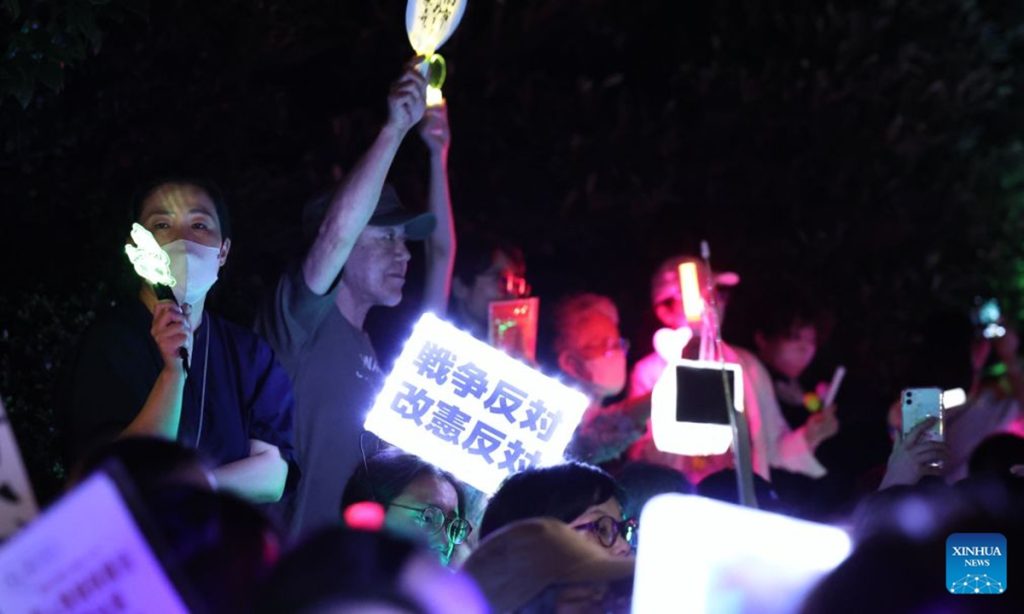
China on Friday urged Japan to deeply reflect on its war crimes and make a clean break with militarism, saying history must not be overturned after reports that the city of Nagasaki planned to alter references to the "Nanjing Massacre" as "Nanjing Incident" in the updating of display panels at the Nagasaki Atomic Bomb Museum.  

According to Japanese broadcaster Nagasaki Bunka Hoso (NCC), the proposal was presented by the Nagasaki city government to the museum's operating advisory council on Thursday as part of preparations for a renovation project scheduled to begin in September 2026. Under the revision plan, a timeline entry currently stating "Occupation of Nanjing, Nanjing Massacre occurs" would be changed to "Nanjing Incident." 

Responding to the reported revision at Friday's regular press conference, Foreign Ministry spokesperson Mao Ning said there is abundant evidence for the Nanjing Massacre—a horrendous war crime of Japanese militarists that shall never be erased. The Tokyo Trials ruled in black and white that the wartime atrocities of the Japanese army in Nanjing were a "massacre", not a mere "incident". 

The Judgement of the International Military Tribunal for the Far East dedicated a special chapter to detail "the Rape of Nanking". With numerous survivors' testimonies, records of third-country witnesses and Japanese army files, the judgement, in the form of the ruling of international justice, made it very clear that the Japanese army who invaded China committed the heinous crime of the Nanjing Massacre. The Massacre's chief perpetrator Iwane Matsui was sentenced to death by hanging as a class-A war criminal. 

The verdict of history must not be overturned. I noted that many survivors of the atomic bombs in Japan, Nagasaki citizen groups and people with insights have called for fully and accurately depicting the crimes and history of Japanese militarists as victimizers, according to the spokesperson. 

"We urge the Japanese side to deeply reflect on its war crimes and make a clean break with militarism," Mao said.

The Nanjing Massacre remains one of the most horrific chapters of Japan's invasion of China. According to the People's Daily, on December 13, 1937, invading Japanese troops occupied Nanjing. Over the following six weeks or more, more than 300,000 innocent civilians and disarmed Chinese soldiers were brutally killed. Approximately 20,000 cases of rape occurred in the city, and about one-third of the buildings were burned down, creating the shocking Nanjing Massacre that stunned the world. 

Terminology used to distort history

The manipulation of historical terminology is intended to beautify Japan's history of aggression, and reflects the lingering influence of militarism, Lü Chao, a research fellow at the Liaoning Academy of Social Sciences, told the Global Times on Friday. He noted that Japan has long distorted historical facts through the manipulation of terminology, for example by avoiding the term "surrender" in favor of "end of the war" or "defeat."

Such practices, Lü said, are part of a broader pattern among right-wing forces of denying the Nanjing Massacre and refusing to reflect on Japan's wartime aggression. He said they seriously hurt the feelings of victims and people in affected countries, and constitute a form of deliberate provocation.

It not only runs counter to abundant historical evidence and the international consensus, but also hampers Japan's ability to become a truly normal country and achieve genuine reconciliation with its neighbors, he added.

The planned move also recalls what scholars have described as the deliberate political use of the term "incident" in Japan's wartime narrative. Zhang Sheng, a professor at the School of History at Nanjing University, previously told the Global Times that newly uncovered archives belonging to William F. Webb, president of the International Military Tribunal for the Far East, showed Japan's use of the term was far from neutral.

During the Tokyo Trial, Akira Muto, a Class-A war criminal who bore significant responsibility for the Nanjing Massacre, acknowledged that Japanese authorities had consciously chosen to describe the war of aggression against China as an "incident" rather than a war in an attempt to deny its status as a formal war and avoid the constraints of international law. Webb explicitly pointed out this intention in his personal archives, Zhang said.

Such practices carry important implications for efforts today to shape historical discourse and ensure accurate historical representation, Zhang noted.

Deep divisions in Japanese society

While the proposed change in terminology on the Nanjing Massacre has drawn criticism from both within Japan and abroad, including from civic groups urging the city not to downplay the country's wartime atrocities, Japanese media coverage has largely focused on another aspect of the draft revision, highlighting that the new exhibition panels explicitly identify the "invasion" by the former Japanese army as the cause of the war. 

According to the Yomiuri Shimbun on Friday, the draft revision includes a description of the process through which the September 18th Incident developed into the Japanese war of aggression against China, stating that Japan "further advanced its invasion into North China." The report, citing a city official, explained that the reason for the wording was that, after examining junior high and high school textbooks, the term "invasion" was found to be the most frequently used expression, the Yomiuri Shimbun reported.

Although one committee member expressed the view that the term "invasion" may be inappropriate because its meaning can vary depending on standpoint and era, another member stated that the international community at the time recognized it as an act of invasion and therefore saw no issue, the Yomiuri Shimbun reported.

Experts noted that this reflects deep divisions within Japanese society over historical memory. While some voices within Japan's academic and civil circles call for confronting historical facts, the official mainstream stance remains ambiguous and at times dismissive of Japan's aggression against China. Narratives emphasizing Japan as a victim of the war tend to blur the distinction between aggressor and victim, thereby distorting public understanding of history, they stressed.

"Genuine peace education must be based on complete and honest historical facts. It should remember all victims, while also facing up to the responsibility for aggression. Only in this way can we avoid repeating cycles of distorted history rooted in selective memory," Lü added.

China’s Beinao No.1 BCI system completes 16 implantations, nationwide hospital trials planned for 2027: report

China's domestically developed semi-invasive brain-computer interface (BCI) system "Beinao No.1" has completed 16 implantations and is expected to be piloted in qualified Grade-A tertiary hospitals nationwide in 2027, while "Beinao No.2" is set to begin clinical validation in the second half of 2026, Zhao Jizong, a neurosurgery expert and academician of the Chinese Academy of Sciences, said at an academic exchange event, according to Beijing Daily on Tuesday.

Zhao said Beijing has built a full-chain research and development system for BCI. At present, "Beinao No.1" has 16 research centers and has completed 16 implantations. The longest implantation has lasted more than one year, and the system has operated safely for more than 55,000 hours, helping patients achieve mind-controlled robotic-arm operation and motor-function reconstruction.

According to the plan, "Beinao No.1" will complete 36 implantations in 2026, while clinical validation of "Beinao No.2" will be advanced in the second half of the year. By 2030, China is expected to complete BCI clinical guidelines and technical standards, forming a replicable Chinese solution, according to the Beijing Daily.

Zhao said the current core bottleneck lies in the shortage of specialized talent, as post-operative rehabilitation for patients lacks dedicated personnel with relevant expertise. Beijing has taken the lead in launching training for clinical BCI adaptation specialists to fill the talent gap and support the implementation of the technology.

A BCI creates a direct communication pathway between the brain and an external device. By recording and interpreting brain signals, BCI allows the brain to "talk" directly to machines, enabling patients to control assistive devices, according to the Xinhua News Agency.

As a frontier technology in human-computer interaction, BCI has been driving a new wave of technological and industrial transformation. China has introduced a series of policies to strengthen BCI research and industrial deployment. The BCI sector has been designated as a future industry in this year's government work report, per Xinhua.

Multiple regions update gaokao security rules, smart glasses banned on penalty of cheating

With the 2026 national college entrance examinations (gaokao) approaching, examination authorities across multiple Chinese provinces have tightened security checks at exam sites. The enhnced measures aim to ensure that cheating devices cannot be brought into examination venues, used during exams, or employed to transmit information. Authorities have placed special emphasis on detecting smart glasses and other high-tech cheating devices, which are prohibited from exam rooms and will be treated as cheating if discovered.

According to the Ministry of Education (MOE), a total of 12.9 million candidates have registered for this year's gaokao, which will begin on June 7. In an announcement on Wednesday, the ministry and relevant government agencies said they have directed local authorities to enhance exam administration and candidate services, with the goal of ensuring a safe and orderly examination process. 

Guangdong Province on Tuesday issued a notice, saying that gaokao candidates wearing or carrying glasses must remove them during entrance security checks under video surveillance and place them on a desk for inspection by proctors, The Paper reported.

Education examinations authorities in Shanghai, Fujian and other regions have also issued notices for candidates, emphasizing that those wearing framed glasses must cooperate with proctors for inspection. Exam staff have also received training to identify new types of smart glasses, with particular attention paid to the size, shape and other characteristics of candidates' eyewear, according to The Paper. 

Under China's  measures for handling violations of national education examinations, any candidate found carrying a device capable of transmitting or receiving information is considered to have cheated, resulting in the cancellation of their scores for all subjects and stages of the examinations they have registered. 

The MOE on Tuesday warned that bringing mobile phones, smartwatches, smart bands, smart glasses, or other devices into gaokao exam rooms constitutes cheating, regardless of whether the devices are actually used. 

North China's Inner Mongolia Autonomous Region has adopted a zero-tolerance policy toward smart glasses. The local education examination authority has advised gaokao candidates who rely on smart eyewear in daily life or for study to prepare suitable conventional prescription glasses before the exams, warning that smart glasses will not be permitted in exam venues and any resulting impact on exam performance will be the candidate's own responsibility, The Paper reported. 

An official from the Examinations and Admissions Authority of Guizhou Province told the Global Times on Wednesday that the requirement permitting only ordinary optical glasses at examination sites comes directly from the MOE. Guizhou is implementing the policy through a combination of smart security gates and manual inspections in line with unified national regulations and requirements.

Recently, the Henan provincial education examinations authority issued pre-exam guidance and introduced a "silent entry" system for the gaokao, requiring candidates to pass smart security gates and metal detector checks without triggering alarms before entering exam zones and test rooms, Henan Fabu, the official WeChat account of the local government said on Wednesday.  

Shenzhou-22 return capsule touches down, astronauts all sound

The return capsule of the Shenzhou-22 spaceship, carrying the Shenzhou-21 astronauts Zhang Lu, Wu Fei and Zhang Hongzhang, touched down at the Dongfeng landing site in north China's Inner Mongolia Autonomous Region on Friday.

The three astronauts are all in good health condition, the China Manned Space Agency said, noting that the Shenzhou-21 spaceflight mission is a complete success.

The new government looks to enhance cooperation with China: Argentine FM

The new Argentine government is looking to cooperate with China, Argentine Foreign Minister Diana Mondino told the Global Times in an exclusive interview on Monday.

She also said that the Belt and Road Initiative (BRI) is very important for Argentina, and the Argentine government will continue to maintain an open attitude toward foreign investment, including from China.

From April 27 to May 1, Argentina's Minister of Foreign Affairs, International Trade and Worship of Argentina, Mondino, visited China. This visit marked the first visit to China by Mondino since the current government took office, and it coincided with the 10th anniversary of the establishment of the comprehensive strategic partnership between China and Argentina. 

China looks forward to further enhancing political mutual trust and opening up broader prospects for mutually beneficial cooperation through this visit, continuously enriching the content of the comprehensive strategic partnership between China and Argentina, and helping both countries achieve common prosperity and development, according to media reports.

Mondino told the Global Times that her visit to China is expected to enhance friendship with China and strengthen links in the economy, politics, diplomacy, and business.

Accompanying her on her visit to China were the President of the Central Bank of Argentina, the Vice Minister of Economy, and representatives from more than 20 Argentine companies, all of whom engaged in dialogues with Chinese partners. 

She said that a series of meetings and agendas in China have been very successful. "Everybody is trying to foster these very good relations," she said.

According to Mondino, during this visit, she and her colleagues explained to China the economic and social changes Argentina is undergoing, as well as some measures taken by the new government over the last four months. 

She stressed that Argentina is trying to further open up to foreign investment and the economy, while reducing inflation and the fiscal deficit. 

She said that China is very cautious in its monetary policy and has been very successful in its openness to the outside world. Argentina hopes to continue to be China's trading partner and an investment destination, and the new government will seek deeper cooperation with China.

"The cooperation between Argentina and China is very good, very fast, and very expeditious," she said.

She also noted to the Global Times that Argentina's participation in the BRI is "really very important" for the country.

Argentina has a huge demand for infrastructure construction. In addition, there is potential for both countries to further strengthen cooperation in agriculture, and in the  mining of minerals such as lithium, and in energy. She said that Chinese investments will receive fair and equal treatment in Argentina.

According to public information, China is currently Argentina's second-largest trading partner, accounting for 13.8 percent of Argentina's total foreign trade. China is also Argentina's third-largest export market and second-largest source of imports, accounting for 8 percent of Argentina's total exports and 19 percent of total imports. Chinese direct investment in Argentina is mainly concentrated in three major areas: infrastructure, energy, and the new energy industry.

During the interview, Mondino denied claims that "China-Argentina relations are at their worst historical time." 

"Maybe (those people) do not understand Spanish," she jokingly told the Global Times. She mentioned that the bilateral trade volume between China and Argentina may have temporarily declined, mainly due to Argentina experiencing a severe drought, which has led to crop yields reduction and, consequently, exports to China. 

However, overall, there are no issues in China-Argentina relations. "You should not believe everything you read."

The Argentine diplomat also stressed that Argentina has always firmly adhered to the one-China policy, and the new government will continue to uphold this policy.

China's steel sector embraces industrial upgrade for high-quality development amid challenges

China's steel sector, an important gauge of the national economy, is advancing toward high-quality development by optimizing its product structure, as reported by the China Iron and Steel Association (CISA) during a press conference addressing the first-quarter industry operation report.

Specifically, the proportion of high-end manufacturing steel, including automobiles, household appliances, and photovoltaics, increased from the 42 percent in 2020 to 48 percent in 2023, and has maintained a further upward trend since the beginning of 2024, according to the CISA.

The positive trend reflects a significant acceleration in the restructuring of the steel industry's operating structure, industry insiders noted.

Meanwhile, businesses are contending with multiple hurdles, including diminished market demand, declining steel prices, and escalating iron ore expenses. External factors, such as heightened scrutiny targeting the Chinese steel industry overseas, compound the profitability challenges faced by enterprises, the Global Times learned from the industry body.

Speaking at Tuesday's press conference, Jiang Wei, vice chairman and secretary general of the CISA, said that China's steel industry is embracing high-quality development which have borne positive results so far.

The optimization of steel-related product structures is accelerating in response to ever-growing demand from burgeoning industries such as car manufacturing, shipbuilding, home appliance production, as well as the wind and solar power sectors.

The production upgrade is reflected in the corresponding export volume. In the first quarter, China's high value-added product exports accounted for more than 35 percent, Jiang said.

Efforts are underway to enhance intelligence in steel production and management within the industry. According to a report by the CISA, surveyed companies have invested approximately 38.5 yuan per ton of steel in digital and intelligent transformation initiatives so far this year. This represents a notable year-on-year increase of 23.9 percent.

There were 40 percent of surveyed companies applying 3D visual simulation technology in their main production lines, another reflection of the industry digitalization and upgrade, according to the CISA.

In addition, domestic steel companies are actively pursuing green transformation,  another key element of high-quality development. As of April 23, 2024, a total of 136 companies had either completed or partially completed ultra-low emission transformations and undergone assessment monitoring.

Challenges persist in China's steel industry, primarily stemming from a significant structural imbalance between market supply and demand. Difficulties also include declining steel prices and high iron ore prices, according to the CISA.

In the first quarter, the national crude steel production came to 257 million tons, a year-on-year decrease of 1.9 percent. Meanwhile, nationwide consumption of crude steel was 232 million tons, a decrease of 4.7 percent year-on-year, indicating a surplus in steel supply over demand.

National steel exports reached 25.8 million tons in the first quarter, marking a year-on-year increase of 30.7 percent, while the average export price stood at $789 per ton, reflecting a decline of 33.4 percent year-on-year, suggesting thinner profit margins for companies despite strong demand overseas.

Meanwhile, the high price of iron ore, a key raw material for steelmaking, remained elevated, serving as another factor affecting company profits. The primary cause behind this is the lack of bargaining power in international pricing negotiations, Shi Hongwei, deputy secretary general of the CISA, said on Tuesday.

Inventories of domestic steel companies were also on the rise. As of mid-March, key steel enterprises reported steel inventory levels of 19.53 million tons, the highest level since the beginning of this year and the highest level in nearly four years, trailing only the 21.41 million tons during the 2020 pandemic period, according to the CISA.

The high inventory reflects the juxtaposition of weak market demand with strong market expectations for the economy, which have supported stockpiling.

Looking ahead, China's steel industry remains optimistic despite certain and temporary challenges.

Despite the challenges, the steel industry's structure is continually optimizing in pursuit of high-quality development, as industry insiders said, with manufacturing figures being a reflection.

In April, China's Manufacturing Purchasing Managers' Index stood at 50.4 percent, down 0.4 percent from the previous month, remaining in the expansionary zone for two consecutive months. This indicates the continued recovery and development momentum of the manufacturing industry, according to data released by the National Bureau of Statistics Service Industry Survey Center on Tuesday.

As China further ramps up its investment in new energy and the development of infrastructure, which are major consumers of steel, and implements policies promoting the trade-in or the replacement of old equipment with new, there will be a boost in steel demand, industry insiders said.