China's reusable carrier rocket Zhuque-3 successfully completed a static fire test on Monday in northwest China, laying a solid foundation for subsequent flight missions, according to its developer LandSpace.
A static fire test is a critical pre-launch procedure in which a rocket's engines are ignited while the vehicle is secured on the ground to verify its performance and safety.
The test, conducted at the Dongfeng commercial space innovation pilot zone, comprehensively verified the rocket system, the launch site system, and their compatibility, said the Beijing-based rocket manufacturer.
All systems functioned normally during the test, with the data and results meeting expectations, confirming the accuracy and coordination of system operations, said LandSpace.
All key ground verification work before the launch has now been completed. In the next phase, the test team will carry out launch preparations as planned, fully preparing for the flight test mission, it added.
Zhuque-3 is a domestically developed, reusable launch vehicle powered by liquid oxygen-methane. It has been developed for large-scale satellite constellation networking missions.
The rocket's first stage is equipped with a reaction control system, grid fins and landing legs, enabling vertical landing and reuse after liftoff.
The rocket completed its maiden flight on Dec. 3, 2025. Its second stage entered its designated orbit, but the recovery of its first stage failed.
Its first-stage booster experienced anomalous combustion during recovery, failing to achieve a soft touchdown on the landing pad, according to LandSpace.
China will improve standards and specifications for the protection and utilization of traditional villages and buildings, a housing official said on Sunday.
Qin Haixiang, vice minister of housing and urban-rural development, said more detailed technical standards should be developed for protection, restoration, repair, renewal and adaptive reuse, in order to avoid one-sided or oversimplified approaches and provide stronger technical support for higher-quality protection and utilization work.
Qin made the remarks at a meeting in Beijing marking the establishment of a branch of the Urban Planning Society of China dedicated to the protection of traditional villages and buildings.
China has placed 8,155 villages on the state protection list of traditional villages, while more than 5,000 villages have also been included on provincial-level protection lists.
From 2026 to 2028, central government funds will support selected counties with sound foundations, strong initiative and distinctive local features in building thematic conservation zones for traditional villages, with the aim of creating a number of national-level cultural brands.
Qin urged local authorities to systematically review the planning and construction concepts and methods embodied in traditional villages and buildings, summarize practical experience in their protection, repair and utilization, and carry forward the wisdom of traditional Chinese culture.
An official from the Shanxi bureau of China's National Mine Safety Administration is currently under supervisory investigation in connection with the deadly coal mine gas explosion that killed 82 people at Liushenyu coal mine in North China's Shanxi Province in May, local authority said on Monday. Geng Qinglu, a third-level researcher of the eighth law enforcement division of the Shanxi bureau of the National Mine Safety Administration, is suspected of serious violations of law in relation to the coal mine gas explosion and is now under investigation by the Shanxi provincial supervisory commission, according to the official website of the Shanxi provincial commission for discipline inspection and supervision.
On June 7, three officials from the emergency management system in Qinyuan county, Changzhi, Shanxi Province, are under disciplinary and supervisory investigation following the deadly coal mine gas explosion, Xinhua reported.
The three officials are suspected of serious violations of Party discipline and the law. They are currently undergoing disciplinary review and supervisory investigation by disciplinary inspection and supervision authorities in Shangdang District of Changzhi, Qinxian county, and Huguan county, respectively.
At 7:29 pm on May 22, a gas explosion occurred underground at the Liushenyu Coal Mine, operated by Shanxi Tongzhou Group in Qinyuan county, Changzhi. The accident has left 82 people dead, two missing, and 128 injured.
A preliminary investigation found that the Shanxi Tongzhou Group, the company that runs the coal mine, had committed serious violations of laws and regulations. Investigators discovered discrepancies between the number of workers displayed on underground personnel information boards and the actual number of people underground. Mine maps provided by the company were also found to be inconsistent with actual conditions. Regulatory records show that the company had been penalized at least five times over the past five years, Xinhua reported.
Hong Kong Police on Monday provided an update on the HK$7 million ($892,906) gold robbery case, announcing that six more suspects have been arrested, bringing the total number of arrests to 13, and thanked Shenzhen authorities for helping detain and hand over four suspects, Shenzhen Media Group reported on Monday.
A gold robbery involving six gold bars worth about HK$7 million occurred at Hong Kong International Airport in the early hours of last Thursday. Hong Kong Police reported on Monday that, in addition to the four men and three women previously arrested, officers carried out further operations from Saturday to Monday and arrested another five men and one woman, aged between 16 and 25, with some suspected of having triad backgrounds. Among them, four fled to Chinese mainland after the incident and were later arrested by police in Shenzhen, South China’s Guangdong Province, before being handed over to Hong Kong authorities, chinanews.com reported on Monday.
The Hong Kong Police said the six arrested individuals in this case played roles throughout the criminal operation, including the mastermind behind the operation, an insider responsible for leaking information, armed robbers who carried out the robbery at the scene, and members who purchased the knives used in the crime, chinanews.com reported.
Hong Kong Police believe that the vast majority of the syndicate’s key members have been arrested, with eight suspects charged and appearing in Shatin Magistrates’ Court. Police are continuing to trace the gold bars, and further arrests have not been ruled out, the police said, according to chinanews.com.
A 36-year-old Hong Kong man, who was hired by a mainland businessman, was ambushed by three masked knife-wielding suspects at Hong Kong International Airport early last Thursday while transporting six gold bars from Indonesia to Hong Kong. The victim suffered non-life-threatening injuries and was hospitalized in stable condition, while the attackers fled in a getaway vehicle with the gold, according to chinanews.com.
Hong Kong police disclosed on Saturday that seven people had been arrested in connection with the premeditated gold robbery, including masterminds and accomplices. Charges include conspiracy to rob and related offenses. Hong Kong police believed the case was not a random robbery but a premeditated crime, with clear evidence that inside information had been leaked, suggesting possible insider involvement or that the perpetrators were acquaintances.
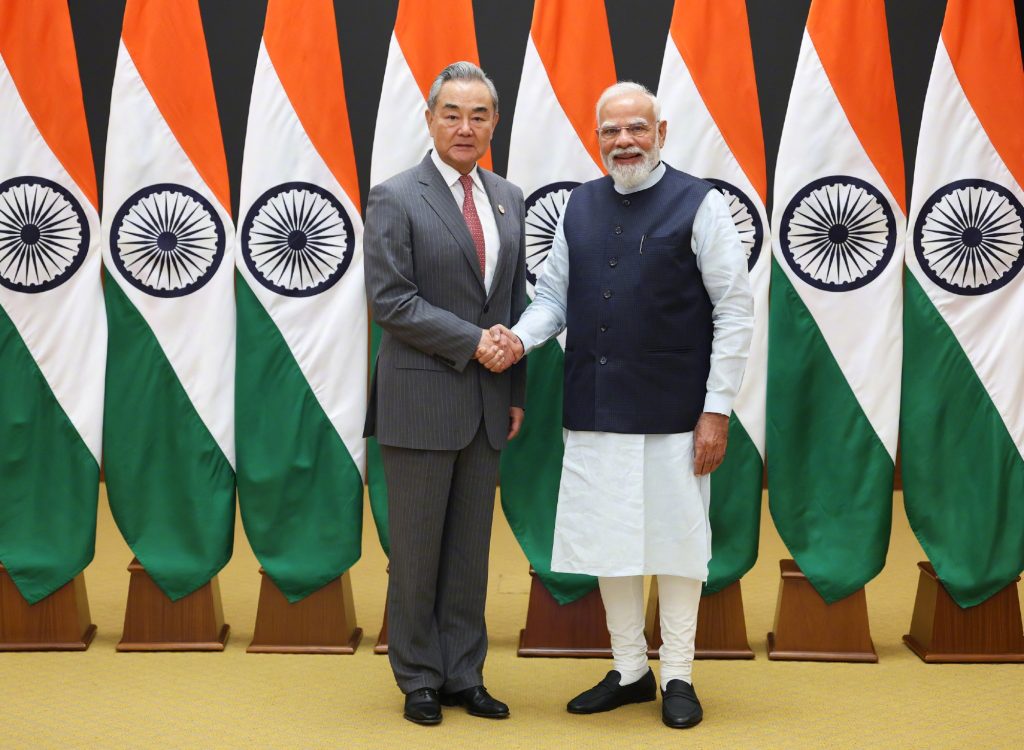
Indian Prime Minister Narendra Modi met here on Tuesday with Wang Yi, a member of the Political Bureau of the Communist Party of China Central Committee and director of the Office of the Central Commission for Foreign Affairs.
Wang is in New Delhi for the 16th Meeting of BRICS National Security Advisors and High Representatives on National Security.
During the meeting, Modi said India and China are both ancient civilizations with a history of friendly exchanges spanning thousands of years, and the two countries held leading and dominant positions in the world for a long period of time.
Under the current circumstances, the two sides should carry forward their traditional friendship, maintain high-level exchanges, advance practical cooperation, and safeguard the common interests of Global South countries, Modi said.
India supports China's assumption of the BRICS rotating presidency next year, and is ready to work with China to promote the development of the cause of BRICS, he said.
Wang said China and India, as the two largest developing countries and important members of the Global South, should play an exemplary role in promoting solidarity and self-reliance among Global South countries.
China will continue to support India in fulfilling its responsibilities as the BRICS rotating chair and work with India to promote solid progress in BRICS cooperation, Wang noted.
Wang said China is ready to work with India to implement the important consensus reached between the leaders of the two countries, continuously enhance trust and dispel doubts, properly handle sensitive issues, deepen mutually beneficial cooperation, maintain the positive momentum of China-India relations, and jointly advance their respective modernization processes.
This fully serves the fundamental interests of the two peoples and conforms to the common expectations of the international community, Wang said.
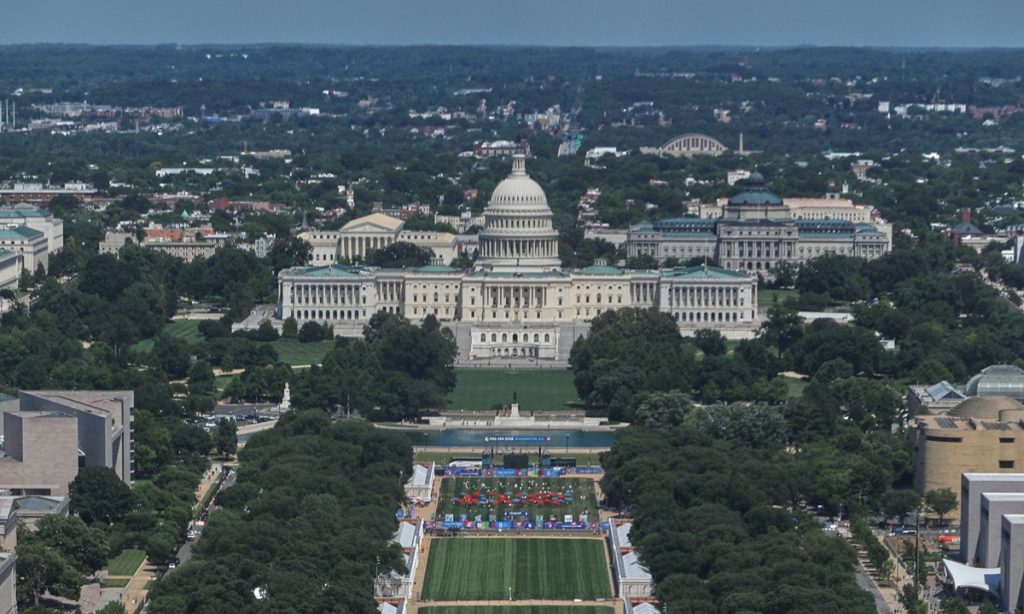
On July 4, 2026, the US will celebrate the 250th anniversary of its independence. At this juncture, international public opinion has described the US as a "declining" America, citing rising political polarization, unprecedented ethnic tensions, increasing pressure on its economic hegemony, a weakening national identity, and overseas military operations mired in deadlock. Over the past 250 years, the US has gradually become a superpower, exerting significant influence on the world's structure and operations. Its political system, economic model, social structure, cultural narrative and foreign policy have also changed with shifts in national power.
To re-examine this historical trajectory, the Global Times will launch an in-depth reporting series titled "250 Years of Independence: America's Change and Constancy," exploring the evolutionary logic of this major power across politics, economy, society, culture, and diplomacy. In the opening installment of this series, we will focus on the issue of intensifying political division and polarization, examining why the bonds that once maintained the "golden period of consensus" between the US Democratic and Republican parties have developed cracks.
'One birthday, two party planners'
"At least seven states have declined to take part in the Great American State Fair," reported The New York Times on June 11. "The withdrawals add to the growing signs that a summer of national celebration has become an increasingly fragmented and partisan affair."
The "Great American State Fair" is one of the core activities of this year's celebrations, scheduled to be held from June 25 to July 10, with all 50 states reportedly setting up exhibition booths. Among the seven states refusing to participate, six have Democratic governors. An Oregon state government spokesperson stated that there were also "growing concerns that the event in Washington, DC, is shaping up to be a more partisan affair than originally presented," according to The New York Times.
Previously, the event had already suffered a setback. NBC News reported under the headline "One Birthday, Two Party Planners," stating that in May, due to confusion between the two organizations "America250" and "Freedom 250," several artists withdrew from the musical performances at the "Great American State Fair," saying that they were "misled about the nature of the event" and not "told about any political involvement with the event."
Then, what are the backgrounds of "Freedom 250" and "America250"? "America250, is the nonprofit supporting the US Semiquincentennial Commission, which was established 10 years ago through an act of Congress and is led by a bipartisan group of lawmakers and private citizens. The other, Freedom 250, was established by the Trump administration as a public-private partnership by which to fund and plan events celebrating this summer's historic anniversary," according to the NBC News.
This contest of "party planning" is one manifestation of intensifying US political division and partisan struggles. The US political system has recently shown unprecedented fragmentation and antagonism on multiple issues. Government shutdowns have become almost routine. At the same time, congressional legislation has been almost stagnant in the first half of this year. The initial vote on federal appropriations bills failed at the beginning of the year, and although it was later advanced, legislative efficiency was extremely low.
Currently, on major issues such as immigration, climate and ideology, the Democratic and Republican parties hold very different positions, and the areas of consensus are becoming increasingly narrow. Political violence has also clearly escalated. This year, conflicts have erupted in many places across the US around issues related to Immigration and Customs Enforcement (ICE), with confrontations between law enforcement officers and protesters, and even fatal shooting incidents, triggering nationwide demonstrations.
How was consensus achieved in the past?
The two US parties have a historical tradition of debate and compromise. Before 1791, the nascent US had not yet formed formal political parties. However, within Washington's cabinet, Treasury Secretary Alexander Hamilton and Secretary of State Thomas Jefferson were already at loggerheads. Their differences on issues such as federal power, fiscal systems and attitudes toward the French Revolution gave rise to the earliest two major US parties - the Federalist Party and the Democratic-Republican Party.
Later, the two major parties underwent several reorganizations and transformations. By the election of 1860, when Republican Abraham Lincoln was elected president, the modern Democratic-Republican two-party system had basically taken shape - a structure that has continued to this day. The intense partisan struggles between the two parties are reinforced by the US Electoral College and winner-take-all voting system, which follow a simple plurality-wins logic. This objectively tends to consolidate the two-party system and is unfavorable to the development and growth of third parties or smaller parties.
Zhang Wenzong, a researcher at the Institute of American Studies of the Chinese Academy of Social Sciences, told the Global Times, "Since independence, the US has been a country with diverse interests that resolves interest conflicts through war, elections, interest exchanges and other means. This historical process is full of bargaining and also inseparable from the stimulation and promotion of major crises. On domestic issues, the two parties' ability to reach major consensus is usually tied to major party realignments or one party securing a sustained medium- to long-term political advantage. On diplomatic and foreign policy issues, however, bipartisan consensus is typically inseparable from external challenges or deliberate efforts by politicians to highlight 'external threats.'"
Back in 1947, shortly after World War II ended with ruins still scattered across Europe, the US grew anxious over what it saw as the Soviet Union's expanding influence on the continent. Then US Secretary of State George Catlett Marshall unveiled a plan to help Europe rebuild. The Harry S. Truman administration knew that the $13 billion aid package - a staggering sum at the time - would need bipartisan backing to pass Congress, so they brought in Republican Senator Arthur Vandenberg to help shape the plan from the start, crafting what became "a genuinely cross-party" product.
The US Congress approved the Marshall Plan in 1948. According to the US National Archives, "Congress's approval of the Marshall Plan signaled an extension of the bipartisanship of World War II into the postwar years." From then on, both major parties strongly supported the Cold War against the Soviet Union, and this "Cold War consensus" endured for more than four decades.
Wu Xinbo, dean of the Institute of International Studies of Fudan University, told the Global Times that during the Cold War, a shared commitment to national development, a predominantly white social order, and external pressure from the Soviet Union prompted the two parties to prioritize national interests over their differences. They compromised with each other and reached agreement on major domestic and foreign policies, maintaining a stable dynamic where partisan disputes rarely spilled beyond Washington.
Why bipartisan compromise has faded The collapse of the Soviet Union in 1991 marked the end of the Cold War, yet many US political analysts voiced concerns. The shared external foe that had long united the two parties was gone. Washington kept searching for, and even creating, new "external threats." Both parties backed the US-led war on terror after the September 11 attacks. After 2017, they reached another consensus on competing with China, with some politicians repeatedly hyping the so-called "China threat" and pushing for anti-China legislation.
Gavin Cooley, a 24-year-old American social media creator and descendant of a WWII veteran, told the Global Times that bipartisan cooperation has become far harder than before. Once, compromise was widely regarded as a necessary part of governing the country. Today, however, American politics has fallen into a rigid black-and-white confrontation.
Zhang pointed out that multiple factors have fueled US' political polarization and fierce partisan rivalry. First, the two parties are nearly evenly matched, with neither holding a long-term political advantage. Second, fewer swing states have intensified electoral competition. Third, the declining white population has worsened racial tensions. People from ethnic minorities now make up over half of newborns and primary school students nationwide. Issues over illegal immigration and diversity, equity, and inclusion policies have also fueled a resurgence of white supremacy. Overall, intertwined class, racial, and regional conflicts have made partisan politics more complicated and confrontational.
Can the US fix its political problems? A survey released by Pew Research Center last spring showed that 62 percent of Americans are dissatisfied with how their democratic system functions. To ordinary people like Cooley, the two parties are no longer different paths for national development, but rival camps locked in constant fights. Many feel elected officials prioritize partisan interests and big donors over public demands. This widespread sentiment has bred public discontent and political apathy.
Wu noted that the US two-party system was originally designed to correct policy errors, as the ruling party would usually revise its predecessor's flawed policies. However, this corrective mechanism has now broken down. Today, the parties often swing from one extreme to the other, failing to fix problems and instead creating new ones, deepening governance gridlock. To restore this function, the US needs to rebuild bipartisan consensus. Externally, the two sides must align views on America's global role and responsibilities, and set foreign strategies that match its national strength. Domestically, it should focus on core issues like economic development and social welfare while pushing liberals and conservatives toward the middle on cultural values. To revive the system's ability to self-correct, Wu said, the key is rebuilding a bipartisan consensus.
In Cooley's view, the system of checks and balances established at America's founding has shown resilience for most of its history. "I believe the US still has the capacity to adapt and reform, but the challenges are significant. Many Americans across the political spectrum recognize that the current level of polarization is unhealthy and unsustainable in the long run," he said. "It will require new generations of leaders, renewed civic engagement and institutions that are better able to earn public trust. Many people feel that politics has become too focused on partisan victory rather than solving practical problems that affect everyday citizens."
A job offer has recently gone viral online and intrigued public as it provides an annual salary of 100,000 yuan ($14,791) for someone to dress up as a black bear in a zoo in Central China's Henan Province, and a zoo staff member confirmed that nearly 100 people have applied for the role to date, according to local news outlet Henan Daily.
Job descriptions on the recruitment poster read "No human language allowed" and "Act naturally as a bear is your core duty," leading numerous netizens to call it a "dream job." A person in charge of the Luohe Wildlife Zoo confirmed authenticity of the job. The zoo hopes this innovative initiative can boost visitors' immersive experience and open up a career path for young people.
"Recruiting a black bear performer with a 100,000-yuan annual salary is not a last-minute whim. It has been part of the tourist experience planned from the very start of the wildlife zoo's construction," the staff member explained, per the report.
After the zoo opened, they found gaps in visitors' interactive and immersive experiences. "Having a human performer dress as a black bear first eliminates safety risks of direct contact between guests and real black bears. Second, a person in the bear costume can interact with visitors more flexibly, making the visit more fun and encouraging guests to stay longer," the person claimed.
He also noted that black bears were chosen as the first for performers because they are widely seen as clumsy and adorable, and particularly popular among children. "If this trial proves successful, we may add performers dressed as tigers, lions and other animals in the future," he said.
Addressing netizens' top concern of salary, the staff member said the 100,000-yuan annual salary is guaranteed as a minimum. The zoo set a relatively high pay rate considering how grueling outdoor work can be in summer, and working hours will not exceed eight per day.
He added that if the performer gains online popularity through entertaining interactions, "they can earn far more than the base 100,000 yuan and build their own online career." The zoo aims to offer young people a platform to grow, while exploring fresh operational models for the zoo, Henan Daily reported.
Regarding selection criteria, the person stated the zoo will prioritize young applicants around 30 years old with good physical fitness. All candidates must attend an in-person interview featuring multiple segments designed to test their adaptability and service awareness.
On the occasion of the 32nd World Day to Combat Desertification and Drought, the Global Times learned from the National Forestry and Grassland Administration on Wednesday that the country has cumulatively treated 152 million mu (about 10.13 million hectares) of desertified land and 29.32 million mu (about 1.95 million hectares) of rocky desertification-affected land over the 14th Five-Year Plan period (2021-25), and the overall level of desertification has continued to decline while ecological conditions in desert regions have steadily improved.
In recent years, China has made the battle against desertification a key priority by advancing the Three-North Shelterbelt Forest Program (TSFP). It is an afforestation program launched in 1978 to tackle desertification in northwestern, northern and northeastern parts of the country.
Since the launch of the TSFP, the central government has allocated a total of 88.9 billion yuan ($12.4 billion) in funding, supported the implementation of 544 major projects, and completed ecological restoration and construction tasks covering 244 million mu (about 16.3 million hectares), according to the administration.
In 1978, China launched this landmark ecological project, which has become the world's largest afforestation endeavor, according to the Xinhua News Agency.
China has also strengthened its policy framework for desertification control. Authorities have issued a national desertification prevention and control plan and a photovoltaic desertification-control plan for the Three-North desert and Gobi regions, revised the overall plan for the TSFP, introduced management measures for the program's implementation, and released 10 industry standards, including technical specifications for desertification control.
Pilot programs for ecological compensation in desert ecosystems have also been launched, further improving the country's policy and regulatory system for combating desertification.
Meanwhile, China has accelerated the construction of desert ecosystem observation stations and ground-based sandstorm monitoring stations, laying the foundation for a nationwide desert ecological monitoring network.
The country has also pursued innovative desertification-control model. Across the Three-North region, local authorities have steadily promoted the "photovoltaic-plus-desertification-control" model, spurring the treatment of 5.3 million mu of land. Efforts to combat desertification through transportation infrastructure have also been expanded, with more than 3,500 kilometers of highways built across sandy areas, contributing to the rehabilitation of 6.8 million mu of degraded land.
At the same time, China has strengthened the role of science and technology in desertification control. Authorities have divided the Three-North region into 136 ecological management zones, developed a number of new drought-resistant, cold-resistant and saline-alkali-tolerant tree and grass varieties, and raised the adoption rate of improved species to more than 75 percent. New equipment and technologies have increased desertification-control efficiency by more than threefold, according to official data.
To date, China's desertified land area has continued to shrink. The trend has reversed from an average annual expansion of 5.15 million mu at the end of the 20th century to an average annual reduction of 10 million mu today, the administration said.
The total volume of wind-induced soil erosion across China's eight major deserts and four major sandy lands has declined by approximately 40 percent compared with 2000. The average vegetation coverage in desert regions has reached 21.17 percent, up 2.84 percentage points from a decade ago, it noted.
Within the TSFP area, forest and grassland coverage has risen to 40.76 percent, while 67.82 percent of treatable desertified land has been brought under effective management and restoration, the administration said.
As a party to the United Nations Convention to Combat Desertification, China has actively fulfilled its obligations under the Convention with guidance from the country's national coordination group for combating desertification, while continuously deepening international cooperation in desertification prevention and control.
Going forward, China will focus on achieving the goals set out in relevant plans, adhere to differentiated conservation and region-specific governance approaches, and promote comprehensive treatment of desertified land in key areas. The country will also appropriately develop green industries in desert regions.
By 2030, China aims to complete the restoration and treatment of nearly 100 million mu (about 6.7 million hectares) of desertified land nationwide, the administration said.
Ecological conditions in key regions - including the country's four major sandy lands, desert oasis areas, the Qinghai-Tibet Plateau, the Yellow River Basin, and areas surrounding the Beijing-Tianjin-Hebei Region - are expected to improve significantly, laying a solid foundation for the country's northern ecological security barrier.
Belgian prime minister Bart De Wever on Tuesday local time has called on European leaders to develop a coherent strategy to counter what he described as "China's drive for economic domination," while claiming that EU leaders are running scared of China, media reported. A Chinese expert said the remarks reflect an arrogant mindset that some European politicians push for a unified tough EU strategy toward China, yet refusing to face its own problems and adapt to new reality.
Speaking at an event organized by two pro-EU think tanks in Brussels on Tuesday, De Wever said he was disappointed to hear that Emmanuel Macron, the French president, has reportedly launched a fresh gambit to include China in coordination efforts ahead of a G7 meeting next week, according to a report by Euractiv.
The G7 leaders' summit will run from June 15 to 17 in France. Emmanuel Macron, whose country holds the Presidency of the G7 for 2026, is reportedly set to host a video call between the group and China to address global trade imbalances.
The report by Euractiv said that EU leaders will meet in Brussels on June 18 and 19, a day after the G7, for a summit where China is expected to be central to the agenda - albeit not officially.
"They have called it geo-economic imbalances, just not to name China by name, because we are so afraid that we don't even dare to do that," De Wever claimed, before immediately asking if any journalists were in the room, per the report.
"That's all very well, but we do take a lot of initiatives. It is time to adopt a strategy," De Wever claimed at the event, Belga News Agency reported.
Jiang Feng, a researcher at Shanghai International Studies University and president of the Shanghai Regional Studies Association, told the Global Times that Belgium acts inconsistently and self-contradictorily by opposing trade barriers while pushing for measures against China, which fully shows its lack of strategic composure. He noted that Europe's real troubles amid current challenges lie not with China, but in its own development, as it is deficient in creativity, vitality, cohesion, and credibility.
"For a long time, Europe has been accustomed to a world in which other countries develop in accordance with its own normative framework. However, with the continued rise of emerging powers, the global order has undergone profound changes," Jiang said. Europe should therefore fundamentally recalibrate its mindset and adapt it to the evolving international landscape, he added.
Already in March, De Wever called on the EU to adopt a firmer approach toward what he described as unfair Chinese competition. In a letter to European Commission (EC) President Ursula von der Leyen, he warned that Beijing's economic policies are eroding Europe's industrial base.
The EU currently resembles a fortress on the defensive. When confronted with any country possessing promising prospects for development, it tends to retreat into a defensive posture and externalize responsibility, Jiang said. Such a response is unquestionably an inferior course of action rather than a choice made with an eye to the future.
The report by Belga News Agency on Tuesday noted that despite the threat to Europe's industry, the prime minister warned against responding with a subsidy race or trade barriers. Europe would lose on the former, he argued, while the latter would drive up costs for both businesses and consumers.
De Wever's remarks came amid recent mixed signals from the EU over how to handle relations with China.
However, since late last year, leaders from multiple European countries have visited China in succession, underscoring a notable trend among European leaders to "look East," reaching out to strengthen cooperation including in trade sector, observers noted.
When asked to comment on a proposal advancing by the EU that would force companies to avoid over-dependency in their supply chains, which it comes as the bloc is looking to reset its trade relationship with China, Chinese Foreign Ministry spokesperson said on Monday that "as an old Chinese saying goes, do not do unto others what you would not have others do unto you. China-EU trade is not a zero-sum game."
The spokesperson Lin Jian added that between China and Europe, the industrial and supply chains are highly integrated and mutually dependent. This is shaped by economic globalization and market force and has served both Chinese and European businesses well. European companies make their choice based on cost, technology and efficiency. How is that "over-dependence"? Isn't "diversification" in this case just another version of protectionism?
A more constructive course of action would be to respond to China's development by engaging in in-depth strategic dialogue with China. Competitive pressures are an objective reality, even without China, similar pressures would arise from other countries, and this fact must be recognized, Jiang noted.
The expert said that the EU should therefore adopt an objective approach and engage China in consultations at the strategic level, with a view to achieving a more balanced bilateral economic and trade relationship.
By 2 am, Sanlitun, one of Beijing's busiest nightlife districts, had largely quieted down. But inside Cafe Groove, owner Sui Jinpeng and his staff were still moving through the restaurant, testing upgraded audio equipment and large screens ahead of the World Cup's opening match early Friday morning.
Sui said he expects this year's tournament to draw fans out of their homes and back into bars, cafés and restaurants, where the experience of watching football becomes something collective. "People can drink, talk and cheer together," he told the Global Times. "This kind of atmosphere is actually quite rare."
The first match, between Mexico and South Africa, is scheduled to kick off at 3 am Friday Beijing time at Mexico City's Azteca Stadium. Although China's men's national team has been absent from the World Cup since 2002, the tournament remains a major event for Chinese fans, whose enthusiasm has endured despite late-night broadcasts and their team's long absence from the field.
This year's World Cup had a shorter commercial warm-up in China, with CCTV finalizing broadcast rights only about a month before the opening match. Analysts said the late deal left advertisers and merchandisers with less time to build momentum, helping explain the relatively subdued atmosphere so far.
Time zones are also working against the party. As the tournament is being held in the US, Canada and Mexico, many matches will air in China in the early morning or late morning, with some kicking off between midnight and 4 am — hardly prime time for bars and barbecue joints built around dinner crowds.
But restaurants are not sitting out the tournament. The Global Times found during recent visits that many venues have adjusted their opening hours and stocked up on food and drinks, betting that even a 3 am kick-off can still draw a crowd when the World Cup is on.
Romy Gai, FIFA's Chief Business Officer, told the Global Times on Thursday via email that China has one of the largest viewership bases in the world and the Chinese audience is central to the global success of the FIFA World Cup.
Aside from various support by Chinese sponsors to the tournament's multiple aspects including AI and video review, Gai said China remains deeply connected to the FIFA World Cup and plays an important role in delivering the tournament to a truly global audience.
"Brands such as Lenovo, Mengniu and Hisense bring innovation, scale and local relevance, helping us enhance fan experiences — from cutting-edge technology in areas like AI and video review to initiatives that make our tournaments more inclusive and accessible through sensory rooms in the stadiums," Gai added.
Preparation outside the pitch
Sui, from Northeast China, has often organized offline viewing events since his restaurant opened last October. He expects overall revenue during the World Cup to increase by roughly 60 percent. He predicted that for high-profile matches involving teams such as Argentina, Brazil, and England, peak periods could even reach two to three times the normal level.
Zhang, a 50-year-old waitress at a restaurant on Beijing's Guijie dining street, told the Global Times that to prepare for this year's games, her workplace has doubled its inventory of crawfish and beer.
In Ningbo, East China's Zhejiang Province, the Laowaitan pedestrian street has launched a 39-day consumption campaign. The operator told the Global Times that a 4-meter-wide high-definition screen has been installed to broadcast matches throughout the tournament. In addition to beer and snacks, the street will also feature a food market with dishes from previous World Cup host countries.
In Shanghai's Laowaijie leisure street, a parking lot has been converted into a new viewing plaza capable of holding around 300 people. According to marketing director Qin Qijing, around 70 percent of customers are foreigners, and foot traffic is expected to rise by 30 to 50 percent during the tournament.
As of Wednesday noon, data shows that on Thursday - the opening day of the 2026 World Cup - hotel audiovisual room bookings on the Tongcheng Travel platform increased by 47 percent year-on-year, according to a statement sent to the Global Times on Thursday.
During the first weekend of the event, from June 12 to 13, audiovisual rooms recorded their highest occupancy levels, with demand rising by more than 90 percent compared with the previous weekend, far outpacing other themed accommodation products on the platform over the same period.
The waitress surnamed Zhang said based on her experience from the previous two editions of World Cups, "it [World Cup] does bring customer traffic. When there are more people, there is naturally more consumption," she said, noting that if football games started earlier, there would be more customers this year.
Unlike a one-day surge in traffic for events like the UEFA Champions League finals, the World Cup is an operational test that lasts nearly 40 days, Sui said, adding that his restaurant's operating rhythm is relatively fixed: a busy period in the evening, another rush after midnight, and some breathing time during the day. "But during the World Cup, that pattern is likely to be disrupted."
Sui noted that about 70 percent of matches will fall outside traditional business hours, leading his restaurant to extend operations to nearly 24-hour service. Sui said that even for matches involving less popular teams, his restaurant still welcomes customers.
Fans' passion and choices
Beyond commercial venues, football fans themselves remain central to the World Cup experience. In a sports brand store in Sanlitun, Yisimayili, a 20-year-old student from Northwest China's Xinjiang Uygur Autonomous Region now studying in Beijing and a fan of the Portugal national team, said that interest in and discussion around this year's World Cup have not declined but have instead increased. "More people around me are talking about the upcoming matches," he said.
In the past, he used to watch matches in his dormitory or at nearby bars and restaurants with friends. "Watching and discussing games together with my friends is part of the enjoyment of the World Cup," he said.
Crystal Li has been a football fan for more than two decades. Although some matches will kick off in the early hours of the morning, that does little to dampen her enthusiasm. "I'll stay up to watch, then survive the next day on Americanos," she said with a laugh. She has even been arranging her work schedule in advance to make room for the tournament.
Liu, a football fan from East China's Zhejiang Province, said,"I think the last tournament was very exciting despite the pandemic. This year, with the expansion from 36 to 48 teams, some matches may be less thrilling, so my expectations are not as high," he said.
Even so, Liu believes that attention to this World Cup remains, and he has created a new social media account to post video clips from past tournaments, hoping to attract more like-minded fans.
China's 'World Cup economy'
China's engagement with the World Cup runs far deeper than fan enthusiasm alone — it extends into broadcasting rights, e-commerce, and a vast merchandise supply chain.
CCTV reported on May 15 that the China Media Group, its parent company, reached an agreement with FIFA to broadcast the 2026 World Cup in China, ending uncertainty and ensuring Chinese audiences can watch the tournament.
Aside from the state broadcaster, social media platform Xiaohongshu has also acquired the broadcasting rights of the 2026 World Cup. Liu Dingding, a veteran industry analyst, told the Global Times that its participation aims to expand beyond its predominantly female user base by leveraging the World Cup's massive male audience, underscoring a unique cooperation pattern.
The World Cup is also deeply integrated with the Chinese market through live broadcasting, e-commerce consumption, and merchandise supply chains, all closely tied to China's manufacturing and consumer ecosystem, said Liu.
World Cup-themed merchandise stores have begun popping up in shopping malls across Beijing. At Hopson One, a shop assistant said products linked to popular contenders such as Argentina, France and Portugal have been selling especially well. "Portugal fan and player jerseys sold out earlier, and we are restocking them now. France jerseys also just sold out and had to be urgently replenished," the assistant said.
Li Mufan, store manager of the World Cup IP store at Beijing's Chaoyang Joy City, said that compared with professional football products like jerseys, dolls and plush keychains are more popular with female consumers and family shoppers, demonstrating that World Cup IP is extending to non-traditional fan groups in China.
Zhejiang Beilei Textile Co obtained official licensing rights for World Cup merchandise last year. Yang Yating, a company representative, told the Global Times that this marked a major breakthrough. Best-selling products include Argentina's "goat" plush toy, England lion dolls, and Portugal-themed neck pillows. These products are packed in Yiwu and shipped via Ningbo Port to global markets, Yang said.
According to FIFA, total revenue over the four-year cycle for this World Cup is expected to reach $13 billion, representing an increase of more than 70 percent compared with the Qatar World Cup cycle, according to a report by the Securities Times.
Experts said the 2026 World Cup will also spur related consumer spending in China, as the country's sports economy has been thriving in recent years with multiple grassroots football leagues springing up across the country.