China has comprehensively bolstered its human rights protection capability, according to an evaluation report jointly released on Friday by the China Society for Human Rights Studies and 20 national human rights education and training bases in the country.
The report assesses the implementation of the National Human Rights Action Plan of China (2021-2025), which was issued in September 2021.
China has fully implemented the five-year action plan, accomplishing all 181 tasks outlined in it, the report says.
It notes that China has advanced human rights through development, with the country completing the building of a moderately prosperous society in all respects and eliminating absolute poverty.
China now has the world's largest education, social security and healthcare systems. Meanwhile, solid progress has been made toward common prosperity for all, laying a stronger material foundation for the continued advancement of human rights in China, the report says.
It also highlights that China has been developing whole-process people's democracy, strengthening legal protection for human rights, and improving the system of institutions through which the people run the country.
The report highlights China's advances in environmental protection. The Ecological and Environmental Code has beefed up the legal framework for environmental protection, while improved environmental quality has helped better safeguard people's environmental rights.
According to the report, China has strengthened protection of the rights and interests of all groups, ensuring that people from various sectors participate in economic and social development, exercise their democratic rights, and benefit from the outcomes of modernization on an equal basis. In addition, the rights of women, children, the elderly and people with disabilities have been better safeguarded.
China has actively promoted human rights education and awareness, fostering greater public understanding of and commitment to respecting and protecting human rights, the report notes.
China follows the principles of equality, mutual trust, inclusiveness, mutual learning, win-win cooperation and common development, and it fulfills its international human rights obligations with a strong sense of responsibility, the report states.
There is always room for progress in human rights protection, the report says, adding that China still faces imbalanced and insufficient development, while sci-tech development and industrial transformation are also giving rise to new demands for rights. The report expresses the expectation that China will respond to these challenges and further advance human rights during the 15th Five-Year Plan period (2026-2030).
The full report is available in both Chinese and English on the official website of the China Society for Human Rights Studies.
The action plan spanning the period 2021-2025 was the fourth national human rights plan released and implemented by the Chinese government.
China on Friday urged Japan to deeply reflect on its war crimes and make a clean break with militarism, saying history must not be overturned after reports that the city of Nagasaki planned to alter references to the "Nanjing Massacre" as "Nanjing Incident" in the updating of display panels at the Nagasaki Atomic Bomb Museum.
According to Japanese broadcaster Nagasaki Bunka Hoso (NCC), the proposal was presented by the Nagasaki city government to the museum's operating advisory council on Thursday as part of preparations for a renovation project scheduled to begin in September 2026. Under the revision plan, a timeline entry currently stating "Occupation of Nanjing, Nanjing Massacre occurs" would be changed to "Nanjing Incident."
Responding to the reported revision at Friday's regular press conference, Foreign Ministry spokesperson Mao Ning said there is abundant evidence for the Nanjing Massacre—a horrendous war crime of Japanese militarists that shall never be erased. The Tokyo Trials ruled in black and white that the wartime atrocities of the Japanese army in Nanjing were a "massacre", not a mere "incident".
The Judgement of the International Military Tribunal for the Far East dedicated a special chapter to detail "the Rape of Nanking". With numerous survivors' testimonies, records of third-country witnesses and Japanese army files, the judgement, in the form of the ruling of international justice, made it very clear that the Japanese army who invaded China committed the heinous crime of the Nanjing Massacre. The Massacre's chief perpetrator Iwane Matsui was sentenced to death by hanging as a class-A war criminal.
The verdict of history must not be overturned. I noted that many survivors of the atomic bombs in Japan, Nagasaki citizen groups and people with insights have called for fully and accurately depicting the crimes and history of Japanese militarists as victimizers, according to the spokesperson.
"We urge the Japanese side to deeply reflect on its war crimes and make a clean break with militarism," Mao said.
The Nanjing Massacre remains one of the most horrific chapters of Japan's invasion of China. According to the People's Daily, on December 13, 1937, invading Japanese troops occupied Nanjing. Over the following six weeks or more, more than 300,000 innocent civilians and disarmed Chinese soldiers were brutally killed. Approximately 20,000 cases of rape occurred in the city, and about one-third of the buildings were burned down, creating the shocking Nanjing Massacre that stunned the world.
Terminology used to distort history
The manipulation of historical terminology is intended to beautify Japan's history of aggression, and reflects the lingering influence of militarism, Lü Chao, a research fellow at the Liaoning Academy of Social Sciences, told the Global Times on Friday. He noted that Japan has long distorted historical facts through the manipulation of terminology, for example by avoiding the term "surrender" in favor of "end of the war" or "defeat."
Such practices, Lü said, are part of a broader pattern among right-wing forces of denying the Nanjing Massacre and refusing to reflect on Japan's wartime aggression. He said they seriously hurt the feelings of victims and people in affected countries, and constitute a form of deliberate provocation.
It not only runs counter to abundant historical evidence and the international consensus, but also hampers Japan's ability to become a truly normal country and achieve genuine reconciliation with its neighbors, he added.
The planned move also recalls what scholars have described as the deliberate political use of the term "incident" in Japan's wartime narrative. Zhang Sheng, a professor at the School of History at Nanjing University, previously told the Global Times that newly uncovered archives belonging to William F. Webb, president of the International Military Tribunal for the Far East, showed Japan's use of the term was far from neutral.
During the Tokyo Trial, Akira Muto, a Class-A war criminal who bore significant responsibility for the Nanjing Massacre, acknowledged that Japanese authorities had consciously chosen to describe the war of aggression against China as an "incident" rather than a war in an attempt to deny its status as a formal war and avoid the constraints of international law. Webb explicitly pointed out this intention in his personal archives, Zhang said.
Such practices carry important implications for efforts today to shape historical discourse and ensure accurate historical representation, Zhang noted.
Deep divisions in Japanese society
While the proposed change in terminology on the Nanjing Massacre has drawn criticism from both within Japan and abroad, including from civic groups urging the city not to downplay the country's wartime atrocities, Japanese media coverage has largely focused on another aspect of the draft revision, highlighting that the new exhibition panels explicitly identify the "invasion" by the former Japanese army as the cause of the war.
According to the Yomiuri Shimbun on Friday, the draft revision includes a description of the process through which the September 18th Incident developed into the Japanese war of aggression against China, stating that Japan "further advanced its invasion into North China." The report, citing a city official, explained that the reason for the wording was that, after examining junior high and high school textbooks, the term "invasion" was found to be the most frequently used expression, the Yomiuri Shimbun reported.
Although one committee member expressed the view that the term "invasion" may be inappropriate because its meaning can vary depending on standpoint and era, another member stated that the international community at the time recognized it as an act of invasion and therefore saw no issue, the Yomiuri Shimbun reported.
Experts noted that this reflects deep divisions within Japanese society over historical memory. While some voices within Japan's academic and civil circles call for confronting historical facts, the official mainstream stance remains ambiguous and at times dismissive of Japan's aggression against China. Narratives emphasizing Japan as a victim of the war tend to blur the distinction between aggressor and victim, thereby distorting public understanding of history, they stressed.
"Genuine peace education must be based on complete and honest historical facts. It should remember all victims, while also facing up to the responsibility for aggression. Only in this way can we avoid repeating cycles of distorted history rooted in selective memory," Lü added.
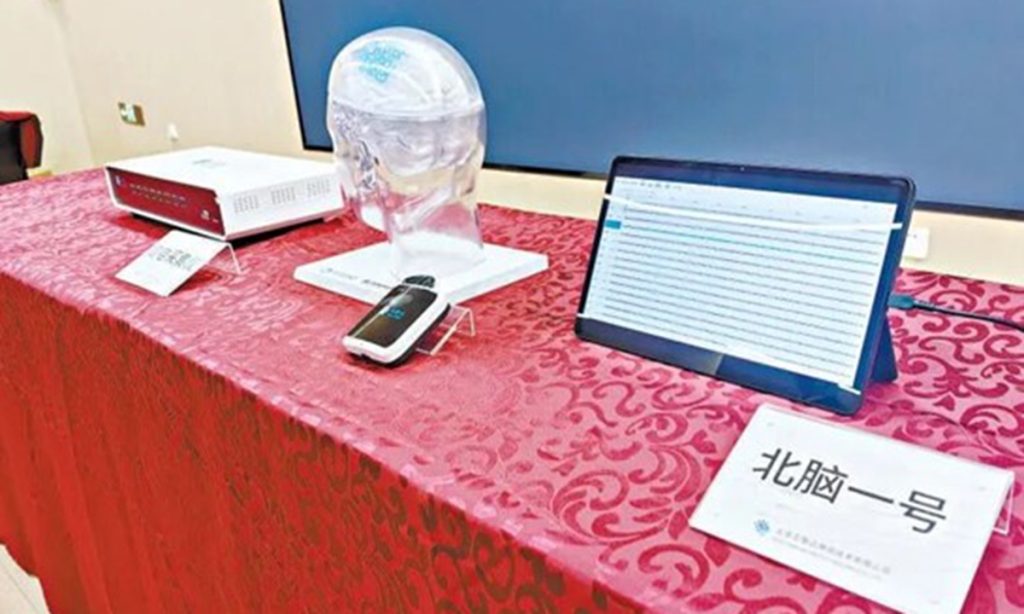
China's domestically developed semi-invasive brain-computer interface (BCI) system "Beinao No.1" has completed 16 implantations and is expected to be piloted in qualified Grade-A tertiary hospitals nationwide in 2027, while "Beinao No.2" is set to begin clinical validation in the second half of 2026, Zhao Jizong, a neurosurgery expert and academician of the Chinese Academy of Sciences, said at an academic exchange event, according to Beijing Daily on Tuesday.
Zhao said Beijing has built a full-chain research and development system for BCI. At present, "Beinao No.1" has 16 research centers and has completed 16 implantations. The longest implantation has lasted more than one year, and the system has operated safely for more than 55,000 hours, helping patients achieve mind-controlled robotic-arm operation and motor-function reconstruction.
According to the plan, "Beinao No.1" will complete 36 implantations in 2026, while clinical validation of "Beinao No.2" will be advanced in the second half of the year. By 2030, China is expected to complete BCI clinical guidelines and technical standards, forming a replicable Chinese solution, according to the Beijing Daily.
Zhao said the current core bottleneck lies in the shortage of specialized talent, as post-operative rehabilitation for patients lacks dedicated personnel with relevant expertise. Beijing has taken the lead in launching training for clinical BCI adaptation specialists to fill the talent gap and support the implementation of the technology.
A BCI creates a direct communication pathway between the brain and an external device. By recording and interpreting brain signals, BCI allows the brain to "talk" directly to machines, enabling patients to control assistive devices, according to the Xinhua News Agency.
As a frontier technology in human-computer interaction, BCI has been driving a new wave of technological and industrial transformation. China has introduced a series of policies to strengthen BCI research and industrial deployment. The BCI sector has been designated as a future industry in this year's government work report, per Xinhua.
With the 2026 national college entrance examinations (gaokao) approaching, examination authorities across multiple Chinese provinces have tightened security checks at exam sites. The enhnced measures aim to ensure that cheating devices cannot be brought into examination venues, used during exams, or employed to transmit information. Authorities have placed special emphasis on detecting smart glasses and other high-tech cheating devices, which are prohibited from exam rooms and will be treated as cheating if discovered.
According to the Ministry of Education (MOE), a total of 12.9 million candidates have registered for this year's gaokao, which will begin on June 7. In an announcement on Wednesday, the ministry and relevant government agencies said they have directed local authorities to enhance exam administration and candidate services, with the goal of ensuring a safe and orderly examination process.
Guangdong Province on Tuesday issued a notice, saying that gaokao candidates wearing or carrying glasses must remove them during entrance security checks under video surveillance and place them on a desk for inspection by proctors, The Paper reported.
Education examinations authorities in Shanghai, Fujian and other regions have also issued notices for candidates, emphasizing that those wearing framed glasses must cooperate with proctors for inspection. Exam staff have also received training to identify new types of smart glasses, with particular attention paid to the size, shape and other characteristics of candidates' eyewear, according to The Paper.
Under China's measures for handling violations of national education examinations, any candidate found carrying a device capable of transmitting or receiving information is considered to have cheated, resulting in the cancellation of their scores for all subjects and stages of the examinations they have registered.
The MOE on Tuesday warned that bringing mobile phones, smartwatches, smart bands, smart glasses, or other devices into gaokao exam rooms constitutes cheating, regardless of whether the devices are actually used.
North China's Inner Mongolia Autonomous Region has adopted a zero-tolerance policy toward smart glasses. The local education examination authority has advised gaokao candidates who rely on smart eyewear in daily life or for study to prepare suitable conventional prescription glasses before the exams, warning that smart glasses will not be permitted in exam venues and any resulting impact on exam performance will be the candidate's own responsibility, The Paper reported.
An official from the Examinations and Admissions Authority of Guizhou Province told the Global Times on Wednesday that the requirement permitting only ordinary optical glasses at examination sites comes directly from the MOE. Guizhou is implementing the policy through a combination of smart security gates and manual inspections in line with unified national regulations and requirements.
Recently, the Henan provincial education examinations authority issued pre-exam guidance and introduced a "silent entry" system for the gaokao, requiring candidates to pass smart security gates and metal detector checks without triggering alarms before entering exam zones and test rooms, Henan Fabu, the official WeChat account of the local government said on Wednesday.
The new Argentine government is looking to cooperate with China, Argentine Foreign Minister Diana Mondino told the Global Times in an exclusive interview on Monday.
She also said that the Belt and Road Initiative (BRI) is very important for Argentina, and the Argentine government will continue to maintain an open attitude toward foreign investment, including from China.
From April 27 to May 1, Argentina's Minister of Foreign Affairs, International Trade and Worship of Argentina, Mondino, visited China. This visit marked the first visit to China by Mondino since the current government took office, and it coincided with the 10th anniversary of the establishment of the comprehensive strategic partnership between China and Argentina.
China looks forward to further enhancing political mutual trust and opening up broader prospects for mutually beneficial cooperation through this visit, continuously enriching the content of the comprehensive strategic partnership between China and Argentina, and helping both countries achieve common prosperity and development, according to media reports.
Mondino told the Global Times that her visit to China is expected to enhance friendship with China and strengthen links in the economy, politics, diplomacy, and business.
Accompanying her on her visit to China were the President of the Central Bank of Argentina, the Vice Minister of Economy, and representatives from more than 20 Argentine companies, all of whom engaged in dialogues with Chinese partners.
She said that a series of meetings and agendas in China have been very successful. "Everybody is trying to foster these very good relations," she said.
According to Mondino, during this visit, she and her colleagues explained to China the economic and social changes Argentina is undergoing, as well as some measures taken by the new government over the last four months.
She stressed that Argentina is trying to further open up to foreign investment and the economy, while reducing inflation and the fiscal deficit.
She said that China is very cautious in its monetary policy and has been very successful in its openness to the outside world. Argentina hopes to continue to be China's trading partner and an investment destination, and the new government will seek deeper cooperation with China.
"The cooperation between Argentina and China is very good, very fast, and very expeditious," she said.
She also noted to the Global Times that Argentina's participation in the BRI is "really very important" for the country.
Argentina has a huge demand for infrastructure construction. In addition, there is potential for both countries to further strengthen cooperation in agriculture, and in the mining of minerals such as lithium, and in energy. She said that Chinese investments will receive fair and equal treatment in Argentina.
According to public information, China is currently Argentina's second-largest trading partner, accounting for 13.8 percent of Argentina's total foreign trade. China is also Argentina's third-largest export market and second-largest source of imports, accounting for 8 percent of Argentina's total exports and 19 percent of total imports. Chinese direct investment in Argentina is mainly concentrated in three major areas: infrastructure, energy, and the new energy industry.
During the interview, Mondino denied claims that "China-Argentina relations are at their worst historical time."
"Maybe (those people) do not understand Spanish," she jokingly told the Global Times. She mentioned that the bilateral trade volume between China and Argentina may have temporarily declined, mainly due to Argentina experiencing a severe drought, which has led to crop yields reduction and, consequently, exports to China.
However, overall, there are no issues in China-Argentina relations. "You should not believe everything you read."
The Argentine diplomat also stressed that Argentina has always firmly adhered to the one-China policy, and the new government will continue to uphold this policy.
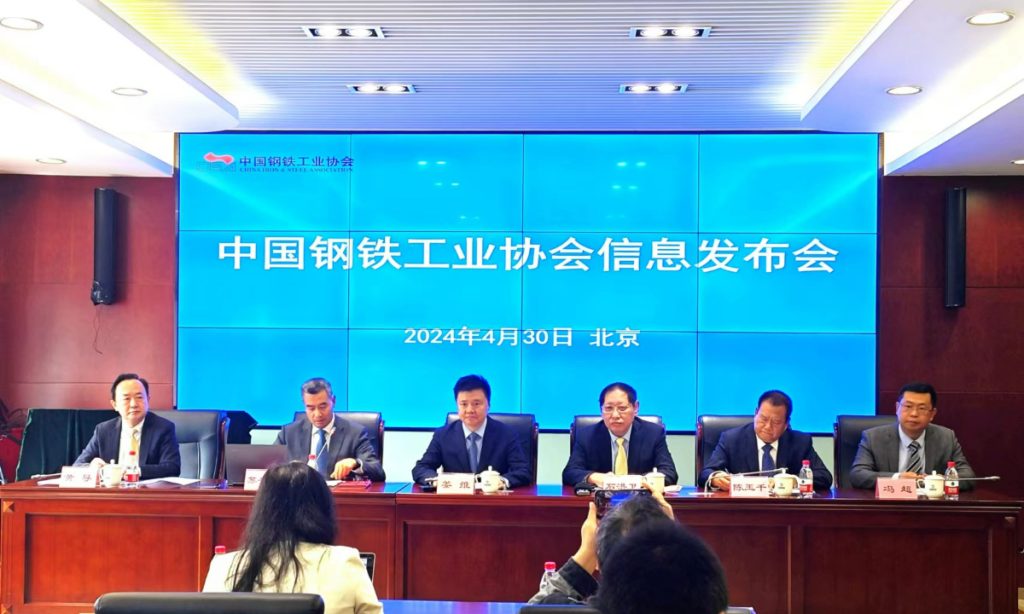
China's steel sector, an important gauge of the national economy, is advancing toward high-quality development by optimizing its product structure, as reported by the China Iron and Steel Association (CISA) during a press conference addressing the first-quarter industry operation report.
Specifically, the proportion of high-end manufacturing steel, including automobiles, household appliances, and photovoltaics, increased from the 42 percent in 2020 to 48 percent in 2023, and has maintained a further upward trend since the beginning of 2024, according to the CISA.
The positive trend reflects a significant acceleration in the restructuring of the steel industry's operating structure, industry insiders noted.
Meanwhile, businesses are contending with multiple hurdles, including diminished market demand, declining steel prices, and escalating iron ore expenses. External factors, such as heightened scrutiny targeting the Chinese steel industry overseas, compound the profitability challenges faced by enterprises, the Global Times learned from the industry body.
Speaking at Tuesday's press conference, Jiang Wei, vice chairman and secretary general of the CISA, said that China's steel industry is embracing high-quality development which have borne positive results so far.
The optimization of steel-related product structures is accelerating in response to ever-growing demand from burgeoning industries such as car manufacturing, shipbuilding, home appliance production, as well as the wind and solar power sectors.
The production upgrade is reflected in the corresponding export volume. In the first quarter, China's high value-added product exports accounted for more than 35 percent, Jiang said.
Efforts are underway to enhance intelligence in steel production and management within the industry. According to a report by the CISA, surveyed companies have invested approximately 38.5 yuan per ton of steel in digital and intelligent transformation initiatives so far this year. This represents a notable year-on-year increase of 23.9 percent.
There were 40 percent of surveyed companies applying 3D visual simulation technology in their main production lines, another reflection of the industry digitalization and upgrade, according to the CISA.
In addition, domestic steel companies are actively pursuing green transformation, another key element of high-quality development. As of April 23, 2024, a total of 136 companies had either completed or partially completed ultra-low emission transformations and undergone assessment monitoring.
Challenges persist in China's steel industry, primarily stemming from a significant structural imbalance between market supply and demand. Difficulties also include declining steel prices and high iron ore prices, according to the CISA.
In the first quarter, the national crude steel production came to 257 million tons, a year-on-year decrease of 1.9 percent. Meanwhile, nationwide consumption of crude steel was 232 million tons, a decrease of 4.7 percent year-on-year, indicating a surplus in steel supply over demand.
National steel exports reached 25.8 million tons in the first quarter, marking a year-on-year increase of 30.7 percent, while the average export price stood at $789 per ton, reflecting a decline of 33.4 percent year-on-year, suggesting thinner profit margins for companies despite strong demand overseas.
Meanwhile, the high price of iron ore, a key raw material for steelmaking, remained elevated, serving as another factor affecting company profits. The primary cause behind this is the lack of bargaining power in international pricing negotiations, Shi Hongwei, deputy secretary general of the CISA, said on Tuesday.
Inventories of domestic steel companies were also on the rise. As of mid-March, key steel enterprises reported steel inventory levels of 19.53 million tons, the highest level since the beginning of this year and the highest level in nearly four years, trailing only the 21.41 million tons during the 2020 pandemic period, according to the CISA.
The high inventory reflects the juxtaposition of weak market demand with strong market expectations for the economy, which have supported stockpiling.
Looking ahead, China's steel industry remains optimistic despite certain and temporary challenges.
Despite the challenges, the steel industry's structure is continually optimizing in pursuit of high-quality development, as industry insiders said, with manufacturing figures being a reflection.
In April, China's Manufacturing Purchasing Managers' Index stood at 50.4 percent, down 0.4 percent from the previous month, remaining in the expansionary zone for two consecutive months. This indicates the continued recovery and development momentum of the manufacturing industry, according to data released by the National Bureau of Statistics Service Industry Survey Center on Tuesday.
As China further ramps up its investment in new energy and the development of infrastructure, which are major consumers of steel, and implements policies promoting the trade-in or the replacement of old equipment with new, there will be a boost in steel demand, industry insiders said.
Baidu's vice president and head of its public relations department Qu Jing, whose remarks on her personal social media account provoked an uproar from the public, has left the company, the Economic View reported on Thursday, citing an insider familiar with the incident from the company. Information from the company's email system also shows her departure from her position.
Chinese search engine giant Baidu has unexpectedly found itself in a public relations crisis stemming from recent comments made by its head of public relations.
Qu Jing, Baidu's vice president and head of the public relations department, created a personal account on Douyin, Chinese version of TikTok, during the May Day holidays and posted four videos. In the first video, she criticized employees who refused to go on long business trips, stating she had "no obligation to know if employees are crying," and no obligation to "consider employees' families, as I'm not your mother." "If you are not satisfied with your job, you can resign. I will approve it immediately," she said.
Qu later apologized for the controversy caused by her personal short video recently. "I have carefully read all the opinions and comments from various platforms, and many criticisms are very pertinent. I deeply reflect on and humbly accept them," Qu said in a WeChat post seen by the Global Times.
She said that the videos did not represent the company's stance and apologized for any misunderstandings they may have caused. Her original idea was to do her job well, but she admitted that she was too hasty and using inappropriate methods.
"Before posting the short videos, I didn't seek the company's opinion in advance, which doesn't comply with the relevant procedures and doesn't represent the company's position. I clarify and apologize. There were many inappropriate and unsuitable points in the videos, which led to misunderstandings about the company's values and corporate culture, causing serious harm," Qu said.
"If you work in public relations, don't expect weekends off," she said in another video posted previously."Keep your phone on 24 hours a day, always ready to respond."
In another video, Qu said she had received hundreds of reports from employees' families, describing it as "the lowest tactic." She also said, "I can make it impossible for you to find a job in this industry with just a short essay. [If you don't believe me,] try it."
Due to the extreme nature of Qu's comments in the videos and the unreasonable treatment of employees, she quickly sparked widespread controversy.
In the past few days, several related topics about her comments have trended on Weibo. Many people believe that her tough approach demonstrates the excessive exploitation and lack of empathy for employees that large tech companies are often criticized for. Some netizens have directly vented their anger at Baidu and posted screenshots uninstalling the Baidu app. At the same time, some netizens have created sarcastic parodic videos from the perspective of employees.
After sparking widespread anger, the four videos posted by Qu were deleted.
Subsequently, a video widely circulated on the Chinese internet showed Qu in the office using a data cable whipping a homemade doll with a media outlet's name written on it. The shooting time and the person who filmed the video are unknown.
At the same time, some netizens pointed out that Qu's account followers might not be real. According to Douyin account information, Qu's account had hundreds of thousands of followers before she started to post videos, and the name was that of a clothing store. Therefore, many netizens speculated she had purchased the account.
In recent months, many executives of Chinese tech companies have opened public accounts on short video platforms, including Xiaomi's Lei Jun, Nio's Li Bin, and Li Auto's Li Xiang. Some executives have won public favor for their companies by chatting humorously with netizens in the comments section.
However, Qu sparked a public relations crisis just days after opening her personal account. Observers pointed out that she provoked public anger by "describing exploitation as something worthy of praise from a condescending perspective." Some media reports also noted that her videos were intended to provoke confrontation, a common tactic for gaining attention on short video platforms.
"Companies cannot simply enjoy the utilitarian value provided by employees without shouldering the emotional burden they create. People are the purpose, not tools," Red Star News stated in a commentary.
The 21st Century Business Herald quoted a senior expert as saying that Qu's remarks cannot be simply viewed as personal opinions. "Creating a workplace internet celebrity IP itself is not right or wrong, but whether the remarks represent the individual or reflect the company culture, they absolutely cannot challenge mainstream values. Above company rules and economic rationality, there is also human care, warmth, and humanity."
Following the incident, Baidu's Hong Kong-listed stock price continued to decline, closing at HK$106.9 on Wednesday, down 1.29 percent. As of press time, Baidu's US-listed stock fell 0.92 percent to $109.51 on Wednesday.
A 6.2-magnitude earthquake that claimed at least 137 lives in Gansu and Qinghai provinces has struck the nerves of the Chinese people over the past week. How do the survivors recall the life-and-death moment? How difficult were the rescue operations carried out in the cold winter night at -15 C? How did they manage to keep going during those golden rescue hours?
In this piece, we give a retrospective of the life-saving race that took place in the first 48 hours in harsh winter conditions by sharing the on-the-spot accounts of survivors of the earthquake and the subsequent mudslides in Jishishan county - the epicenter of the Gansu earthquake - as well as the stories of the soldiers involved in the rescue efforts.
This story is a part of the Global Times' "Witness to history" series, which features first-hand accounts from witnesses who were at the forefront of historic moments. From scholars, politicians and diplomats to ordinary citizens, their authentic reflections on the impact of historical moments help reveal a sound future for humanity through the solid forward steps taken in the past and the present. A bustling Lanzhou beef noodle soup stall was busy distributing noodles for free to the survivors beside a temporary resettlement camp for earthquake victims in Jintian village in Northwest China's Qinghai Province. With the steaming soup came gradually relaxed faces and unfolding smiles as the warmth comforted bellies and hearts in a temperature approaching -15 C. With the heat curling up, it was probably one of the warmest moments among people's memories from the disaster area.
Not far away, four excavators worked non-stop together to dig through 3- to 4-meter thick mud. Underneath, there were still two households and nine missing villagers.
When Global Times reporters visited Jintian village on Wednesday morning, there were still thick layers of mud, about three to four meters deep, throughout the village. The mud was super soft and one could easily sink in and get stuck if they stumbled into it.
Thrilling moments
On Monday evening, a 6.2-magnitude earthquake hit Jishishan county, Northwest China's Gansu Province, affecting neighboring Minhe county in Qinghai. Jintian village in Minhe saw an unprecedented mudslide triggered by the earthquake, which caused a rupture in a canal on the northern side of the village. The houses of 36 households, totaling 177 villagers, were destroyed by surging mud from underground.
Li Xi (pseudonym), a rescue worker who was waiting in line, was warmly handed a bowl of beef noodles by a survivor from the village, who asked him to eat first. Li smiled shyly, waved his hand in the negative. Despite working all night, he still wasn't able to help Yang Zhongcai, a villager, find his buried family members.
Thirteen people, including a pregnant woman, went missing. Yang's 100-year-old mother, 2-year-old grandson, and two other relatives were among them. Yang returned to the scene to provide more detailed instructions to the rescue workers about the exact location of the incident. The 75-year-old elderly man had not slept a wink all night and had been returning to the scene every a few hours to check if there was any news about his missing relatives.
"This was the most powerful earthquake I had experienced," Yang told the Global Times on Wednesday. At midnight on Monday night, he suddenly felt a strong shaking, as cups and teapots on the table fell one after another.
"I quickly woke up my wife and pulled her to run into the yard. We didn't even have time to put on shoes or socks, just grabbed a coat. While running, I shouted for my mother and grandson who live in the neighboring yard. We had only run a few meters when our house collapsed, it only took about five minutes."
"Then I saw mud flowing toward us. I was scared and wanted to go through the small path in the middle of the yard to find my mother and grandson, but the mud quickly caught up from behind and swept over us. We had to immediately run to higher ground. The mud quickly submerged the ground floor of my mother's house," Yang recalled with wet eyes.
The dirt from the night before still clung to his trouser leg.
Earthquakes are quite unfamiliar to local people. The last time Jishishan county experienced such a devastating earthquake was in 1936.
The lack of awareness and experience in earthquake response, especially in extremely cold weather, may be one of the reasons for the severe damage caused by the earthquake.
Yang said that he burst into tears when he saw the rescue team arrive at the scene in about just two hours.
"On that most helpless freezing night, seeing these young rescue officers and soldiers - some were not even wearing thick clothing - appear here overnight to help us find our loved ones, I felt truly grateful. I know they came to help us at the fastest speed, risking their lives," said Yang.
Li Xi was one of the young rescue soldiers who arrived in Jintian village for reinforcement early Tuesday morning.
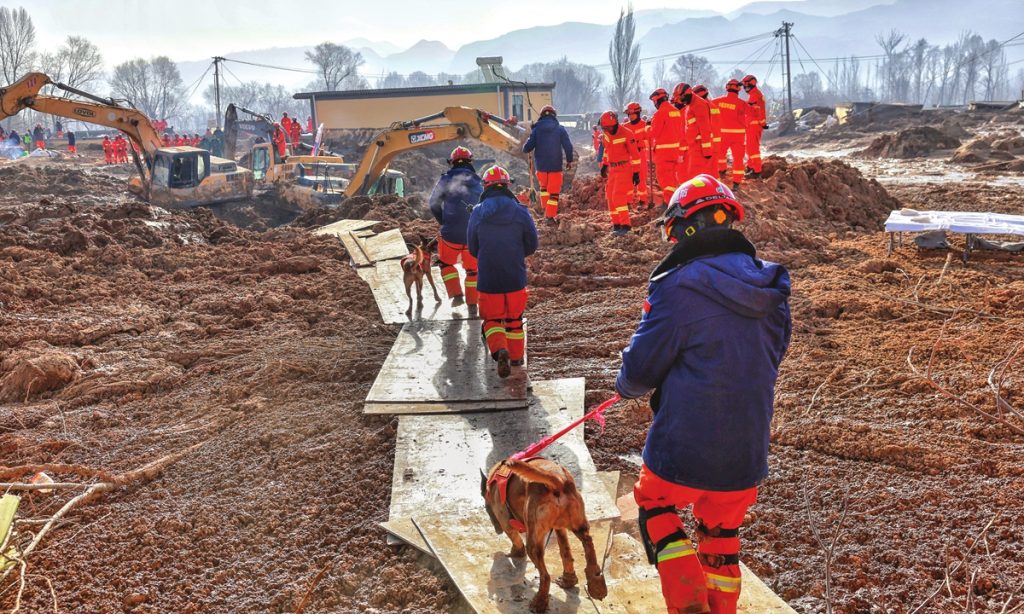
"After we arrived, we found that the search and rescue here were very difficult. We couldn't step on the mud, so we had to build boards to make a path. This was what we called an 'initial lifeline'," Li told the Global Times.
He said one of the biggest challenges was working in the freezing cold. "It was very difficult to work at night in such cold temperatures, but we maintained 24-hour non-stop rescue. Every two hours, a group of people would rotate in and out."
Each group had three firefighters, one responsible for close observation of the excavator, one responsible for maintaining vigilance on the side, and one mobile personnel. "A layer of ice would form on the surface of the mud at night, but it was still flowing and soft underneath. If you didn't watch your step, it was easy to sink in. In this situation, we needed to be extra careful," Li said.
The lows in Gansu at night reached -15 C. Global Times reporters' hands were almost numb with the cold after less than 10 minutes, but there was no sign of stopping search and rescue on the scene when they visited Jintian village on Tuesday midnight.
The Global Times learned from a rescue team that low temperature environments can cause stiffness and muscle contractions, which greatly hinders flexibility. At the same time, it can also reduce the power supply and even cause some communication devices and rescue equipment to malfunction. Moreover, there was still snow and ice on most of the roads in the villages, which made it difficult for the rescue vehicles to travel. But these difficulties did not stop the lifeline.
Li Kai, a commander from a battalion in the PLA Western Theater Command participating in the post-disaster rescue mission, told the Global Times that after completing search and rescue efforts on Tuesday, his battalion returned to the homes of affected people to help them move furniture, livestock, and other belongings to help minimize their economic losses.
When Global Times reporters visited a temporary shelter for victims in the earthquake-hit village of Dahe in Jishishan county on Tuesday night, almost 130 tents with electricity and heating had been erected.
Local government workers were preparing hot food, free drinks and instant noodles for the victims. Supplies and rations from all over the country were being transported here constantly.
Some children were playing games inside the tents. Although the aftershocks are still uncertain, every light in the resettlement site was illuminating people's expectations for the future and the yearning for a warm home.
Full-wing supports
Rescue personnel used sonar, drones, and other equipment to carry out geological surveys during the rescue efforts. They used excavators, bulldozers, and other large machinery to quickly clear away the mud. Rescue dogs were also brought in to help.
The Global Times reporters on the scene witnessed the use of a number of high-tech equipment in disaster relief efforts, including Y-20 military aircraft used to transport large-scale rescue vehicles and the "Wing Loong" unmanned aerial vehicle (UAV) used for emergency telecommunication support and disaster reconnaissance tasks. Currently, the public communication network in the affected areas has been largely restored to normal. When the Global Times reporters left the scene on Wednesday night, the excavators were still roaring, and non-stop search and rescue efforts remained the first principle of China's response to earthquake disasters. The rescue officers and soldiers were putting in all their efforts to ensure the success of this life-saving relay.
Gansu's emergency management bureau said on Thursday that the province's earthquake relief work has achieved a phased victory, and now the local government is focusing on saving the injured, the resettlement of victims and cleaning debris from across earthquake-stricken areas.
Meanwhile, local hospitals have received a total of 784 injured people, and health authorities are currently providing psychological counseling for those impacted by the disaster.
More than 500 specialists and technicians have been dispatched to the area to survey the damage to residential areas and facilities, conduct emergency assessments of building structures, and carry out urgent repairs.
As of Thursday, the water and gas supply in Jishishan county, the epicenter of the earthquake, had resumed.
Signs of life resuming and the return of vitality are gradually emerging. Survivors are helping each other in the aftermath of the earthquake, with the full support and great efforts of the whole country.
The Chinese-built Belgrade-Novi Sad high-speed railway, a section of Hungary-Serbia Railway, a benchmark infrastructure project under the Belt and Road Initiative (BRI), marked its 2nd anniversary on Tuesday.
The railway has transported over 6.83 million people between Serbia's two largest cities since its operation in 2022, which greatly facilitated travel in the region and has become a significant project of international railway cooperation, China Railway said in a press release sent to the Global Times.
The Belgrade-Novi Sad section marks the first time that China-developed train control system and technology were imported to Europe.
A large range of Chinese technology and equipment, such as wireless communication systems, were also used in the railway. The Belgrade-Novi Sad section of the railway is more than 54 percent made-in-China, according to the company.
China Railway said that the construction of the section between Novi Sad and Subotica - another part of Hungary-Serbia Railway - is picking up speed, and will be ready for operation at the end of 2024.
According to the company, the north-south high-speed railway is a double-track electrified railway with a total length of 341.7 kilometers, including 183.1 kilometers in Serbia, with a designed maximum speed of 200 kilometers per hour, and 158.6 kilometers in Hungary, with a designed maximum speed of 160 kilometers per hour.
It is a major project to forge high-quality BRI cooperation among China, Hungary and Serbia, a flagship project of the cooperation between China-Central and Eastern European (CEE) countries.
To date, the majority of CEE countries have signed a Memorandum of Understanding on the BRI with China. Since 2012, the trade volume between China and CEE countries expanded by 8.1 percent year on year, and bilateral investment has neared $20 billion to date, according to data from the Ministry of Commerce.
China's commercial aerospace enterprises were inspired as the Government Work Report vowed to step up the development of commercial spaceflight to foster new growth engines.
Developing commercial spaceflight was listed among key areas for development of emerging industries in the Government Work Report, which was mentioned again following the Central Economic Work Conference held in December 2023.
Industry insiders said the Government Work Report underlines the importance and strategic position of the commercial spaceflight industry and builds a foundation for potential policy support for fostering new quality productive forces.
Zhang Changwu, founder and CEO of Chinese private aerospace firm LandSpace, told the Global Times that China's commercial aerospace sector is at a stage of vigorous development, and overall policies, funds, talent and other factors are converging toward this industry.
From the industry's perspective, competition and opportunities coexist. In the fields of rockets, satellites and the corresponding downstream applications, the degree of commercialization varies, but many market participants have emerged, Zhang said.
The development of commercial aerospace has opened a major window, which determines that at this stage, the industry and enterprises need to be more calm and pragmatic, Zhang said, adding that the nation has systematic guidance and guarantees for commercial aerospace from the policy and resource levels.
In regard to the government's pledge to develop new quality productive forces at a faster pace as noted in the Government Work Report, Xia Dongkun, vice president of the Beijing-based private aerospace enterprise firm Galactic Energy, told the Global Times that developing new productivity in the field of commercial aerospace can effectively promote the continuous innovation and breakthrough of new technologies, promote the improvement and optimization of the commercial aerospace industry chain, and create more development space and opportunities for commercial aerospace enterprises.
Xia called for industry efforts to strengthen innovation and production efficiency to compete with global leading commercial aerospace companies such as SpaceX, generating a force for economic growth.
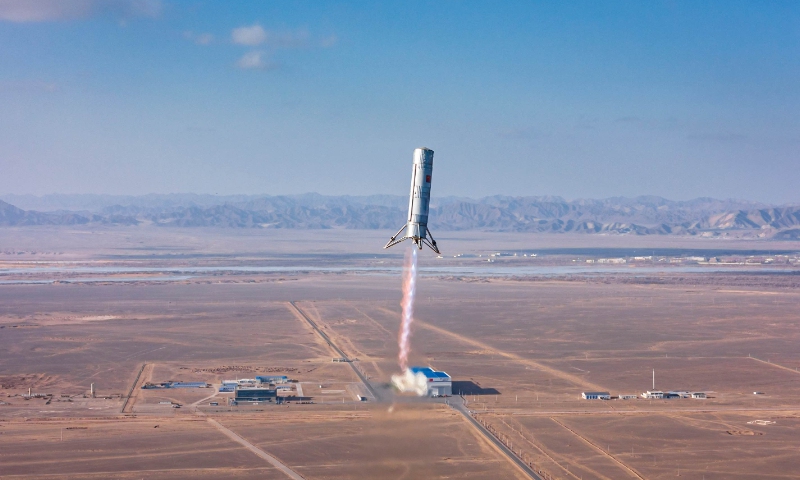
On January 11, the world's mightiest solid carrier rocket, Gravity-1, developed by Chinese aerospace firm Orienspace, blasted off from a space port in East China's Shandong Province, making the company the sixth commercial aerospace firm in China to have sent a satellite into orbit.
In 2023, domestic private rocket companies made 13 launches and successfully entered orbit 12 times, setting new records in the eight years of China's commercial aerospace development, according to media reports.
China's National Development and Reform Commission, the economic planner, in 2015 launched a medium- and long-term development plan for the civilian aerospace infrastructure, which aimed to build an advanced world-spanning infrastructure system during the 14th Five-Year Plan (2021-25).
Since 2015, the size of China's commercial aerospace market has quickly expanded. Data from analysis organization iiMedia Research Institute showed that the market is expected to reach 2.3 trillion yuan ($319.47 billion) in 2024 from 376.42 billion yuan in 2015.
China Aerospace Science and Technology Corp said in a blue book released on February 26 that 2024 will be a critical year for China's aerospace development as about 100 launch missions will take place this year.
Also, China's first commercial aerospace launch site in South China's Hainan Province is expected to host its first rocket launch in the first half of 2024.