China has comprehensively bolstered its human rights protection capability, according to an evaluation report jointly released on Friday by the China Society for Human Rights Studies and 20 national human rights education and training bases in the country.
The report assesses the implementation of the National Human Rights Action Plan of China (2021-2025), which was issued in September 2021.
China has fully implemented the five-year action plan, accomplishing all 181 tasks outlined in it, the report says.
It notes that China has advanced human rights through development, with the country completing the building of a moderately prosperous society in all respects and eliminating absolute poverty.
China now has the world's largest education, social security and healthcare systems. Meanwhile, solid progress has been made toward common prosperity for all, laying a stronger material foundation for the continued advancement of human rights in China, the report says.
It also highlights that China has been developing whole-process people's democracy, strengthening legal protection for human rights, and improving the system of institutions through which the people run the country.
The report highlights China's advances in environmental protection. The Ecological and Environmental Code has beefed up the legal framework for environmental protection, while improved environmental quality has helped better safeguard people's environmental rights.
According to the report, China has strengthened protection of the rights and interests of all groups, ensuring that people from various sectors participate in economic and social development, exercise their democratic rights, and benefit from the outcomes of modernization on an equal basis. In addition, the rights of women, children, the elderly and people with disabilities have been better safeguarded.
China has actively promoted human rights education and awareness, fostering greater public understanding of and commitment to respecting and protecting human rights, the report notes.
China follows the principles of equality, mutual trust, inclusiveness, mutual learning, win-win cooperation and common development, and it fulfills its international human rights obligations with a strong sense of responsibility, the report states.
There is always room for progress in human rights protection, the report says, adding that China still faces imbalanced and insufficient development, while sci-tech development and industrial transformation are also giving rise to new demands for rights. The report expresses the expectation that China will respond to these challenges and further advance human rights during the 15th Five-Year Plan period (2026-2030).
The full report is available in both Chinese and English on the official website of the China Society for Human Rights Studies.
The action plan spanning the period 2021-2025 was the fourth national human rights plan released and implemented by the Chinese government.
China on Friday urged Japan to deeply reflect on its war crimes and make a clean break with militarism, saying history must not be overturned after reports that the city of Nagasaki planned to alter references to the "Nanjing Massacre" as "Nanjing Incident" in the updating of display panels at the Nagasaki Atomic Bomb Museum.
According to Japanese broadcaster Nagasaki Bunka Hoso (NCC), the proposal was presented by the Nagasaki city government to the museum's operating advisory council on Thursday as part of preparations for a renovation project scheduled to begin in September 2026. Under the revision plan, a timeline entry currently stating "Occupation of Nanjing, Nanjing Massacre occurs" would be changed to "Nanjing Incident."
Responding to the reported revision at Friday's regular press conference, Foreign Ministry spokesperson Mao Ning said there is abundant evidence for the Nanjing Massacre—a horrendous war crime of Japanese militarists that shall never be erased. The Tokyo Trials ruled in black and white that the wartime atrocities of the Japanese army in Nanjing were a "massacre", not a mere "incident".
The Judgement of the International Military Tribunal for the Far East dedicated a special chapter to detail "the Rape of Nanking". With numerous survivors' testimonies, records of third-country witnesses and Japanese army files, the judgement, in the form of the ruling of international justice, made it very clear that the Japanese army who invaded China committed the heinous crime of the Nanjing Massacre. The Massacre's chief perpetrator Iwane Matsui was sentenced to death by hanging as a class-A war criminal.
The verdict of history must not be overturned. I noted that many survivors of the atomic bombs in Japan, Nagasaki citizen groups and people with insights have called for fully and accurately depicting the crimes and history of Japanese militarists as victimizers, according to the spokesperson.
"We urge the Japanese side to deeply reflect on its war crimes and make a clean break with militarism," Mao said.
The Nanjing Massacre remains one of the most horrific chapters of Japan's invasion of China. According to the People's Daily, on December 13, 1937, invading Japanese troops occupied Nanjing. Over the following six weeks or more, more than 300,000 innocent civilians and disarmed Chinese soldiers were brutally killed. Approximately 20,000 cases of rape occurred in the city, and about one-third of the buildings were burned down, creating the shocking Nanjing Massacre that stunned the world.
Terminology used to distort history
The manipulation of historical terminology is intended to beautify Japan's history of aggression, and reflects the lingering influence of militarism, Lü Chao, a research fellow at the Liaoning Academy of Social Sciences, told the Global Times on Friday. He noted that Japan has long distorted historical facts through the manipulation of terminology, for example by avoiding the term "surrender" in favor of "end of the war" or "defeat."
Such practices, Lü said, are part of a broader pattern among right-wing forces of denying the Nanjing Massacre and refusing to reflect on Japan's wartime aggression. He said they seriously hurt the feelings of victims and people in affected countries, and constitute a form of deliberate provocation.
It not only runs counter to abundant historical evidence and the international consensus, but also hampers Japan's ability to become a truly normal country and achieve genuine reconciliation with its neighbors, he added.
The planned move also recalls what scholars have described as the deliberate political use of the term "incident" in Japan's wartime narrative. Zhang Sheng, a professor at the School of History at Nanjing University, previously told the Global Times that newly uncovered archives belonging to William F. Webb, president of the International Military Tribunal for the Far East, showed Japan's use of the term was far from neutral.
During the Tokyo Trial, Akira Muto, a Class-A war criminal who bore significant responsibility for the Nanjing Massacre, acknowledged that Japanese authorities had consciously chosen to describe the war of aggression against China as an "incident" rather than a war in an attempt to deny its status as a formal war and avoid the constraints of international law. Webb explicitly pointed out this intention in his personal archives, Zhang said.
Such practices carry important implications for efforts today to shape historical discourse and ensure accurate historical representation, Zhang noted.
Deep divisions in Japanese society
While the proposed change in terminology on the Nanjing Massacre has drawn criticism from both within Japan and abroad, including from civic groups urging the city not to downplay the country's wartime atrocities, Japanese media coverage has largely focused on another aspect of the draft revision, highlighting that the new exhibition panels explicitly identify the "invasion" by the former Japanese army as the cause of the war.
According to the Yomiuri Shimbun on Friday, the draft revision includes a description of the process through which the September 18th Incident developed into the Japanese war of aggression against China, stating that Japan "further advanced its invasion into North China." The report, citing a city official, explained that the reason for the wording was that, after examining junior high and high school textbooks, the term "invasion" was found to be the most frequently used expression, the Yomiuri Shimbun reported.
Although one committee member expressed the view that the term "invasion" may be inappropriate because its meaning can vary depending on standpoint and era, another member stated that the international community at the time recognized it as an act of invasion and therefore saw no issue, the Yomiuri Shimbun reported.
Experts noted that this reflects deep divisions within Japanese society over historical memory. While some voices within Japan's academic and civil circles call for confronting historical facts, the official mainstream stance remains ambiguous and at times dismissive of Japan's aggression against China. Narratives emphasizing Japan as a victim of the war tend to blur the distinction between aggressor and victim, thereby distorting public understanding of history, they stressed.
"Genuine peace education must be based on complete and honest historical facts. It should remember all victims, while also facing up to the responsibility for aggression. Only in this way can we avoid repeating cycles of distorted history rooted in selective memory," Lü added.
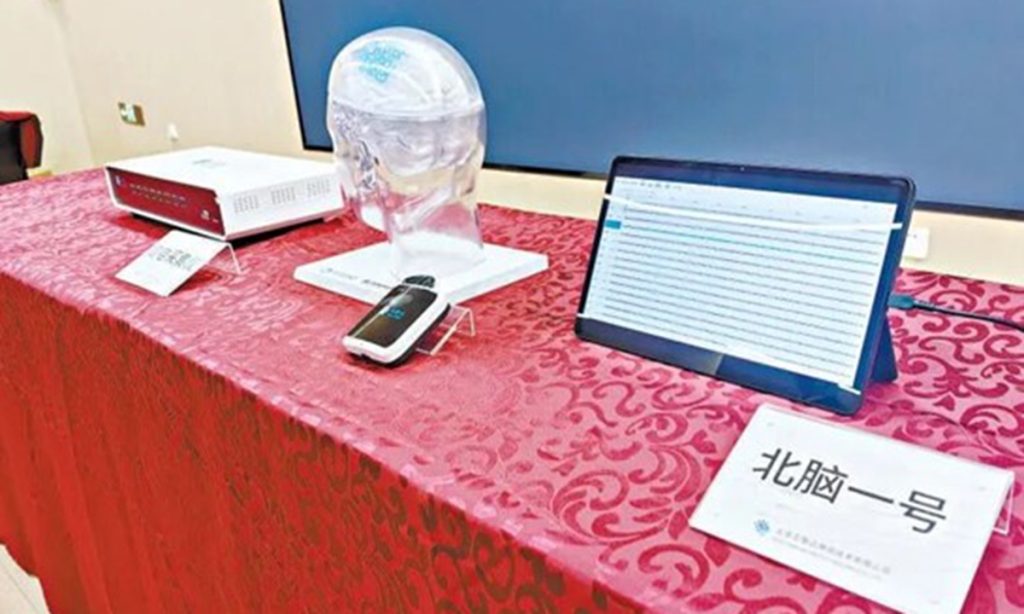
China's domestically developed semi-invasive brain-computer interface (BCI) system "Beinao No.1" has completed 16 implantations and is expected to be piloted in qualified Grade-A tertiary hospitals nationwide in 2027, while "Beinao No.2" is set to begin clinical validation in the second half of 2026, Zhao Jizong, a neurosurgery expert and academician of the Chinese Academy of Sciences, said at an academic exchange event, according to Beijing Daily on Tuesday.
Zhao said Beijing has built a full-chain research and development system for BCI. At present, "Beinao No.1" has 16 research centers and has completed 16 implantations. The longest implantation has lasted more than one year, and the system has operated safely for more than 55,000 hours, helping patients achieve mind-controlled robotic-arm operation and motor-function reconstruction.
According to the plan, "Beinao No.1" will complete 36 implantations in 2026, while clinical validation of "Beinao No.2" will be advanced in the second half of the year. By 2030, China is expected to complete BCI clinical guidelines and technical standards, forming a replicable Chinese solution, according to the Beijing Daily.
Zhao said the current core bottleneck lies in the shortage of specialized talent, as post-operative rehabilitation for patients lacks dedicated personnel with relevant expertise. Beijing has taken the lead in launching training for clinical BCI adaptation specialists to fill the talent gap and support the implementation of the technology.
A BCI creates a direct communication pathway between the brain and an external device. By recording and interpreting brain signals, BCI allows the brain to "talk" directly to machines, enabling patients to control assistive devices, according to the Xinhua News Agency.
As a frontier technology in human-computer interaction, BCI has been driving a new wave of technological and industrial transformation. China has introduced a series of policies to strengthen BCI research and industrial deployment. The BCI sector has been designated as a future industry in this year's government work report, per Xinhua.
With the 2026 national college entrance examinations (gaokao) approaching, examination authorities across multiple Chinese provinces have tightened security checks at exam sites. The enhnced measures aim to ensure that cheating devices cannot be brought into examination venues, used during exams, or employed to transmit information. Authorities have placed special emphasis on detecting smart glasses and other high-tech cheating devices, which are prohibited from exam rooms and will be treated as cheating if discovered.
According to the Ministry of Education (MOE), a total of 12.9 million candidates have registered for this year's gaokao, which will begin on June 7. In an announcement on Wednesday, the ministry and relevant government agencies said they have directed local authorities to enhance exam administration and candidate services, with the goal of ensuring a safe and orderly examination process.
Guangdong Province on Tuesday issued a notice, saying that gaokao candidates wearing or carrying glasses must remove them during entrance security checks under video surveillance and place them on a desk for inspection by proctors, The Paper reported.
Education examinations authorities in Shanghai, Fujian and other regions have also issued notices for candidates, emphasizing that those wearing framed glasses must cooperate with proctors for inspection. Exam staff have also received training to identify new types of smart glasses, with particular attention paid to the size, shape and other characteristics of candidates' eyewear, according to The Paper.
Under China's measures for handling violations of national education examinations, any candidate found carrying a device capable of transmitting or receiving information is considered to have cheated, resulting in the cancellation of their scores for all subjects and stages of the examinations they have registered.
The MOE on Tuesday warned that bringing mobile phones, smartwatches, smart bands, smart glasses, or other devices into gaokao exam rooms constitutes cheating, regardless of whether the devices are actually used.
North China's Inner Mongolia Autonomous Region has adopted a zero-tolerance policy toward smart glasses. The local education examination authority has advised gaokao candidates who rely on smart eyewear in daily life or for study to prepare suitable conventional prescription glasses before the exams, warning that smart glasses will not be permitted in exam venues and any resulting impact on exam performance will be the candidate's own responsibility, The Paper reported.
An official from the Examinations and Admissions Authority of Guizhou Province told the Global Times on Wednesday that the requirement permitting only ordinary optical glasses at examination sites comes directly from the MOE. Guizhou is implementing the policy through a combination of smart security gates and manual inspections in line with unified national regulations and requirements.
Recently, the Henan provincial education examinations authority issued pre-exam guidance and introduced a "silent entry" system for the gaokao, requiring candidates to pass smart security gates and metal detector checks without triggering alarms before entering exam zones and test rooms, Henan Fabu, the official WeChat account of the local government said on Wednesday.
Since April, the Philippine Coast Guard's BRP Teresa Magbanua (MRRV-9701) has been illegally anchored in the lagoon of Xianin Jiao in the South China Sea, with the intention of substantially advancing the construction of a "forward base" on Xianbin Jiao to form a semi-permanent floating platform and to achieve illegal "grounding."
The Nansha Islands, including Xianbin Jiao, are China's inherent territory. China has indisputable sovereignty over the Nansha Islands, which brooks no infringement. The scientific survey conducted by China this year shows that Xianbin Jiao is a typical high-water plateau. The report, released on August 30, used sufficient scientific facts to show that the six sandbanks on the Xianbin Jiao plateau were all naturally formed, and three of them emerged from the sea at high tide.
The signal sent by this position is very clear: There is no doubt that Xianbin Jiao has internal waters, a territorial sea and a contiguous zone. There are sufficient international and domestic laws to support any form of enforcement against the illegally stationed Philippine ships at Xianbin Jiao. The measures taken by the Chinese side to block the Philippine side's transportation, replenishment and rotation are rational, restrained and fair. In fact, China has the means to resolutely and thoroughly remove illegal vessels, barge vessels and aircraft infringing on its airspace. If the Philippines does not immediately withdraw the illegally vessels, it will bare all the consequences.
At the same time, China has made clear its position on many international occasions and platforms that it must resolutely uphold the seriousness of the Declaration on the Conduct of Parties in the South China Sea.
Article 5 of the Declaration on the Conduct of Parties in the South China Sea (DOC), signed by China and ASEAN countries in 2002, stipulates that the parties undertake to exercise self-restraint in the conduct of activities that would complicate or escalate disputes and affect peace and stability including, among others, refraining from action of inhabiting on the presently uninhabited islands, reefs, shoals, cays, and other features and to handle their differences in a constructive manner.
The Philippines' recent actions represent a serious breach of its commitments. The series of actions taken by the Philippines constitute a malicious provocation to the status quo of peace in the South China Sea, undermining both international and regional order and betraying its commitments to neighbors and partners.
More importantly, the China-Philippines Bilateral Consultation Mechanism on the South China Sea has held nine rounds. On July 2, the two sides reached a joint commitment to de-escalate the situation at sea. However, at Xianbin Jiao, the Philippines has not adhered to the tacit understanding and commitments reached, instead engaging in extremely dangerous provocations and brinkmanship. The Philippines wants to use the South China Sea issue to engage in geopolitical speculation and to draw in countries outside the region by provoking maritime tensions. More specifically, the Philippines is testing the limits of what the US is willing to do as an ally.
The Philippines' move fully exposes its ambition to provoke and expand territory in the South China Sea. China has stated many times that it will never allow the Philippines to arbitrarily occupy Xianbin Jiao. Any provocations by the Philippines will be met with firm countermeasures from China.
The Philippines should not underestimate the high costs that will inevitably arise from challenging China and undermining regional security, nor should it assume that it has the backing of major powers. For the Philippines, the only correct choice is to immediately withdraw its ships and personnel, and restore the status of no presence or facilities at Xianbin Jiao.
On September 6, the Internationale Funkausstellung Berlin (IFA) opened in Berlin, Germany. This year's IFA marks a significant milestone—its 100th anniversary. Over the past century, IFA has evolved from a radio exhibition to a global showcase for cutting-edge technologies such as smart homes and artificial intelligence, bearing witness to every major shift in the consumer electronics industry.
"Going global" has become a central business strategy for Chinese companies this year. From light industrial products and everyday items to household appliances, mobile phones, automobiles, and robots, Chinese brands are making significant strides in global markets. Whether in well-established markets like Europe, North America, and ASEAN, or emerging ones such as Russia and Mexico, Chinese brands are increasingly becoming mainstream on the global stage.
This year's IFA exhibition has drawn over 1,800 exhibitors from 139 countries and regions. Among them is ECOVACS, a leading Chinese brand in cleaning robots that has been participating in IFA since 2012. Alongside prominent industry players like TCL and HONOR, ECOVACS has showcased its latest and most innovative technologies with confidence. The centennial IFA exhibition, in this context, stands as a testament to the rise of Chinese innovation and technology. One New Product Launch, Two International Awards
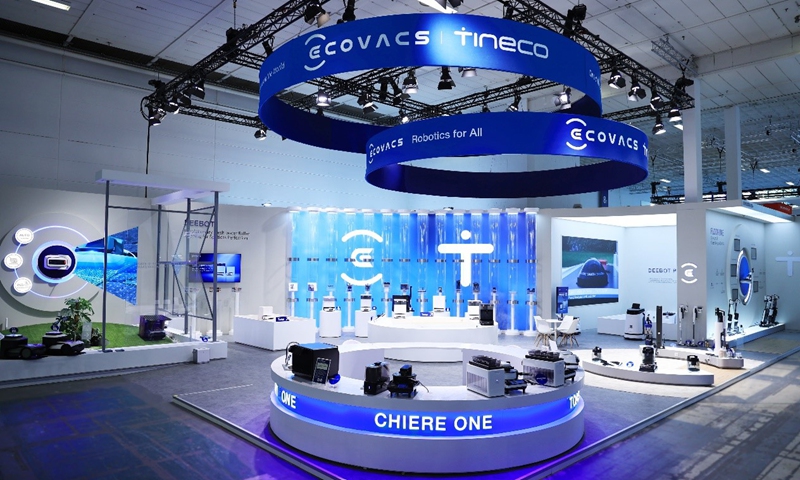
As visitors enter the IFA exhibition from either the north or south gates, they are immediately met with a prominent display of Chinese brands. Hall 9, one of the most stunning spaces at the exhibition, sees the ECOVACS booth predominantly positioned at one side of the entrance. This year, ECOVACS Group is making its debut with a joint presentation of its dual brands, ECOVACS ROBOTICS and TINECO, at the IFA exhibition. This year marks the 26th anniversary of ECOVACS in the service robotics industry. Through its relentless pursuit of excellence in products and services, ECOVACS has evolved into a vibrant, globally recognized brand. The booth has been continuously crowded with visitors, all captivated by the "hard-working" cleaning robots on display.
Qian Cheng, Vice Chairman of ECOVACS Group and CEO of ECOVACS ROBOTICS, remarked that this is his 12th time attending the IFA in the past 15 years. He has noticed changes each year, with the most significant being the increasing prominence of Chinese brands and innovations. "Chinese companies are presenting their best domestic technologies and products to European and global audiences through the IFA," he noted.
At the exhibition, ECOVACS ROBOTICS unveiled its latest floor cleaning robot innovations. Highlighting the launch was the DEEBOT X8 PRO PLUS, the world's first constant-pressure water renewal robotic floor washer. This groundbreaking model merges ECOVACS' advanced smart technology with TINECO's core OZMO ROLLER constant-pressure water renewal system. Its unique roller-based cleaning structure significantly enhances floor cleaning pressure, improving effectiveness against stubborn stains. Additionally, the DEEBOT T50 series showcases a revolutionary design as the thinnest robotic vacuum cleaner from ECOVACS, with an ultra-slim profile of just 81mm, making it the sleekest model in the DEEBOT lineup.
It is worth noting that the ECOVACS brand and its DEEBOT X8 PRO PLUS received prestigious accolades at this year's IFA Product Innovation and Technology Awards, including the "Home Cleaning Robot Brand Award" and the "Gold Award for Home Cleaning Solutions." Qian Cheng further commented, "We are honored to present ECOVACS' most advanced technological innovations in floor cleaning at this exhibition and look forward to setting a new standard in the floor cleaning industry." Additionally, at IFA ECOVACS also showcased a diverse product lineup, including the DEEBOT vacuum robot, the WINBOT window cleaning robot, and the GOAT lawn mowing robot. Top- Seller at Europe's Largest Electronics Retailers
As early as 2012, ECOVACS ROBOTICS showcased its products, including robotic vacuum cleaners and robotic window cleaners, at the IFA exhibition. Each year since then, ECOVACS has introduced increasingly advanced technologies, making a significant impact in the industry.
This year, ECOVACS' products drew substantial attention from European media and consumers. A procurement manager from Hamburg, Germany, remarked that ECOVACS is a familiar name in the European cleaning robot market. Despite their higher price points, the products' robust functionality and user-centric design have made them bestsellers. It is evident that ECOVACS has solidified its position as a preferred Chinese brand among European distributors and consumers. MediaMarkt is the largest electronics retail chain in Germany and Europe. According to Mr Saxe, Managing Director of MediaMarkt Berlin-Wedding, the store offers around 47,000 products, and over half of them are manufactured in China. ECOVACS products are available at all Wandeltown stores and on their e-commerce platforms, where they consistently receive high praise from consumers. One customer described ECOVACS products as "quiet, powerful, and smart."
What has earned ECOVACS the approval of discerning European consumers? The ECOVACS ROBOTICS CEO confidently attributes this success to innovation. He noted that European consumers were initially hesitant to embrace robotic vacuum cleaners. However, advancements in AI and sensor technology have enabled ECOVACS' robotic vacuum cleaners to deliver a more intelligent cleaning experience. The introduction of mopping capabilities and OMNI Stations has significantly enhanced the overall user experience.
Around the year 2000, the ECOVACS team began exploring and developing home service robots. By 2006, ECOVACS introduced its first autonomous vacuum cleaner, making its first appearance to the public. Since then, ECOVACS has leveraged the technology developed for robotic vacuum cleaners to create new categories of home appliances. This includes innovations such as robotic window cleaners and, extending beyond indoor use, the development of a robotic lawnmower that advances lawn care technology to a new level. ECOVACS has also deeply invested in the robotics industry ecosystem by establishing an Artificial Intelligence Engineering Institute and focusing on intelligent sensor research, continually leading the advancement of cutting-edge technologies. As one of the frontrunners in the development of China's robotics and intelligent manufacturing industry cluster, ECOVACS hosted its inaugural ECOVACS Robotics Conference in Suzhou last June. The event brought together over 300 robotics-related companies, investment institutions, and industry scholars to explore future trends and challenges in the robotics industry.
Last year, ECOVACS' R&D expenditure reached 877 million yuan, marking a 17.87% increase from the previous year. Beyond that, the company employs up to 16% of its staff in technology research and development and holds over 2,000 patents worldwide.
Expanding the Pie, Not Just Sharing It
As a leading example of China's new productive forces going global, ECOVACS has leveraged its technological prowess to capture markets across Europe and beyond. Since 2012, ECOVACS has established subsidiaries in key locations such as the US and Germany. In 2023, the company further accelerated its international expansion by opening an overseas headquarters in Singapore.
In the first half of this year, ECOVACS' overseas business revenue grew by 11.3% year-on-year, accounting for 39.3% of the brand's total revenue. Sales in the European market surged by 42% compared to the previous year, with the DEEBOT X series alone selling over 1.6 million units globally. Today, ECOVACS ROBOTICS products are present in over 170 major markets worldwide, serving more than 28 million households globally. Since 2018, ECOVACS ROBOTICS has been listed among the Top 50 Global Brands by BRANDZ for seven consecutive years.
Regarding the advantages and challenges faced by Chinese companies' "going global" strategies, Qian noted that, as far as ECOVACS is concerned, the company has achieved balanced coverage across Europe, the Americas, Asia-Pacific, and the Chinese market, actively addressing global challenges. For Chinese enterprises going international, it's not about "sharing the pie" but rather "expanding it."
He believes that while market competition is inevitable, overcoming price competition always hinges on superior technology and innovation. Consumers are consistently willing to pay for an exceptional product experience. Currently, many European consumers and media representatives are visiting the booth to explore the new products. Despite ECOVACS' products being positioned in the "premium" segment, the company is confident that innovation is crucial for shaping the brand and enhancing its value.
Looking ahead to the next decade, the field of robotic vacuum cleaners is poised for significant transformation with the advancement of artificial intelligence and sensor technologies. ECOVACS will continue to uphold its mission of "Robotics for All," remain responsive to market changes, increase its investment in research and development, lead the industry in high-quality growth, and work toward becoming a top global robotics company.
Trade between China and Canada dropped by 0.5 percent year-on-year in the first eight months this year to $57.66 billion, reversing the 2.4 percent growth seen in the first seven months, official data showed on Tuesday, as Canada-provoked trade tensions with China have negatively impacted bilateral ties, experts said.
According to data released by China's General Administration of Customs, China's imports from Canada fell by 4.7 percent on a yearly basis to $26.81 billion in the first eight months, compared with 0.7 percent growth in the first seven months.
"It is no surprise to see a decline in trade between China and Canada, as the Canadian side's unreasonable move to impose tariffs on Chinese products including electric vehicles has produced negative effect on the two countries' economic and trade ties," Liu Dan, a research fellow at the Center for Regional Country Studies at Guangdong University of Foreign Studies, told the Global Times on Tuesday.
Without any prior investigation, Canada announced a 100-percent additional tariff on Chinese EVs and a 25-percent tariff on steel and aluminum from China starting from October 1.
China's Ministry of Commerce has vowed to take all necessary measures to defend the legitimate rights and interests of Chinese companies, if Ottawa fails to correct its mistakes.
On Monday, China initiated an anti-dumping probe into imported colza seeds from Canada, the ministry said.
The move was made in accordance with the Chinese laws and in compliance with the rules of the WTO, the ministry said.
"It's expected that dissatisfied industry players in the colza seed industry in Canada will express their concerns to the Canadian government, forcing it to ease trade tensions with China," Liu commented.
Liu urged Canada not to blindly follow the US' footsteps and instead objectively view China-Canada relations from the perspective of its own development interests.
The Board of Directors of Al Yah Satellite Communications Company (Yahsat) has approved the distribution of interim dividends of 8.40 fils per share for the first half of 2024.
In a disclosure to the Abu Dhabi Securities Exchange (ADX) on Tuesday, Yahsat said that the dividends are equivalent to 8.40% of the nominal value of the share, representing AED204,940,703 to be paid to the shareholders registered as at the closing of business day on Thursday, 12 September, 2024.
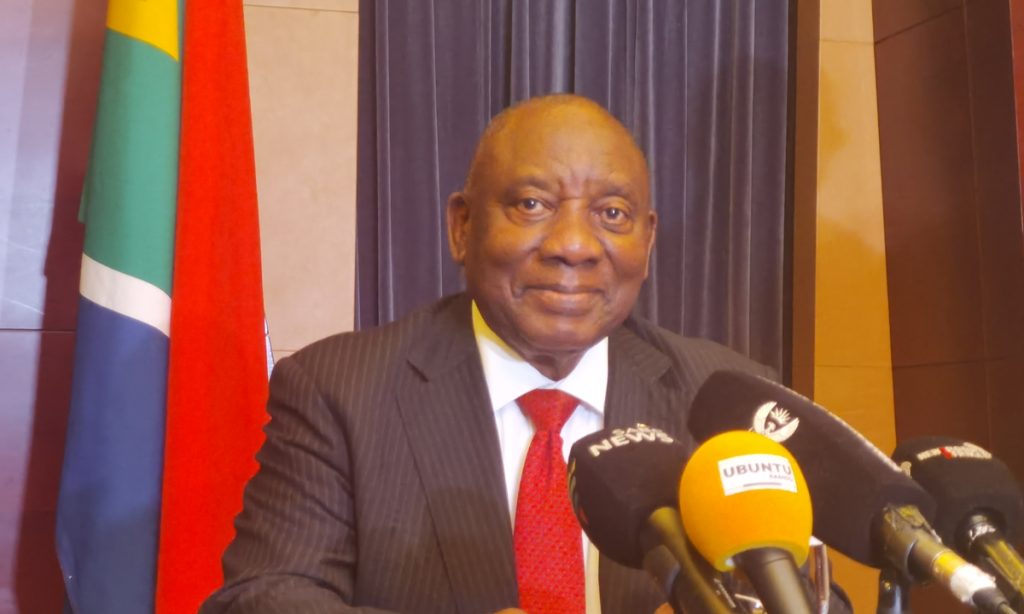
South Africa is grateful for the manner in which China conducts its relationship - with recognition, respect and due regard for one another - not only with South Africa but also with the rest of the African continent, said South African President Cyril Ramaphosa, who described it as a relationship of good quality.
Ramaphosa made these remarks at a media briefing in Beijing on Thursday during his state visit to China, during which he is attending the 2024 Summit of the Forum on China-Africa Cooperation (FOCAC) which runs from Wednesday to Friday.
"Without comparing China with any other part of the world, we have found China to be very progressive in its relations with Africa, and we are very appreciative of the FOCAC relationship we have as a continent, because we see it foster a mutually beneficial relationship," the South African president said in response to a question from the Global Times.
Ramaphosa also briefed the media of the purposes and achievements of his visit to China. During his stay in China, the two countries announced the elevation of bilateral ties to an all-round strategic cooperative partnership in the new era.
Ramaphosa said that South Africa is interested in receiving more investment from China in electric vehicles, which he believes to be the future. He emphasized that South Africa is not being lobbied by the West to reject investment from China and would like those countries not to impose their will on South Africa, a country eager to foster economic development.
"We want to remain sovereign politically and economically, and when it comes to foreign policy as well. Our view is that our journey to developing our economy should not be held back by anxieties and fears that some countries have about other countries with which we have relationships," the president said.
Ramaphosa recognized that China has a lot of experience and technological capabilities that it can share with South Africa.
"We are pretty straightforward and say we want to learn. We want to see how China has reached this level of great development. They already have done exactly what we are seeking to do. So our presence here is to draw from the history of their experience and the journey they have traversed," he said.
The state visit also provided an opportunity for the two sides to exchange views on pressing regional and global issues, he noted. As South Africa prepares to assume the presidency of the G20 in 2025, this dialogue is essential for shaping the future of multilateral cooperation, said the South African president.
Chinese President Xi Jinping on Friday met with Chairman of Sudan's Sovereignty Council Abdel Fattah Al-Burhan, who is in Beijing for the 2024 Summit of the Forum on China-Africa Cooperation (FOCAC).