China has comprehensively bolstered its human rights protection capability, according to an evaluation report jointly released on Friday by the China Society for Human Rights Studies and 20 national human rights education and training bases in the country.
The report assesses the implementation of the National Human Rights Action Plan of China (2021-2025), which was issued in September 2021.
China has fully implemented the five-year action plan, accomplishing all 181 tasks outlined in it, the report says.
It notes that China has advanced human rights through development, with the country completing the building of a moderately prosperous society in all respects and eliminating absolute poverty.
China now has the world's largest education, social security and healthcare systems. Meanwhile, solid progress has been made toward common prosperity for all, laying a stronger material foundation for the continued advancement of human rights in China, the report says.
It also highlights that China has been developing whole-process people's democracy, strengthening legal protection for human rights, and improving the system of institutions through which the people run the country.
The report highlights China's advances in environmental protection. The Ecological and Environmental Code has beefed up the legal framework for environmental protection, while improved environmental quality has helped better safeguard people's environmental rights.
According to the report, China has strengthened protection of the rights and interests of all groups, ensuring that people from various sectors participate in economic and social development, exercise their democratic rights, and benefit from the outcomes of modernization on an equal basis. In addition, the rights of women, children, the elderly and people with disabilities have been better safeguarded.
China has actively promoted human rights education and awareness, fostering greater public understanding of and commitment to respecting and protecting human rights, the report notes.
China follows the principles of equality, mutual trust, inclusiveness, mutual learning, win-win cooperation and common development, and it fulfills its international human rights obligations with a strong sense of responsibility, the report states.
There is always room for progress in human rights protection, the report says, adding that China still faces imbalanced and insufficient development, while sci-tech development and industrial transformation are also giving rise to new demands for rights. The report expresses the expectation that China will respond to these challenges and further advance human rights during the 15th Five-Year Plan period (2026-2030).
The full report is available in both Chinese and English on the official website of the China Society for Human Rights Studies.
The action plan spanning the period 2021-2025 was the fourth national human rights plan released and implemented by the Chinese government.
China on Friday urged Japan to deeply reflect on its war crimes and make a clean break with militarism, saying history must not be overturned after reports that the city of Nagasaki planned to alter references to the "Nanjing Massacre" as "Nanjing Incident" in the updating of display panels at the Nagasaki Atomic Bomb Museum.
According to Japanese broadcaster Nagasaki Bunka Hoso (NCC), the proposal was presented by the Nagasaki city government to the museum's operating advisory council on Thursday as part of preparations for a renovation project scheduled to begin in September 2026. Under the revision plan, a timeline entry currently stating "Occupation of Nanjing, Nanjing Massacre occurs" would be changed to "Nanjing Incident."
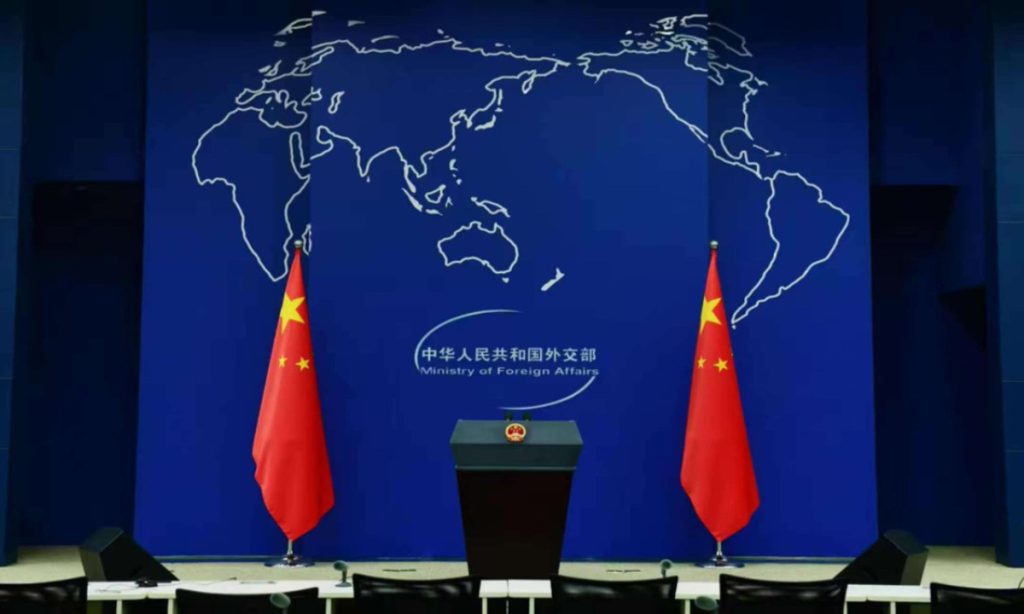
Responding to the reported revision at Friday's regular press conference, Foreign Ministry spokesperson Mao Ning said there is abundant evidence for the Nanjing Massacre—a horrendous war crime of Japanese militarists that shall never be erased. The Tokyo Trials ruled in black and white that the wartime atrocities of the Japanese army in Nanjing were a "massacre", not a mere "incident".
The Judgement of the International Military Tribunal for the Far East dedicated a special chapter to detail "the Rape of Nanking". With numerous survivors' testimonies, records of third-country witnesses and Japanese army files, the judgement, in the form of the ruling of international justice, made it very clear that the Japanese army who invaded China committed the heinous crime of the Nanjing Massacre. The Massacre's chief perpetrator Iwane Matsui was sentenced to death by hanging as a class-A war criminal.
The verdict of history must not be overturned. I noted that many survivors of the atomic bombs in Japan, Nagasaki citizen groups and people with insights have called for fully and accurately depicting the crimes and history of Japanese militarists as victimizers, according to the spokesperson.
"We urge the Japanese side to deeply reflect on its war crimes and make a clean break with militarism," Mao said.
The Nanjing Massacre remains one of the most horrific chapters of Japan's invasion of China. According to the People's Daily, on December 13, 1937, invading Japanese troops occupied Nanjing. Over the following six weeks or more, more than 300,000 innocent civilians and disarmed Chinese soldiers were brutally killed. Approximately 20,000 cases of rape occurred in the city, and about one-third of the buildings were burned down, creating the shocking Nanjing Massacre that stunned the world.
Terminology used to distort history
The manipulation of historical terminology is intended to beautify Japan's history of aggression, and reflects the lingering influence of militarism, Lü Chao, a research fellow at the Liaoning Academy of Social Sciences, told the Global Times on Friday. He noted that Japan has long distorted historical facts through the manipulation of terminology, for example by avoiding the term "surrender" in favor of "end of the war" or "defeat."
Such practices, Lü said, are part of a broader pattern among right-wing forces of denying the Nanjing Massacre and refusing to reflect on Japan's wartime aggression. He said they seriously hurt the feelings of victims and people in affected countries, and constitute a form of deliberate provocation.
It not only runs counter to abundant historical evidence and the international consensus, but also hampers Japan's ability to become a truly normal country and achieve genuine reconciliation with its neighbors, he added.
The planned move also recalls what scholars have described as the deliberate political use of the term "incident" in Japan's wartime narrative. Zhang Sheng, a professor at the School of History at Nanjing University, previously told the Global Times that newly uncovered archives belonging to William F. Webb, president of the International Military Tribunal for the Far East, showed Japan's use of the term was far from neutral.
During the Tokyo Trial, Akira Muto, a Class-A war criminal who bore significant responsibility for the Nanjing Massacre, acknowledged that Japanese authorities had consciously chosen to describe the war of aggression against China as an "incident" rather than a war in an attempt to deny its status as a formal war and avoid the constraints of international law. Webb explicitly pointed out this intention in his personal archives, Zhang said.
Such practices carry important implications for efforts today to shape historical discourse and ensure accurate historical representation, Zhang noted.
Deep divisions in Japanese society
While the proposed change in terminology on the Nanjing Massacre has drawn criticism from both within Japan and abroad, including from civic groups urging the city not to downplay the country's wartime atrocities, Japanese media coverage has largely focused on another aspect of the draft revision, highlighting that the new exhibition panels explicitly identify the "invasion" by the former Japanese army as the cause of the war.
According to the Yomiuri Shimbun on Friday, the draft revision includes a description of the process through which the September 18th Incident developed into the Japanese war of aggression against China, stating that Japan "further advanced its invasion into North China." The report, citing a city official, explained that the reason for the wording was that, after examining junior high and high school textbooks, the term "invasion" was found to be the most frequently used expression, the Yomiuri Shimbun reported.
Although one committee member expressed the view that the term "invasion" may be inappropriate because its meaning can vary depending on standpoint and era, another member stated that the international community at the time recognized it as an act of invasion and therefore saw no issue, the Yomiuri Shimbun reported.
Experts noted that this reflects deep divisions within Japanese society over historical memory. While some voices within Japan's academic and civil circles call for confronting historical facts, the official mainstream stance remains ambiguous and at times dismissive of Japan's aggression against China. Narratives emphasizing Japan as a victim of the war tend to blur the distinction between aggressor and victim, thereby distorting public understanding of history, they stressed.
"Genuine peace education must be based on complete and honest historical facts. It should remember all victims, while also facing up to the responsibility for aggression. Only in this way can we avoid repeating cycles of distorted history rooted in selective memory," Lü added.
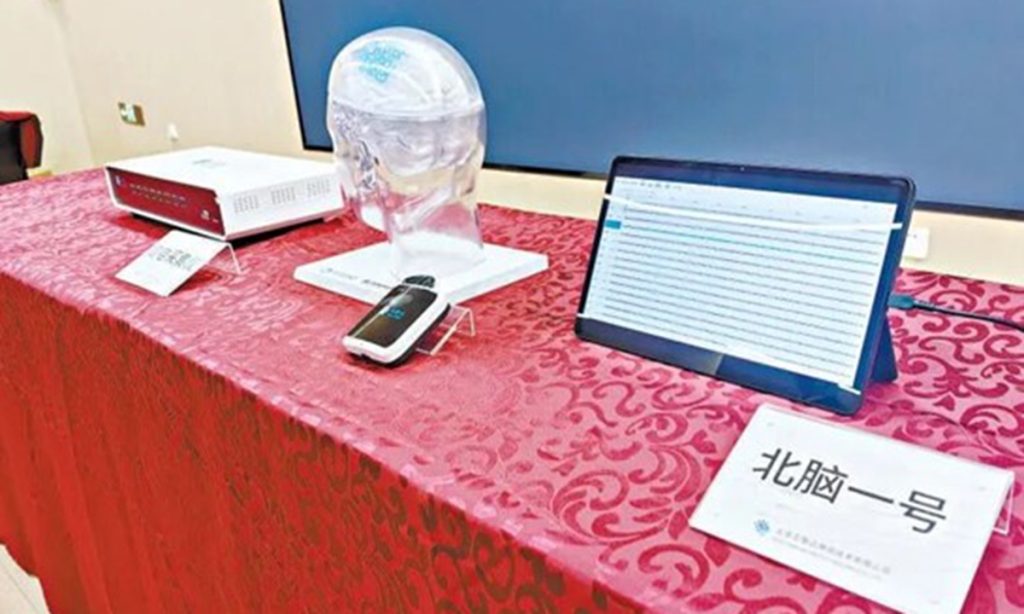
China's domestically developed semi-invasive brain-computer interface (BCI) system "Beinao No.1" has completed 16 implantations and is expected to be piloted in qualified Grade-A tertiary hospitals nationwide in 2027, while "Beinao No.2" is set to begin clinical validation in the second half of 2026, Zhao Jizong, a neurosurgery expert and academician of the Chinese Academy of Sciences, said at an academic exchange event, according to Beijing Daily on Tuesday.
Zhao said Beijing has built a full-chain research and development system for BCI. At present, "Beinao No.1" has 16 research centers and has completed 16 implantations. The longest implantation has lasted more than one year, and the system has operated safely for more than 55,000 hours, helping patients achieve mind-controlled robotic-arm operation and motor-function reconstruction.
According to the plan, "Beinao No.1" will complete 36 implantations in 2026, while clinical validation of "Beinao No.2" will be advanced in the second half of the year. By 2030, China is expected to complete BCI clinical guidelines and technical standards, forming a replicable Chinese solution, according to the Beijing Daily.
Zhao said the current core bottleneck lies in the shortage of specialized talent, as post-operative rehabilitation for patients lacks dedicated personnel with relevant expertise. Beijing has taken the lead in launching training for clinical BCI adaptation specialists to fill the talent gap and support the implementation of the technology.
A BCI creates a direct communication pathway between the brain and an external device. By recording and interpreting brain signals, BCI allows the brain to "talk" directly to machines, enabling patients to control assistive devices, according to the Xinhua News Agency.
As a frontier technology in human-computer interaction, BCI has been driving a new wave of technological and industrial transformation. China has introduced a series of policies to strengthen BCI research and industrial deployment. The BCI sector has been designated as a future industry in this year's government work report, per Xinhua.
With the 2026 national college entrance examinations (gaokao) approaching, examination authorities across multiple Chinese provinces have tightened security checks at exam sites. The enhnced measures aim to ensure that cheating devices cannot be brought into examination venues, used during exams, or employed to transmit information. Authorities have placed special emphasis on detecting smart glasses and other high-tech cheating devices, which are prohibited from exam rooms and will be treated as cheating if discovered.
According to the Ministry of Education (MOE), a total of 12.9 million candidates have registered for this year's gaokao, which will begin on June 7. In an announcement on Wednesday, the ministry and relevant government agencies said they have directed local authorities to enhance exam administration and candidate services, with the goal of ensuring a safe and orderly examination process.
Guangdong Province on Tuesday issued a notice, saying that gaokao candidates wearing or carrying glasses must remove them during entrance security checks under video surveillance and place them on a desk for inspection by proctors, The Paper reported.
Education examinations authorities in Shanghai, Fujian and other regions have also issued notices for candidates, emphasizing that those wearing framed glasses must cooperate with proctors for inspection. Exam staff have also received training to identify new types of smart glasses, with particular attention paid to the size, shape and other characteristics of candidates' eyewear, according to The Paper.
Under China's measures for handling violations of national education examinations, any candidate found carrying a device capable of transmitting or receiving information is considered to have cheated, resulting in the cancellation of their scores for all subjects and stages of the examinations they have registered.
The MOE on Tuesday warned that bringing mobile phones, smartwatches, smart bands, smart glasses, or other devices into gaokao exam rooms constitutes cheating, regardless of whether the devices are actually used.
North China's Inner Mongolia Autonomous Region has adopted a zero-tolerance policy toward smart glasses. The local education examination authority has advised gaokao candidates who rely on smart eyewear in daily life or for study to prepare suitable conventional prescription glasses before the exams, warning that smart glasses will not be permitted in exam venues and any resulting impact on exam performance will be the candidate's own responsibility, The Paper reported.
An official from the Examinations and Admissions Authority of Guizhou Province told the Global Times on Wednesday that the requirement permitting only ordinary optical glasses at examination sites comes directly from the MOE. Guizhou is implementing the policy through a combination of smart security gates and manual inspections in line with unified national regulations and requirements.
Recently, the Henan provincial education examinations authority issued pre-exam guidance and introduced a "silent entry" system for the gaokao, requiring candidates to pass smart security gates and metal detector checks without triggering alarms before entering exam zones and test rooms, Henan Fabu, the official WeChat account of the local government said on Wednesday.
The return capsule of the Shenzhou-22 spaceship, carrying the Shenzhou-21 astronauts Zhang Lu, Wu Fei and Zhang Hongzhang, touched down at the Dongfeng landing site in north China's Inner Mongolia Autonomous Region on Friday.
The three astronauts are all in good health condition, the China Manned Space Agency said, noting that the Shenzhou-21 spaceflight mission is a complete success.
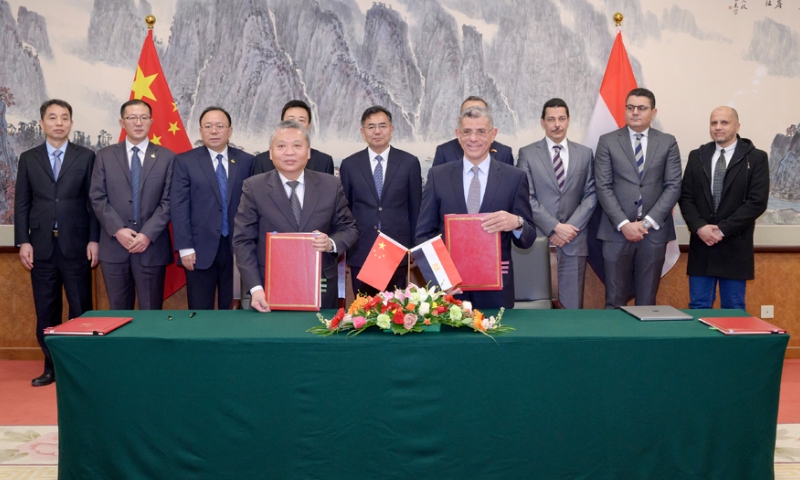
China and Egypt have signed cooperation documents in space exploration in Beijing on Wednesday to boost deep space exploration, spacecraft development and construction of space infrastructure, which is of great significance to foster a comprehensive strategic partnership between the two countries.
Zhang Kejian, administrator of the China National Space Administration (CNSA) and Sherif Sedky, Chief Operating Officer of the Egyptian Space Agency (EGSA), signed a memorandum of understanding between the governments of the two countries on space cooperation and peaceful use of outer space and a cooperation agreement between the CNSA and the EGSA on the International Lunar Research Station (ILRS).
According to the cooperation documents, both sides will encourage joint researches and development cooperation in a variety of areas including lunar and deep space exploration, development and launch of spacecraft, construction of space infrastructure, satellite data reception and application, the BRICS Remote Sensing Satellite Constellation, space science and astronomical observation.
They will also collaborate on the joint demonstration and research of the ILRS, space missions, space systems and subsystems, space equipment, ground segments and applications, education and training and capacity building.
China and Egypt have achieved fruitful results in space cooperation. The China-assisted Egyptian Satellite Assembly, Integration and Test Center completed the acceptance checks in June this year. The China-funded MisrSat-2 satellite completed its assembly and testing at the center and was launched on Monday.
The satellite MisrSat-2, launched by a Long March-2C carrier rocket from the Jiuquan Satellite Launch Center in Northwest China's Gansu Province, will be used in Egypt's land and resource utilization, water conservancy, agriculture, and other fields. It is a landmark project of deep cooperation between China and Egypt in the field of aerospace high-tech, and is of milestone significance in aerospace cooperation between the two countries, according to the CNSA.
The signing of these space agreements between China and Egypt will guide future collaboration and play a significant role in advancing space technology and fostering comprehensive strategic partnerships between the two countries, said CNSA in a press release on Wednesday.
The Week of Italian Cuisine in the World kicked off on Monday, with the aim to promote exquisite Italian cooking, the Mediterranean diet, Italian agri-food products and wine. In the 2023 edition, as in past years, the week will be further enhanced by activities organized by the Italian Embassy in China together with the Italian business community operating in China.
Several Italian restaurants in Beijing, Tianjin, and Qingdao have been preparing special menus and typical dishes for Chinese friends and expatriates residing in China to enjoy throughout the Italian cuisine week that is set to run until November 19. Beijing's ABBOCCA restaurant, for instance, has provided a special selection for homemade fresh cheeses called "TRILOGY," which includes mozzarella, stracciatella, and ricotta, and has been dubbed a tasty journey through salty and sweet to stimulate all senses complete with fresh basil leaves, cherry tomatoes.
Parasites can drive their hosts to do weird, dumb things. But in certain oak trees, the parasites themselves get played.
“Creepy and awesome,” says Kelly Weinersmith of Rice University in Houston, who has helped reveal a Russian doll of nested parasitisms.
The saga begins when two majestic live oak species in the southeastern United States send out new shoots, and female crypt gall wasps (Bassettia pallida) arrive to lay eggs. A wasp mom uses the delivery end of her reproductive tract to drill through tree bark, injecting each of her eggs into a separate spot in the oak. Wasp biochemistry induces the tree to form a botanical womb with an edible lining largely free of oak defense chemicals. The tree is hijacked into nurturing each larva, and wasp life is good — until the unlucky ones get noticed by a second exploiter.
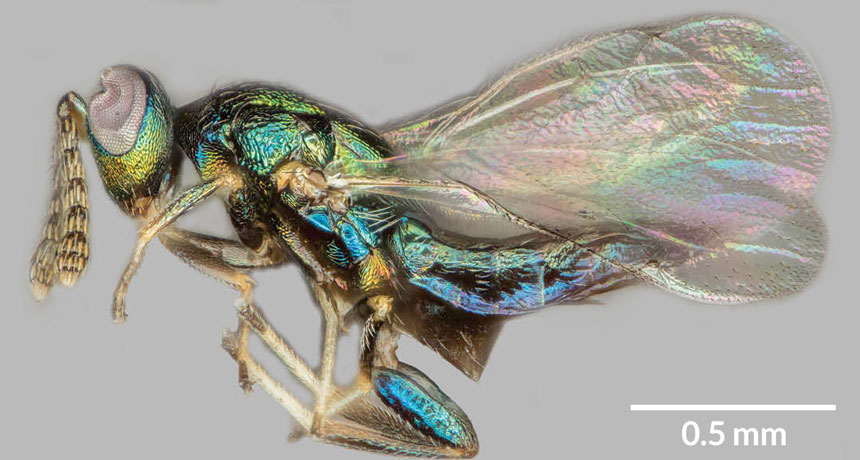
Another wasp species, a newly discovered Euderus, arrives, barely visible to the naked eye but “amazingly iridescent,” Weinersmith says. Her colleague at Rice, Scott Egan, named these jewel blue and green specks after Set, an Egyptian god of evil and chaos. E. set wasps enslave the B. pallida as laborers and living baby food. E. set females sense their prey inside the gall and inject eggs that hatch and feed on the original occupant. When the invaders mature, they are typically too frail to dig themselves out of the tree.But that’s not a problem, Weinersmith, Egan and colleagues report in the Jan. 25 Proceedings of the Royal Society B. That’s because, despite having a gnawing parasite inside, B. pallida wasps dig a tunnel to freedom.
Almost. When infested with E. set, the tunnelers don’t manage a large enough hole for their own escape. They die with their heads plugging the tunnel exit, perfect for the E. set attackers, who chew an escape hole through the stuck noggins.
Weinersmith and Egan may be the first to describe E. set’s manipulation, but what could be a much earlier example was collected by Alfred Kinsey — yes, that Kinsey. Before shocking mid-20th century America with explicit chronicles of human sexual behavior, he specialized in gall wasps.
Kinsey named more than 130 new species in just three years, collecting at least 5.5 million specimens, now at New York’s American Museum of Natural History. One of his Bassettia has its head stuck in a too-small exit hole in a stem, suggesting a chaos-and-death wasp lurks inside.
Much of what happens on the Earth’s surface is connected to activity far below. “Beneath Our Feet,” a temporary exhibit at the Norman B. Leventhal Map Center in the Boston Public Library, explores the ways people have envisioned, explored and exploited what lies underground.
“We’re trying to visualize those places that humans don’t naturally go to,” says associate curator Stephanie Cyr. “Everybody gets to see what’s in the sky, but not everyone gets to see what’s underneath.” “Beneath Our Feet” displays 70 maps, drawings and archaeological artifacts in a bright, narrow exhibit space. (In total, the library holds a collection of 200,000 maps and 5,000 atlases.) Many objects have two sets of labels: one for adults and one for kids, who are guided by a cartoon rat mascot called Digger Burrows.
The layout puts the planet’s long history front and center. Visitors enter by walking over a U.S. Geological Survey map of North America that is color-coded to show how topography has changed over geologic time. Beyond that, the exhibit is split into two main themes, Cyr says: the natural world, and how people have put their fingerprints on it. Historical and modern maps hang side by side, illustrating how ways of thinking about the Earth developed as the tools for exploring it improved.
For instance, a 1665 illustration drawn by Jesuit scholar Athanasius Kircher depicts Earth’s water systems as an underground network that churned with guidance from a large ball of fire in the planet’s center, Cyr says. “He wasn’t that far off.” Under Kircher’s drawing is an early sonar map of the seafloor in the Pacific Ocean, made by geologists Marie Tharp and Bruce Heezen in 1969 (SN: 10/6/12, p. 30). Their maps revealed the Mid-Atlantic Ridge. Finding that rift helped to prove the existence of plate tectonics and that Earth’s surface is shaped by the motion of vast subsurface forces.
On another wall, a 1794 topological-relief drawing of Mount Vesuvius — which erupted and destroyed the Roman city of Pompeii in A.D. 79 — is embellished by a cartouche of Greek mythological characters, including one representing death. The drawing hangs above a NASA satellite image of the same region, showing how the cities around Mount Vesuvius have grown since the eruption that buried Pompeii, and how volcano monitoring has improved.
The tone turns serious in the latter half of the exhibit. Maps of coal deposits in 1880s Pennsylvania sit near modern schematics explaining how fracking works (SN: 9/8/12, p. 20). Reproductions of maps of the Dakotas from 1886 may remind visitors of ongoing controversies with the Dakota Access Pipeline, proposed to run near the Standing Rock Sioux Reservation, and maps from the U.S. Environmental Protection Agency mark sites in Flint, Mich., with lead-tainted water.
Maps in the exhibit are presented dispassionately and without overt political commentary. Cyr hopes the zoomed-out perspectives that maps provide will allow people to approach controversial topics with cool heads.
“The library is a safe place to have civil discourse,” she says. “It’s also a place where you have access to factual materials and factual resources.”
An immune system mainstay in the fight against viruses may harm rather than help a pregnancy. In Zika-infected mice, this betrayal appears to contribute to fetal abnormalities linked to the virus, researchers report online January 5 in Science Immunology. And it could explain pregnancy complications that arise from infections with other pathogens and from autoimmune disorders.
In pregnant mice infected with Zika virus, those fetuses with a docking station, or receptor, for immune system proteins called type I interferons either died or grew more poorly compared with fetuses lacking the receptor. “The type I interferon system is one of the key mechanisms for stopping viral infections,” says Helen Lazear, a virologist at the University of North Carolina at Chapel Hill, who coauthored an editorial accompanying the study. “That same [immune] process is actually causing fetal damage, and that’s unexpected.” Cells infected by viruses begin the fight against the intruder by producing type I interferons. These proteins latch onto their receptor on the surfaces of neighboring cells and kick-start the production of hundreds of other antiviral proteins.
Akiko Iwasaki, a Howard Hughes Medical Institute investigator and immunologist at Yale School of Medicine, and her colleagues were interested in studying what happens to fetuses when moms are sexually infected with Zika virus. The researchers mated female mice unable to make the receptor for type I interferons to males with one copy of the gene needed to make the receptor. This meant that moms would carry some pups with the receptor and some without in the same pregnancy.
Pregnant mice were infected vaginally with Zika at one of two times — one corresponding to mid‒first trimester in humans, the other to late first trimester. Of the fetuses exposed to infection earlier, those that had the interferon receptor died, while those without the receptor continued to develop. For fetuses exposed to infection a bit later in the pregnancy, those with the receptor were much smaller than their receptor-lacking counterparts.
Story continues below graphic The fetuses without the receptor still grew poorly due to the Zika infection, which is expected given their inability to fight the infection. What was striking, Iwasaki says, is that the fetuses able to fight the infection were more damaged, and were the only fetuses that died.
It’s unclear how this antiviral immune response causes fetal damage. But the placentas—which, like their fetuses, had the receptor — didn’t appear to provide those fetuses with enough oxygen, Iwasaki says.
The researchers also infected pregnant mice that had the receptor for type I interferons with a viral mimic — a bit of genetic material that goads the body to begin its antiviral immune response — to see if the damage happened only during a Zika infection. These fetuses also died early in the pregnancy, an indication that perhaps the immune system could cause fetal damage during other viral infections, Iwasaki notes.
Iwasaki and colleagues next added type I interferon to samples of human placental tissue in dishes. After 16 to 20 hours, the placental tissues developed structures that resembled syncytial knots. These knots are widespread in the placentas of pregnancies with such complications as preeclampsia and restricted fetal growth.
Figuring out which of the hundreds of antiviral proteins made when type I interferon ignites the immune system can trigger placental and fetal damage is the next step, says Iwasaki. That could provide more understanding of miscarriage generally; other infections that cause congenital diseases, like toxoplasmosis and rubella; and autoimmune disorders that feature excessive type I interferon production, such as lupus, she says.