Chinese Premier Li Qiang on Thursday met here with representatives of the U.S. business community accompanying President Donald Trump on his visit to China.
The talks between President Xi Jinping and President Trump this morning have set a strategic direction for China-U.S. relations, Li noted.
Amid rising global instability and uncertainty, he said, maintaining candid and open communication as well as a stable and sound China-U.S. relationship is not only significant for both countries but also essential for global peace and development.
China stands ready to work with the United States to implement the important consensus reached by the two heads of state and strive for more tangible results to benefit both peoples and the world, the premier said.
"A steadily growing Chinese economy will provide more opportunities for companies from all countries, including U.S. enterprises," he told the representatives.
Noting that China is implementing its 15th Five-Year Plan (2026-2030), Li said that the scale, growth potential, and stability of the Chinese market remain evident, with new demand being unleashed at a faster pace, new drivers of growth constantly strengthening, and the economy continuing to improve steadily.
He pledged that China will stay committed to expanding high-standard opening up, provide quality services to foreign-funded enterprises, improve policies and efficiency, listen to their concerns, help solve their difficulties, and enable them to plan and grow with confidence.
"A stable and open policy environment is the long-standing and unwavering commitment of the Chinese government," said Li, who expressed hope that more U.S. companies will continue to deepen their engagement in the Chinese market and facilitate communication between the two nations.
Representatives of the U.S. business community said that the successful meeting between the two heads of state has injected new impetus into bilateral economic and trade cooperation and provided certainty for the world economy.
Speaking highly of China's efforts to advance high-standard opening up and build a world-class business environment, they said the U.S. business community is optimistic about China's development prospects and willing to expand cooperation with China.
"All we want right now is to feel safe," travel vlogger Jake Rosmarin said in a tearful message from the MV Hondius cruise ship - one of the first public videos from a passenger as the ship became mired in anxiety over a hantavirus outbreak that led to three deaths this month.
"What's happening right now is very real for all of us here. We're not just a story. We're not just headlines. We're people," Rosmarin said in the video he posted online on May 4.
While not everyone aboard shared the same sentiment, the journey proved far more difficult than the 147 passengers and crew from 23 countries had imagined when they boarded the sleek Dutch-flagged expedition vessel MV Hondius, operated by Oceanwide Expeditions, for what was supposed to be a premium bird-watching and Antarctic expedition.
Passengers paid top dollar for a dream voyage but instead found themselves stranded in the vast, windswept expanse of the South Atlantic before the ship was eventually rerouted and allowed to dock in Tenerife in Spain's Canary Islands. Health officials from several countries involved have said the ship's passengers, who started evacuating the vessel on Sunday, will be closely monitored upon returning to their home countries.
The World Health Organization said on Wednesday that 11 confirmed cases of hantavirus infection linked to the MV Hondius have been identified, including three deaths (case fatality ration 27 percent).
Health experts contacted by the Global Times responded to public concerns, pointing out that the possibility of large-scale transmission of the virus remains low.
Yet many people following the unfolding crisis continue to worry about the potential for further spread and what practical steps passengers can take to safeguard their health, especially on long-haul journeys.
'Patient Zero'
Seventy-year-old Dutch ornithologist Leo Schilperoord has been identified as the likely "Patient Zero" behind the hantavirus outbreak on the MV Hondius.
He developed symptoms around April 6 and died on board on April 11. His 69-year-old wife, Mirjam Schilperoord, also Dutch, disembarked later and died in South Africa after her condition worsened during a flight to Johannesburg, International Business Times (IBT) reported.
Three deaths have been linked to the outbreak so far. In addition to the Dutch couple, a German national died on May 2 aboard the ship.
The tragedy is likely to be traced to a municipal landfill near the southern Argentine city of Ushuaia. The landfill, about four miles outside of the Argentina city, is a site which local residents often avoid due to the sprawling waste facility, but the place remains popular among global birdwatchers for the opportunities to photograph the rare white-throated caracara, a species first documented by Charles Darwin.
On March 27, the Schilperoord couple visited the municipal landfill. Four days later, they boarded the vessel.
It started out as an idyllic trip. Aboard the MV Hondius, 59 crew members looked after 88 passengers - most of them amateur birdwatchers aged 60 and older. Turkish travel vlogger Ruhi Cenet, who boarded the ship on April 1, described the voyage in an interview with AFP.
Things turned strange on the morning of April 12, when the captain announced over the microphone that a passenger had died. The captain initially described the death as due to natural causes, according to Cenet.
Argentine health authorities suspect the couple was exposed while navigating the rubbish mounds. Investigators believe they inhaled aerosolised particles from the feces of long-tailed pygmy rice rats dwelling in the trash. These rodents carry the Andes strain of hantavirus, as per the IBT.
As to why the Andes virus was suspected as the target, Wang Xinyu, deputy director of the Infectious Disease Department of the Shanghai-based Huashan Hospital of Fudan University, analyzed in an article published on WeChat public account that unlike the viruses carried by the common house rats found almost everywhere across the Eurasian continent, the Andes virus has a highly "picky" host - the long-tailed pygmy rice rat. This small rodent is mainly distributed in the Patagonia region of southern South America, and Ushuaia lies at the very heart of this area.
The first records of human-to-human transmission of the virus date back to 1996 in Argentina, where doctors discovered that several family members who had never visited the wilderness were infected. Human-to-human transmission was ultimately confirmed through viral genome sequencing, Wang wrote in the article.
For a Chinese traveler surnamed Chen, the outcome was far more fortunate.
"Chen has shown no related symptoms for 39 days since disembarking. All hantavirus nucleic acid test results have been negative. After expert assessment, Chen poses no infection risk and no risk of community transmission," read an announcement by the Yibin Center for Disease Control and Prevention on May 9.
On March 31, this Chinese citizen was fortunate to leave the MV Hondius cruise ship in time. The very next day, the ship's first hantavirus case boarded. The two had no overlap in time or space. Origin of a name
Lu Hongzhou, president of Shenzhen Third People's Hospital and director of the Training and Research Cooperation Center for Newly Emerging Infectious Diseases Clinical Diagnosis and Treatment at the WHO, told the Global Times that hantavirus was first isolated in 1978. By 2018, the International Committee on the Taxonomy of Viruses had recognized 36 species of hantavirus capable of infecting mammals.
According to a report from The Korea Herald, the hantavirus was first isolated by South Korean virologist Lee Ho-wang from a rodent captured near the Hantan River. Thus, it was named after the river as the Hantaan virus at the beginning and became known more broadly as hantavirus later.
The natural hosts of hantaviruses are predominantly rodents such as rats and mice. Large amounts of the virus may be present in the feces, urine and saliva of rodents like rats. These excreta can form aerosols. In relatively enclosed spaces or with close contact, people may inhale the aerosols through the respiratory tract and become infected, Li Tongzeng, chief physician with the Infectious Diseases Department of Beijing You'an Hospital, told the Global Times.
According to Li, infection can also occur when rodents contaminate human food with their feces, urine or saliva, and people then consume the contaminated food. Another route of infection is direct scratches or bites from rodents, as well as direct contact with their excreta.
According to the WHO, symptoms typically occur from 1-6 weeks after initial exposure to the virus. However, symptoms may appear as early as one week and as late as eight weeks following exposure.
Cenet, who disembarked from the ship on April 24 along with about 20 other passengers, told AFP that he was startled to see that, at the beginning, "everyday life continued" on the ship following the captain's announcement." To be safe, he and his cameraman chose to self-isolate.
Hantavirus infections are associated with a case fatality rate of between 1 and 15 percent in Asia and Europe and up to 50 percent in the Americas, according to the WHO. In specific, fatality rate of the Andes variant could reach about 30-50 percent, Li said.
"The disease progresses rapidly once entering the cardiopulmonary phase, and cardiopulmonary failure and life-threatening conditions may occur within 24 to 48 hours," he said.
Lu said that it usually requires the infected individual to shed the virus during the acute phase to transmit the Andes virus to another person. But the Andes virus is generally not shed in large quantities in the respiratory tract, making human-to-human transmission often unlikely. Further observation required
Based on current evidence, this incident is a spillover event involving an ancient virus from its natural habitat. It is not the first time this virus has spilled over - it has simply occurred in a different setting, health experts pointed out.
"Whether the event will end in the near term depends on whether returning cruise passengers develop symptoms during their subsequent six-week home isolation period and whether any second-generation cases appear. So far, no cases have emerged outside of controlled monitoring," Zhang Wenhong, a leading infectious disease expert and professor at Huashan Hospital affiliated with Fudan University, wrote in the article published on the hospital's WeChat account on Sunday.
In an interview with Yicai, Zhang stressed that climate change is reshaping infectious disease risks in more subtle and systematic ways. "Throughout history, many major infectious disease crises have occurred because pathogens in nature have persistently tried to breach species barriers and enter human society," he said.
Zhang noted that the root causes of these outbreaks are often closely linked to human activities, environmental changes, and the process of globalization.
This outbreak also highlighted vulnerabilities at the intersection of tourism, the wilderness, and emerging infectious diseases.
On Tuesday, the vessel Ambition arrived in Bordeaux carrying 1,233 passengers, most of them British or Irish nationals. About 50 people were showing symptoms of norovirus, French health officials said, according to a report from the Guardian.
The cruise industry has previously faced scrutiny over COVID outbreaks. In February 2020, the Diamond Princess remained at anchor outside the port of Yokohama for over a month due to more than 700 cases of COVID-19 infection.
"The Andes virus is fundamentally different from COVID-19. The coronavirus was indeed a completely new virus at that time, whereas there is already a wealth of research data on the Andes virus," Li said.
He suggested that whether traveling domestically or abroad, people should proactively learn about local endemic infectious diseases. If any symptoms develop within two months after returning from travel, people must not take it lightly.
Medical institutions in various countries have also been taking action. In China, many institutions like Beijing You'an Hospital have launched travel medicine clinics, providing travelers with consultations, physical examinations and other services before and after trips.
In an interview with the US morning TV program Today on Tuesday, Rosmarin, who is still in quarantine, appeared to have moved past his initial anxiety. "I feel good right now," he told the co-hosts.
South Korean President Lee Jae Myung on Wednesday met with Chinese Vice Premier He Lifeng at the presidential office in Seoul.
During the meeting, He Lifeng noted that the heads of state of China and South Korea have conducted reciprocal visits since the end of last year, leading the bilateral relations into a new stage of improvement and development.
China is willing to work with South Korea to well implement the important consensus reached by the two leaders, strengthen communication, enhance mutual trust, deepen exchanges and cooperation, and effectively safeguard and develop the strategic cooperative partnership, He said.
For his part, Lee said that exchanges and cooperation between South Korea and China in various fields, including economy and people-to-people exchanges, have remained active recently.
Lee expressed the hope that the two sides will further strengthen exchanges and cooperation, enhance the amity between the two peoples, enable the development of the relations to better benefit the two peoples and play an important role in regional peace and stability.
During the visit, He Lifeng also met with South Korean Deputy Prime Minister and Minister of Economy and Finance Koo Yun-cheol on Tuesday. The two sides had an in-depth exchange of views on strengthening bilateral economic and trade cooperation.
China has no natural hosts of the hantavirus strain involved in this outbreak, and no human infection cases have been reported in the country, Chinese Center for Disease Control and Prevention (CDC) said on Friday.
On May 2, the World Health Organization reported an outbreak of hantavirus infections aboard a polar expedition cruise ship that departed from Argentina on April 1. Since April 6, eight people have fallen ill, and as of May 7, three deaths had been reported, triggering widespread concern. According to an article published on the CDC WeChat account.
Since the hantavirus is also present in China, when answered could a similar situation occur in China, the CDC said that hantavirus infections are distributed worldwide, with an estimated 200,000 cases reported globally each year. In recent years, the incidence of hemorrhagic fever with renal syndrome in China has shown a year-on-year decline.
In the Americas, 200 to 300 cases are reported annually, with the overall trend on the rise. The Andes virus involved in this outbreak has no known natural host distribution in China, and no human infection cases have been reported in the country, the CDC article noted.
Human hantavirus infection is primarily acquired through contact with the urine, faeces, or saliva of infected rodents. It is a rare but severe disease that can be fatal. Although uncommon, limited human-to-human transmission has been reported in previous outbreaks of Andes virus, a specific hantavirus species, according to Xinhua.
Based on available information and current understanding of the virus, the WHO assesses the risk to the global population from this event as low, saying it will continue to monitor the epidemiological situation and update its risk assessment.
Hantavirus infections generally do not result in human-to-human transmission, and ordinary social interactions or routine contact in public places do not spread the virus, according to CDC.
The center said that hantavirus pulmonary syndrome caused by the Andes virus in this cruise ship outbreak has previously been linked to isolated cases of person-to-person transmission. In particular, limited transmission may occur among people living together for extended periods in confined spaces, through close contact or inhalation of pathogen-containing aerosols expelled by infected individuals.
The CDC said reducing contact with rodents is the primary strategy for preventing hantavirus infection, urging the public to maintain clean living and working environments, properly store food and water, and avoid direct contact with rodents, their droppings and carcasses.
It also advised people working or camping outdoors to stay away from wild animals and rodent-infested areas, while recommending protective measures such as masks, gloves and disinfectants when cleaning long-unused buildings to avoid inhaling contaminated aerosols. Workers in high-risk sectors including agriculture, forestry, sanitation and field exploration are encouraged to receive hemorrhagic fever vaccinations.
Iranian President Masoud Pezeshkian expressed gratitude to China during his visit to the headquarters of Iran's Red Crescent Society (IRCS) in Tehran on Wednesday, China Media Group (CMG) reported. "We look forward to the continued strengthening and development of our relationship with this beloved country," he said.
We appreciate the Chinese government, the president of China, and the support and cooperation they provide, the Iranian president said, according to the CMG's report.
"China also stands against oppression and cruelty, and pursues justice and the unity of the people," Pezeshkian said. "Iran is grateful to China, and looks forward to the continued strengthening and development of our relationship with this beloved country," per CMG.
In response to a question raised by a reporter from Chinese media Phoenix TV on the same occasion, Pezeshkian said at this moment, he feels both deep sorrow and strong indignation.
Pezeshkian also expressed gratitude for the assistance provided by countries including China, Russia, and Turkey, and in particular thanked the Chinese government and the Chinese people, the Phoenix TV said.
China has repeatedly voiced its position on the evolving situation in the Middle East. On Wednesday, responding to media inquiries about what should be the next step to resolving the war, Chinese Foreign Ministry spokesperson Guo Jiakun said that the current ceasefire is highly fragile and the regional situation has come to a critical stage. The pressing priority is to prevent by all means a relapse in fighting and maintain the momentum for ceasefire that did not come easy.
Relevant parties should adhere to the temporary ceasefire and stick to resolving disputes through political and diplomatic means. China will continue working with the international community for peace, bring parties to the table and strive for the early return of peace and stability to the Middle East, Guo noted.
China's Office of the Working Mechanism for Security Review of Foreign Investment under the National Development and Reform Commission (NDRC) announced on Monday its decision to prohibit, in accordance with laws and regulations, the foreign acquisition of the Manus project and required the parties involved to revoke the transaction, according to the official website of the NDRC.
This regulatory approach targets no specific country or company, but applies a unified legal and procedural framework to all cross-border investment to better safeguard economic security and market order, an industry analyst said.
In December, Meta announced that it would acquire artificial intelligence (AI) start-up Manus, as the US technology giant accelerates efforts to integrate advanced AI across its platforms, according to Reuters.
Earlier, Manus, part of Beijing-based Butterfly Effect Technology Ltd Co, launched its AI agent, claiming that its performance surpassed that of OpenAI's AI agent DeepResearch, according to Reuters.
This decision reflects China's continued efforts to improve its foreign investment review system and regulate cross-border mergers and acquisitions in accordance with laws and regulations, Ma Jihua, a veteran industry analyst, told the Global Times on Monday. He noted that regulatory rules in key technology areas are being further refined and standardized, helping create a more predictable and well-structured environment.
On April 2, in response to foreign media inquiries regarding what measures the Chinese side would take concerning Manus' case and related questions, He Yadong, spokesperson of China's Ministry of Commerce (MOFCOM), said that the Chinese government supports enterprises in carrying out cross-border operations and technological cooperation according to their needs, but such activities must comply with China's laws and regulations and fulfill legal procedures.
This acquisition case has been controversial since it was first revealed. The main point of criticism is that Manus, an AI company developed with the support of Chinese engineers and infrastructure, suddenly "cut ties" with Chinese elements after receiving US investment, experts said, noting that at the time, the move raised concerns over whether it was circumventing regulatory scrutiny.
In March 2025, Manus launched what it claimed to be the world's first general-purpose AI agent. The company was then hailed as the second "DeepSeek moment" by some foreign media outlets. Just a few months later, Manus relocated its headquarters to Singapore in July, laid off dozens of China-based staff - retaining only core technical personnel - and completely ceased operations and services in the Chinese mainland, according to Bloomberg.
In April last year, Manus received $75 million in financing from the US venture capital firm Benchmark. The US subsequently launched an investigation because American funds are prohibited from investing in Chinese high-tech companies, according to CNBC and Yahoo Finance.
In December last year, Meta announced the acquisition of Manus for approximately $2 billion, making it the third-largest acquisition in Meta's history.
According to China's Catalogue of Technologies Prohibited and Restricted for Export and the newly revised Foreign Trade Law, the export, cross-border transfer, and related investment activities involving such technologies are required to undergo security review and obtain the necessary licenses in accordance with the law. The Chinese side has a fully sufficient and solid legal basis for exercising jurisdiction over this transaction.
This regulatory approach is not directed at any specific country or company, but is based on a unified legal framework and procedural requirements for all types of cross-border investment activities, with the aim of safeguarding economic security and maintaining market order, Li Chang'an, a professor at the Academy of China Open Economy Studies at the University of International Business and Economics, told the Global Times on Monday.
China has consistently encouraged enterprises to expand internationally and engage in technological exchanges based on their development needs. However, it is important to note that all cross-border investment, technology cooperation, and related activities must comply with relevant laws and regulations and follow required approval and compliance procedures, said Li.
"As cross-border cooperation in key technology areas such as AI becomes more frequent, cases like this may help further institutionalize review mechanisms and secure the healthy and sustainable development of the rapidly growing technology sector," Li said.
The United Arab Emirates (UAE) announced on Tuesday that it will exit from the Organization of the Petroleum Exporting Countries (OPEC) and the wider OPEC+ alliance from May 1, 2026, Xinhua News Agency reported citing Emirates News Agency.
The UAE's decision to withdraw is deeply influenced by the current geopolitical landscape, Chinese experts stated. After a comprehensive evaluation of various factors, this move may potentially shake the very foundation of OPEC.
The decision follows a comprehensive review of the UAE's production policy and its current and future capacity, and is based on the UAE's national interest and commitment to contributing effectively to meeting the market's pressing needs, Xinhua reported.
The decision reflects the UAE's long-term strategic and economic vision and evolving energy profile, including accelerated investment in domestic energy production, and reinforces its commitment to a responsible, reliable, and forward-looking role in global energy markets, according to Xinhua.
Lin Boqiang, director of the China Center for Energy Economics Research at Xiamen University, told the Global Times on Tuesday that although OPEC's global influence has weakened, internal constraints such as output management and production quotas remain in place.
In addition, OPEC's collective response to issues surrounding Iran and other regional matters does not align with its own interests, said Lin.
"Coupled with the lack of stability and reliability in US commitments, the UAE has concluded after a strategic trade-off that the benefits of remaining within the mechanism are limited," he noted.
The UAE joined OPEC in 1967 and its departure will leave the oil cartel with 11 members, BBC reported on Tuesday, noting that with the UAE's exit, OPEC will lose approximately 15 percent of its production capacity, citing an analyst.
Lin projected that the UAE will increase its oil exports after leaving OPEC. However, he noted that on a global scale, a production increase from a single country will not immediately impact oil prices, and the impact on China will likewise be limited.
On April 22, China reduced retail prices of gasoline and diesel by 555 yuan per ton. National Development and Reform Commission, China's top economic planner, said the average price during the 10 working days considered for this round of adjustment remained lower than that recorded in the previous pricing cycle, according to Xinhua.
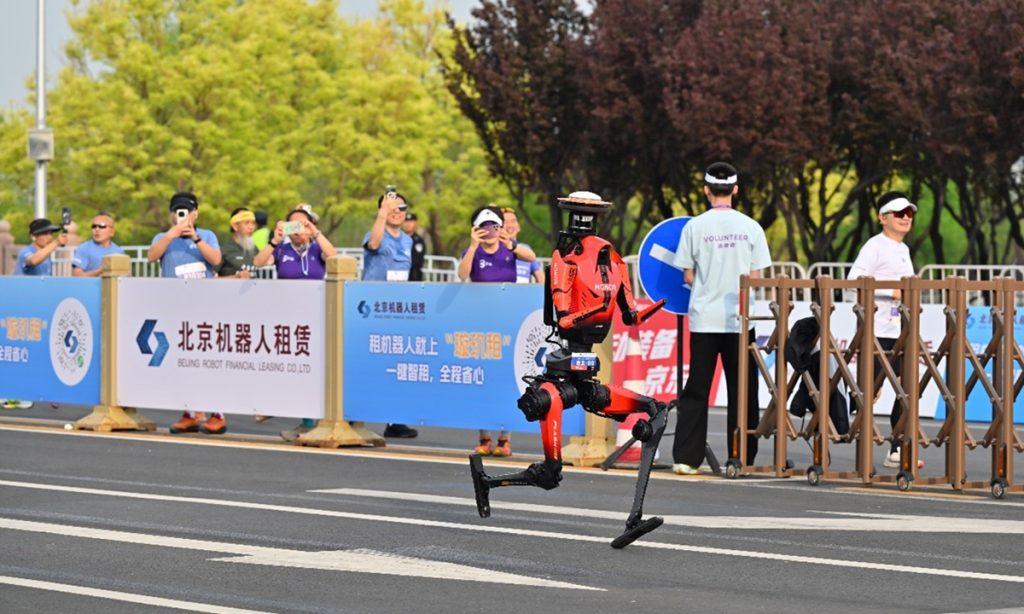
The second World Humanoid Robot Games will be held in Beijing from August 22 to 26, the organizers announced at a press conference on Tuesday. The event, co-hosted by the Beijing municipal government and China Media Group, will take place at the National Speed Skating Oval stadium.
The Games will feature two main categories and 32 events, divided into competitive and scenario-based contests.
The competitive category encompasses nine disciplines and 26 events, such as athletics, football, gymnastics, weightlifting, martial arts, street dance, sport dance, tug-of-war and pitch-pot. The scenario-based category comprises six events, covering home, hotel, industrial, emergency response, hospital and retail settings.
In the competitive events, alongside traditional highlights such as the 100-meter race, football and martial arts, the Games will introduce new contests including robot tug-of-war, which requires coordinated teamwork to generate maximum force; pitch-pot, derived from a traditional Chinese ritual and testing precision control and perception; and weightlifting, which challenges upper-body load capacity, showcasing the rapidly advancing overall capabilities of humanoid robots, Jiang Guangzhi, director of the Beijing Municipal Bureau of Economy and Information Technology, said.
Notably, robot football players this year are capable of dribbling while in motion and making diving saves, with their competitive level expected to advance from that of "preschoolers" to the "youth" stage, Jiang said.
The scenario-based events will also take place in real-world settings, comprehensively testing humanoid robots' coordination of "brain, eyes and hands" in environmental perception, decision-making and precise manipulation.
The aim is to cultivate task-capable humanoid "workers" such as workshop operators, household assistants and firefighters, and to explore a new model that links competition with industry by "winning medals first, and securing orders," according to Jiang.
"The rapid progress of robotics has raised our expectations for this year's Games, and we expect robot athletes to deliver more impressive performances in three areas," Jiang said.
"First, it's about greater autonomy. The level of embodied intelligence has improved significantly, so the 100-meter race has been upgraded to a fully autonomous event, with rules also encouraging teams in scenario-based competitions to adopt fully autonomous approaches for positioning, recognition and operation.
"And it's about greater dexterity. This year's events feature more tasks requiring fine manipulation, such as sorting clothes in home settings, firefighting in emergency scenarios and food preparation in retail environments.
"Third, it's about greater practicality. Scenario-based events will no longer be held in simulated venues but in real-world settings such as factories, hotels and model homes, enabling robots to autonomously and continuously perform long-horizon tasks in complex environments — moving from 'demonstration tools' toward 'practical productivity.'"
In addition to organizing the competitions, Beijing has rolled out supportive policies such as "first-use trials" for robots and a "challenge-based bidding" mechanism for key components.
The city is also advancing the Beijing Humanoid Robot Innovation Center to build four major platforms covering common technology research and development (R&D), embodied intelligence data, pilot testing and validation, and public industrial services. Multiple robotics industrial parks and pilot-scale testing bases are being developed across the Beijing-Tianjin-Hebei region, alongside a government investment fund of 100 billion yuan ($14 billion) to systematically support the growth of the humanoid robotics industry in Beijing.
As a result, Beijing's robotics sector is entering a new wave of innovation, shifting from technological leadership to real-world application. The city's innovation ecosystem continues to improve, with breakthroughs across motion control, embodied artificial intelligence (AI) models and biomimetic interaction, placing it among the national leaders in innovation density, Jiang said.
The World Robot Games test mobility, joint flexibility, heat dissipation, and more. This year's results are significantly better than last year's, reflecting Chinese companies' all-round R&D and manufacturing progress, which has also drawn public attention and strengthened the supply chain, Ma Jihua, a veteran tech industry insider, told the Global Times.
Robots are moving from "show" to "use." Performance gains come from software and hardware advances that apply beyond sports. Open competition reveals strengths and weaknesses, fostering mutual learning. These agile robots will find many real-world uses in life and work, and may even enable innovations once beyond human imagination, Ma said.
Chen Jing, a vice-president of the Technology and Strategy Research Institute, told the Global Times on Tuesday that from the half-marathon to the World Humanoid Robot Games, the competition logic has shifted from "physical fitness" testing to an integrated assessment of "fitness + intelligence." With more than 30 events—far beyond a single long-distance race — the 100-meter event has become fully autonomous, abandoning remote control to test embodied intelligence and real-time decision-making. This marks a transition from asking "can it run?" to "how does it run and decide?"
This year's event integrates traditional Chinese sports into competition, adding pitch-pot after martial arts to test precision and posture control. More crucially, the "win medals first, then orders" model designs events based on real needs from factories and hospitals. Robots must autonomously complete long-horizon tasks, pushing them from demonstration tools to practical productivity, Chen said.
Another highlight is the "dexterous hand" already installed on some robots, Chen said. It is a key bottleneck for commercialization and the next competitive frontier. Whoever demonstrates stable, precise dexterous manipulation in complex events will likely secure industry orders first, truly turning robots into trustworthy "workers" or "assistants," Chen added.
China's Supreme People's Court and the Supreme People's Procuratorate on Wednesday issued a judicial interpretation on the application of law in cases involving the safety of civil aviation, which provides for severe punishment for acts such as disruptive "air rage" and fabricating terror information, according to a press conference held by the Supreme People's Court on Wednesday, CCTV News reported.
The document consists of seven articles and will take effect on Thursday. In response to current conditions and key issues in punishing criminal offenses that endanger the safety of civil aviation in accordance with the law, the interpretation sets out how to apply the Criminal Law and implement relevant policies, according to the report.
First, it elaborates on the punishment of disruptive "air rage" acts, such as the unauthorized opening of civil aircraft cabin doors and fighting or brawling inside the cabin. According to the interpretation, not all acts of the unauthorized opening of civil aircraft cabin doors constitute criminal offenses. Only when a cabin door is opened without authorization while the civil aircraft is moving under its own power or during flight, and poses a risk to public safety, can it be considered constituting the crime of endangering public safety by dangerous means.
The interpretation adopts a list-based approach to define standards for conviction and sentencing for the crime of violence endangering flight safety, which applies to violent acts committed on a civil aircraft in flight. It specifically clarifies that acts involving violence against civil aviation crew members may constitute the crime of violence endangering flight safety.
Second, it calls for the strict punishment of crimes involving the fabrication and deliberate dissemination of false terror information related to the safety of civil aviation.
The interpretation stipulates that if an individual's act affects the normal operation of civil aviation flights or civil airports, or prompts public security, armed police, fire rescue, health quarantine and other departments to respond, it will be treated as a criminal offense. If it causes a serious social impact or significant economic losses, it will be deemed to have caused serious consequences, and a sentence of imprisonment of more than five years will be imposed.
Third, it clarifies the principles of territorial jurisdiction for criminal cases involving threats to the safety of civil aviation.
The interpretation specifies that for criminal cases occurring inside a civil aircraft, if the individual is apprehended during the flight, the case will fall under the jurisdiction of the people's court where the aircraft first lands after the incident. When necessary, jurisdiction may be exercised by the people's courts in the place of departure, stopover, or destination of the civil aircraft, to avoid possible jurisdictional disputes in practice.
"The issuance of the judicial interpretation is of great significance," Wang Yanan, editor-in-chief of Beijing-based Aerospace Knowledge magazine, told the Global Times on Wednesday.
Essentially, by clarifying judicial standards, it addresses the long-standing issue of ambiguous penalties for violations such as disruptive "air rage" and brings acts that seriously endanger the safety of civil aviation within the scope of criminal regulation, thereby responding to society's dual demands for the safety of civil aviation operations and judicial fairness, Wang said.
In 2025, China's civil aviation industry handled 770 million passenger trips, representing a 5.5 percent year-on-year increase.
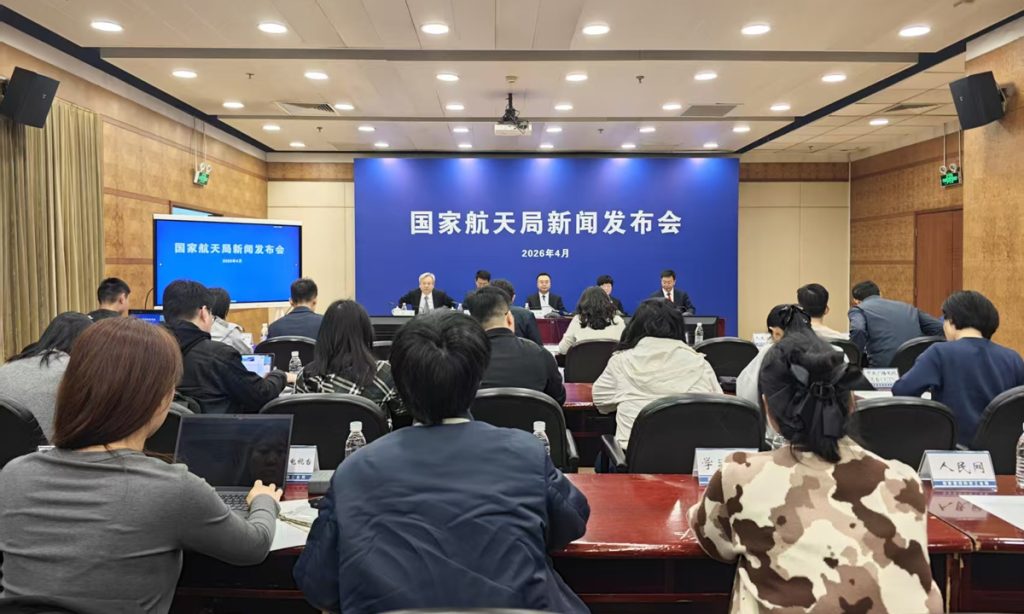
China National Space Administration (CNSA) on Friday outlined plans for this year's China Space Day celebrations while unveiling a series of major missions for 2026, including crewed Shenzhou spacecraft flights and flight tests for multiple reusable rockets. A Chinese expert said the agenda shows that both state-led and commercial space programs are advancing rapidly, with lunar exploration expected to become a key focus in the next stage of development.
International cooperation missions were also highlighted at the press briefing. China and Europe will launch the Solar Wind Magnetosphere Ionosphere Link Explorer (SMILE), a joint satellite project aimed at revealing the interaction processes and patterns between the solar wind and Earth's magnetosphere. China-Brazil Earth Resources Satellite cooperation will also continue, extending nearly four decades of friendship and collaboration between the two countries.
Officials said this year marks the 11th China Space Day and coincides with the 70th anniversary of China's space industry. Main events will be held around April 24 in Chengdu, Southwest China's Sichuan Province.
The program will include science popularization exhibitions, the China Space Conference and a series of technical exchange activities. Leaders and academicians from central government departments, the Chinese Academy of Sciences, Chinese Academy of Engineering, universities and aerospace enterprises are expected to attend, alongside foreign guests from 26 countries, regions and international organizations. Brazil has been invited as the guest country of honor.
At the briefing, Liu Yunfeng, an official with the CNSA, introduced several major tasks planned for 2026. He said Tianwen-2 will approach its target asteroid and carry out close-range exploration. China's manned space program will implement missions including the Shenzhou-23 crewed spacecraft. Multiple types of reusable rockets will undergo flight verification tests, while commercial aerospace will pursue high-quality development under high-standard safety guarantees.
"China has a number of important space missions ahead, and both the national program and commercial space sector are advancing rapidly," Kang Guohua, a senior member of the Chinese Society of Astronautics and a professor of Aerospace Engineering at Nanjing University of Aeronautics and Astronautics, told the Global Times on Friday.
"At the national level, Tianwen-2 will carry out asteroid sampling tasks, while Chang'e-7 will launch for lunar exploration. It can be expected that a series of lunar missions will become a major focus of China's next phase of space development," Kang said.
On the commercial side, recoverable and reusable rockets will remain a major point of attention, he said.
"Commercial aerospace will continue experiments involving recoverable rockets. Once technical verification succeeds, I believe it will quickly drive an expansion of private-sector space delivery capabilities," Kang added.
On international cooperation, Liu said the China-Europe SMILE mission is intended to reveal the interaction process and changing patterns between the solar wind and magnetosphere, while the China-Brazil Earth Resources Satellite program will continue to deepen long-standing bilateral ties.
Speaking to media, Liu said China-Brazil space cooperation is regarded as a model of "South-South cooperation" in high-technology fields.
He said the CNSA and the Brazilian Space Agency have signed multiple cooperation plans. The China-Brazil Earth Resources Satellite program, launched in 1988, created a successful precedent for cooperation in the aerospace field among developing countries, serving the socioeconomic development of both nations and effectively promoting advances in space science and technology.
Liu said satellite data has benefited countries across Latin America, Africa and Asia, contributing positively to the progress of human civilization.
He added that with Brazil invited as the guest country of honor for this year's China Space Day, the two sides will deepen cooperation, including advancing the CBERS-06 satellite as scheduled and refining technical plans for CBERS-05.
"China's space program is unlike many Western-led projects that tend to involve a narrower group of developed countries cooperating mainly among themselves," Kang said.
"After developing its own capabilities, China has extended benefits for developing countries such as Brazil and Pakistan. For example, China previously announced it would arrange for one Pakistani astronaut to carry out a short-term mission as a payload specialist, while maintaining long-term cooperation with Brazil," he said.
Kang added that China has also maintained cooperation with Europe in the space sector, citing SMILE as an example, and said China has consistently attached importance to international collaboration in aerospace.