Ethical guideline released for human genome editing research
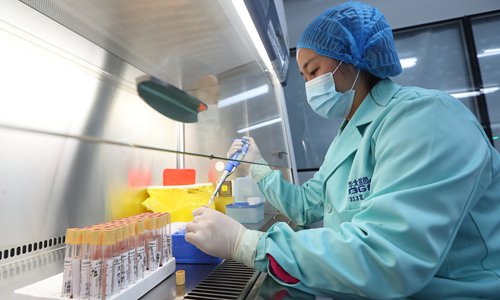
An ethical guideline for human genome editing research was released by China's Ministry of Science and Technology on Monday, which includes a strict prohibition on the use of edited germ cells, fertilized eggs, or human embryos for pregnancy and reproduction.
The guideline aims to regulate the conduct of human genome editing research and promote healthy development in this field, as the risks involved are unpredictable and have implications for the dignity and well-being of individuals, as well as potential ethical, legal, and social issues that could impact human society.
It is currently forbidden to conduct any clinical research on germline genome editing, according to the guideline. Clinical research should only be considered if the benefits and risks, as well as other available options, are fully understood and weighed, safety and efficacy issues have been addressed, a broad social consensus has been achieved, and the study has been subjected to rigorous and prudent assessment.
He Jiankui, a genome-editing researcher at the Southern University of Science and Technology of China in Shenzhen, Guangdong Province, shocked the world in 2018 when he claimed to have created the world's first genetically modified humans.
He was sentenced to three years in prison in December 2019 for illegally conducting human embryo gene editing.
The basic principles outlined in the guideline include enhancing human well-being, respecting human dignity, and safeguarding the fundamental rights and interests of research participants, including the right to information, privacy, and autonomy.
The research must be carried out by carefully assessing the conditions for the use of human genome editing technologies, and ensuring risk monitoring throughout the process with appropriate supervision, according to the guideline. It also puts forward principles of fairness and impartiality, as well as openness and transparency.
The guideline also noted general requirements and special requirements for human genome editing research, which should be given special attention at different stages of basic and preclinical research and clinical research into human genome editing.
China's animal food scandal exposes industry malpractices, calling for stringent regulations
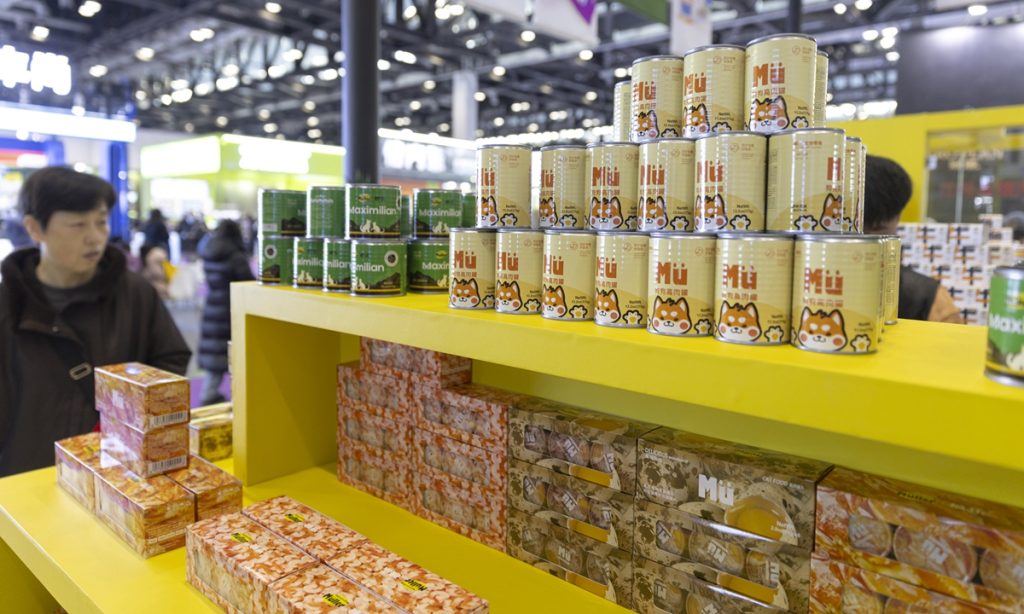
In China, an increasing number of people are enjoying the companionship of pets and treating them as part of the family.
Against the backdrop of rapid development in the pet economy, China's pet food market has experienced explosive growth. However, as the market expands, issues with product quality have emerged.
Recently, a series of news reports have uncovered that some pet food manufacturers, in pursuit of higher profits, resort to using low-quality ingredients for dog, and even falsely label nutritional content, misleading consumers.
In March, a scandal involving "toxic dog food" from Xingtai in North China's Hebei Province, the largest dog food production cluster in China, came to light, causing panic among pet owners across China.
This incident exposed the dark underbelly of the industry and the lack of effective regulation. Some unscrupulous companies have been found falsifying the nutritional content and ingredients of their products, such as overstating the chicken content while using cheaper chicken meal as a substitute.
Worse still, to mask the risks of inferior ingredients, some manufacturers excessively add montmorillonite to pet food, which could severely impact pet health over time.
Given the ineffective enforcement of industry standards, pet owners often find themselves in a battle of wits with unscrupulous manufacturers to ensure the dietary safety of their pets.
With the pet market continuing to grow, there is an urgent need to improve industry standards and strengthen regulation. The question of how to expose the chaos in the industry, attract attention from all sectors of society, and drive the pet food industry toward a healthier and more transparent direction is now a major concern, analysts pointed out.
'Toxic' pet food
In Xingtai's Nanhe district, recognized as the nation's largest pet food production base with an annual output of over 1.3 million tons, accounting for 60 percent of China's market share, the practice of "using the worst materials for the most expensive feed" was once an unwritten industry rule.
Investigations have revealed that some manufacturers produced pet food with inferior materials for higher profits, even mixing stone and feather meal into their products, as reported by the China National Radio (CNR).
Following the exposure, the Hebei Provincial Department of Agriculture and Rural Affairs responded by investigating the involved companies and taking samples for testing. An official from the Nanhe district agricultural department told the Global Times that the pet food industry is a key development focus for the region, and the scandal has had a significant impact.
A pet food manufacturer in Xingtai confirmed to the Global Times that recent inspections by relevant departments have been strict. He said that dog food purchases are now reliable.
On the sales page of a manufacturer selling pet food on 1688, Alibaba's B2B trading platform, the cheapest dog and cat food from Xingtai sells for less than 10 yuan ($1.43) per kilogram, with different products claiming to cater to puppies, small, medium, or large dogs, and containing various ingredients like beef, fruits and vegetables.
Despite many pet food companies claiming to offer high-quality customized dog and cat food, actual product quality remains poor, with nutritional values often misrepresented. An investigation published by the CNR into a company that outsources dog food production found significant discrepancies between claimed and actual protein content.
Additionally, the use of montmorillonite to absorb toxins has been excessive in "toxic" dog food, reaching about 5 percent when only 0.2 percent is necessary. Overuse of such substances and flavor enhancers to mask the taste of poor-quality feed can have detrimental effects on pet health, according to media reports.
Pet owners vs manufacturers
Xin Rui heard of "toxic dog food" for the first time when she adopted a dog from a stray dog shelter in Beijing.
She bought some dog food and dog snacks on the e-commerce platform Tmall the day the dog shelter owner sent the dog to her home.
"Toxic dog food," the stray dog shelter owner said disdainfully with a sideways glance at the bags of dog food casually lying in the living room.
"Honestly, I totally had no idea what she meant when she said the word 'toxic dog food.' I mean, I trust in Tmall supermarket and have bought many things, including food and snacks for myself on the platform. I carefully selected those products to welcome the dog. I did not understand why she said so. I felt so confused," Xin told the Global Times.
Xin bought another bag of dog food from the shelter owner as she recommended in consideration to help the dog get used to its new home sooner. It did not take a long time for Xin to tell the differences between these products. It took a few days for the dog to get used to the food recommended by the stray dog base owner. But the dog entirely refused to eat the food bought on Tmall, even when Xin mixed it with canned meat.
"Dogs are smart. They are helping owners to select safe food," Xin said.
She tried four brands of dog food in the nearly two years after adopting the dog. "I do not trust the base owner as she did not tell me where she got the food. Her price is much lower than that in official stores, making me suspicious about the quality and authenticity of the food," Xin said.
Now Xin buys food from a pet shop near her home. "The employees at the shop can provide official pet nutritionist certificates and they treat pets very nicely, so I choose to trust them. I hope they do not disappoint me," she said.
Actually, Xingtai's case is not unique, and Xin's worry is not unprovoked either.
Many pet owners have taken to social media platforms complaining that their dogs died or got seriously sick, for example by getting pancreatitis, after eating cheap food bought from online channels. Some of the cheap foods were revealed to have had dust and saw powder mixed in.
Even well-known pet food brands are not always trustworthy.
In April 2022, a pet owner in Hangzhou, East China's Zhejiang Province, reported that his cats were poisoned after consuming Singen cat food, with one of them dying. After seeking information online, he discovered that many other families had encountered similar issues. Statistics gathered from 90 individuals revealed similar issues happened with 239 cats, resulting death of 95 cats, reported the Jiemian News.
Singen, founded in the island of Taiwan, claims to have a 50-year history of production. The company's business scope includes the production of veterinary drugs, feed, and feed additives.
Besides the issue of manufacturers falsifying their own products, there have been instances of factories producing counterfeit pet food of major brands.
On March 21, Shanghai-based Observer News reported that the local police department, after thorough investigations, dismantled three dark factories in Central China's Hunan Province and South China's Guangdong Province involved in manufacturing and selling counterfeit cat food of a certain brand.
According to a report on pet market consumption released by e-commerce platform JD.com in late 2023, the number of pet-owning households in China exceeded 100 million in 2023, increasing from 98 million in 2022 to 105.65 million. Among them, the number of pet dogs in 2023 was 51.75 million, a 1.1 percent increase from 2022.
"For China, there is a great potential for the improvement and development of the pet industry. With the improvement of residents' income levels and quality of life, the concept of pet ownership is gradually shifting from guarding the home to emotional companionship. It is expected that in the next 10 years, China will become the world's largest pet market," said Qin Yuchang, president of the pet food branch of the China Feed Industry Association.
Regulating the industry
According to Qin, China's pet industry already reached over 490 billion yuan in 2020, becoming the third-largest service market after Europe and the US. The market size is estimated to reach 800 billion yuan by 2025.
In addition, there has been a significant increase in demand for imported pet feed, with over 600 pet feed import registration certificates issued by the Ministry of Agriculture and Rural Affairs in 2021, a 7.3-fold increase from 2016.
However, compared with the rapidly growing industry, there is still a significant gap in the standards of pet feed in China, which seriously slows the industry's development needs, especially in the standards for pet food additives, with only over 100 of the more than 400 additives having been standardized.
"Some companies' pet food cannot meet the nutritional requirements for young animals, as reflected in the high failure rates of water-soluble chlorides, total calcium, and total phosphorus content. The quality control of animal-derived raw materials, such as meat meal, by companies is insufficient," said Fan Xia, executive deputy director of the National Feed Quality Inspection and Testing Center in Beijing.
In 2018, the Ministry of Agriculture and Rural Affairs of China issued the "Regulations on the Management of Pet Feed," establishing a standardized management system and placing the pet feed industry onto a path of standardized development.
The vast majority of pet feed products have already achieved production certification, but from the market response, there are still some cases of substandard production and production without certification in the production process. It is necessary to increase the publicity and implementation of regulations, and companies must carry out production and operation in accordance with the law and regulations, experts said.
Moreover, many pet feed operators, especially e-commerce and cross-border e-commerce platforms on the internet, have not strictly controlled the quality and safety of their products, leading to the influx of products of varying quality into the market. This requires the strengthening of the supervision of the pet feed industry, continuously improving inspection and testing technology, optimizing the regulatory system. Companies must strictly adhere to the bottom line of quality and safety, experts pointed out.
At the same time, enterprises and operators who violate relevant laws and regulations must be resolutely ordered to rectify, and those who cause serious injury will be held accountable, in order to effectively create a healthy dog food market, Qin stressed.
China's largest offshore solar farm starts construction in Jiangsu Province

China's largest offshore solar farm officially commenced construction at Haibin harbor in Lianyungang city, East China's Jiangsu Province on Sunday, China National Nuclear Corporation (CNNC) said, setting another milestone in the country's intensifying green transformation in aligning with its carbon neutrality goal by 2060.
With a total investment of 9.88 billion yuan ($1.39 billion), the 2-million-kilowatt photovoltaic demonstration farm is expected to save around 680,000 tons of standard coal and reduce carbon dioxide emissions by 1.77 million tons annually once completed, according to the CNNC.
Experts said that more offshore solar farms will be launched in bolstering clean and renewable ne- energy generation, which is needed by regional economic development in the country's major coastline provinces.
This project built by CNNC, one of the country's largest nuclear power operators, is so far the largest three-dimensional layered sea-based project in China, with an approved sea area of around 28,000 mu (1,868 hectares).
The project is located in the warm water sea area already earmarked by the Tianwan Nuclear Power Plant in Lianyungang. While an area of the water is utilized for the nuclear power plant's warm water discharge, the sea area above it is designated for offshore photovoltaic construction. This design represents a cohesive and integrated use of marine resources.
The 2-million-kilowatt tidal flat photovoltaic project is divided into two parts, both offshore and onshore. The offshore section comprises the photovoltaic power generation, with the generated electricity transmitted to the onshore step-up substation via an overhead corridor bridge and integrated into the national grid after voltage adjustment. Simultaneously, onshore energy storage stations are being constructed as complementary facilities.
Currently, the onshore energy storage project has entered its final construction phase and is expected to be completed and operational by the end of June.
The project serves as an important demonstration for offshore solar power generation, Lin Boqiang, director of the China Center for Energy Economics Research at Xiamen University, told the Global Times on Sunday.
The project's key advantage lies in its proximity to the market where electricity demand is significant, Lin said.
"Given that the southeastern coastal areas are among China's fastest-developing regions with high electricity demand, the potential for offshore solar farms remains substantial," Lin noted.
China has a high demand for solar power, but the persistent reliance on coal is primarily due to the insufficient contribution by new energy sources, including solar, the expert said, noting that solar and wind power combined now accounts for 15 percent of the entire power generation structure.
In 2023, China's newly installed photovoltaic capacity reached 216.88 gigawatts, a year-on-year increase of 148.1 percent, according to the China Photovoltaic Industry Association, indicating further growth in demand for clean and renewable new energy.
China implements visa-free entry for foreign tourist groups on cruise ships
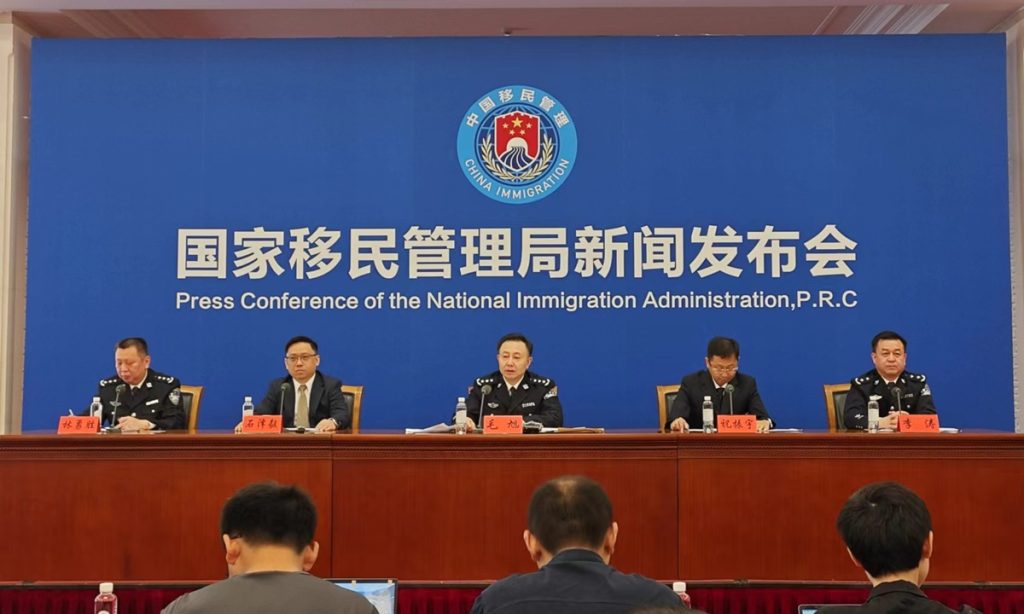
China's National Immigration Administration announced on Wednesday the full implementation of a visa exemption policy for foreign tourist groups entering China on cruise ships from the country's coastal provinces and cities. The policy will take immediate effect.
This decision was made through consultation and coordination among the Ministry of Foreign Affairs, the National Development and Reform Commission, the Ministry of Transport, the Ministry of Commerce, the Ministry of Culture and Tourism, and the General Administration of Customs, and approved by the State Council, China's cabinet.
Starting from Wednesday, foreign tourist groups (consisting of two or more people) traveling by cruise ship and organized by domestic travel agencies can enter Chinese mainland without a visa as a whole group through the designated ports in 13 cities including Tianjin, Dalian in Northeast China's Liaoning Province, Shanghai, Lianyungang in East China's Jiangsu Province, Wenzhou and Zhoushan in East China's Zhejiang Province, Xiamen in East China's Fujian Province, Qingdao in East China's Shandong Province, Guangzhou and Shenzhen in South China's Guangdong Province, Beihai in South China's Guangxi Zhuang Autonomous Region, Haikou and Sanya in South China's Hainan Province, said the National Immigration Administration at a press conference on Wednesday.
Tourist groups ought to accompany the same cruise ship to the next port until the cruise ship leaves China, and their stay in China cannot exceed 15 days, with activities limited to the coastal provinces and Beijing, the administration said.
In order to support the development of cruise tourism, seven new cruise ports including Dalian, Lianyungang, Wenzhou, Zhoushan, Guangzhou, Shenzhen, and Beihai were added to the list of ports eligible for China's transit visa exemption policy, facilitating transit for overseas passengers traveling by cruise.
French businesses upbeat on China market
French businesses have expressed growing confidence in investment in the China market, as a state visit by Chinese President Xi Jinping to France is set to strengthen bilateral ties and economic and trade cooperation.
French direct investment in China has been skyrocketing in recent months, highlighting the great attractiveness of the China market among French companies amid China's steady opening-up measures, experts said.
The state visit will bolster the confidence of both Chinese and French businesses to pursue win-win cooperation, they noted.
"President Xi's visit to France reinforces the potential for the two countries to open up a new future of collaboration on the 60th anniversary of bilateral diplomatic ties," Paul Hudson, CEO of Sanofi, a French multinational pharmaceutical and healthcare company, told the Global Times. "The two countries have opportunities to strengthen their bilateral relationship while also further collaborating to address global topics."
Hudson said that the company has seen a great expansion in the China market over the past several decades and will continue to expand in China, amid growing potential and the improving business environment.
"As one of the first multinational companies to enter China since its reform and opening-up more than 40 years ago, our footprint has grown significantly over the years as a result of openness and collaboration between our two countries," Hudson said.
"China staying focused on high-level opening-up and actively improving the environment for foreign investment incentivizes pharmaceutical innovation for patients in China and beyond."
Sanofi is hardly alone in expanding in the China market. In 2023, France was one of the fastest-growing sources of direct investment in China, with direct investment surging 77 percent year-on-year to $1.34 billion, according to China's Ministry of Commerce (MOFCOM).
L'Oreal Chairman Jean-Paul Agon also said that the company remains committed to the China market.
"I can assure you that we are more determined than ever to contribute, together, to the mutual development of our two countries. To this end, I believe it is essential to reiterate the imperative need for an ongoing dialogue between us," Agon said.
That trend has only intensified this year, with French direct investment in China surging 585.8 percent year-on-year in the first two months of this year, data from the MOFCOM showed.
A survey of French companies in China conducted by the French Chamber of Commerce and Industry in China in 2023 showed that members' willingness to operate in China over the coming three years had increased, with 47 percent saying they planned to further invest in the Chinese market.
French companies are interested in cooperation with Chinese companies in a wide range of areas including pharmaceuticals and clean energy. During the fifth meeting of the China-France Business Council in April 2023, 36 Chinese and French businesses signed 18 cooperation agreements in the areas of green energy, innovation, aerospace and new energy.
"In China specifically, we are bolstering local innovation and investment by prioritizing early-stage [research and development], involving China in 90 percent of our global simultaneous projects," Hudson said.
The growing commitment of French companies to the China market is mainly due to China's continuous opening-up measures, efforts to improve the business environment for foreign companies, as well as China's steady economic recovery and its vast market potential, experts noted.
Cui Hongjian, a professor at the Academy of Regional and Global Governance at Beijing Foreign Studies University, said that the state visit will send a clear signal to French and European businesses that China remains committed to continuous opening-up in an all-round way.
"This will further strengthen the confidence of French businesses and investors in the China market," Cui told the Global Times on Monday, noting that remarkable growth in French direct investment in China in recent months has already showed growing confidence in China.
China's CPI up 0.3% in April, signaling steady demand recovery: NBS
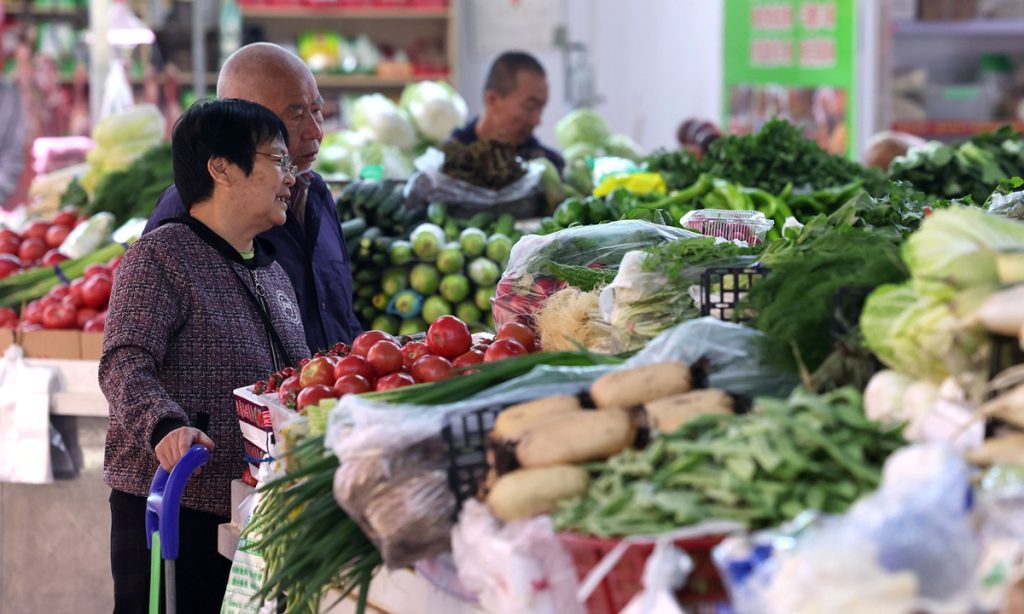
China's consumer price index (CPI), a main gauge of inflation, was up 0.3 percent year-on-year in April, the National Bureau of Statistics unveiled on Saturday, adding more positive signs to the country's upbeat economy performance since the first quarter of the year.
Data showed clear signs that the consumption-driven recovery is being maintained from demand to production, laying the foundation for a strong recovery, analysts noted.
Dong Lijuan, statistician from the NBS, pointed out that continuous consumption recovery reversed the 1-percent drop in CPI from March on a monthly basis, and further expanded growth on an annual basis.
General food prices were down by 1 percent, narrowing by 2.2 percentage points from the reading in March. Prices of vegetables, meats, fruits and eggs declined due to sufficient supply, according to the NBS.
Non-food prices recorded a 0.3 percent increase, bouncing back from a 0.5-percent fall in March on monthly basis. Benefiting from holidays, non-food consumer prices, including flight tickets, vehicle rental, hotel and tourism products, reported a clear increase in prices.
Core CPI, deducting for food and energy prices, was up 0.7 percent year-on-year last month, expanding 0.1 percentage point from March, according to the NBS.
Meanwhile, China's producer price index (PPI), which measures costs for goods at the factory gate, dipped 2.5 percent year on year in April, narrowing by 0.3 percentage point from the drop in March. Dong noted that the country's industrial operation is keeping recovering, while some industries saw a seasonal drop in demand.
Other economic indicators also showed that the world's second-largest economy remains on a steady recovery trend.
China's trade in goods in the first fourth months of 2024 recorded an increase of 5.7 percent year-on-year to reach 13.81 trillion yuan ($1.91 trillion), data from China's General Administration of Customs showed on Thursday.
Notably, in April alone, China's imports and exports reached 3.64 trillion yuan, rising 8 percent year-on-year. Exports stood at 2.08 trillion yuan with a year-on-year growth of 5.1 percent, while imports surged by 12.2 percent year-on-year to reach 1.56 trillion yuan, thanks to improving overseas demand as well as strengthening domestic consumption demand.
Hu Qimu, a deputy secretary-general of the digital-real economies integration Forum 50, told the Global Times on Saturday that data for China's foreign trade and domestic economic indicators were correlated, which all pointed to an encouraging link between demand and production.
"The current 0.3 percent growth in CPI is positive, while relatively moderate. It has shown a strong momentum for a further improvement in production, which also needs supports from policy and market players," Hu noted.
Li Changan, a professor at the Academy of China Open Economy Studies of the University of International Business and Economics, pointed out that the nation's economy is still facing challenges, and needs more support to boost consumption and market investment.
Policymakers have vowed to further step up policy measures to further consolidate the recovery. A meeting of the Political Bureau of the Communist Party of China Central Committee noted that the economy has secured a good start this year, and urged to front-load efforts to effectively put the established macro policies in place, and well implement a proactive fiscal policy and a prudent monetary policy, according to Xinhua.
Biden's remark on halting arms supply to Israel a show to alleviate domestic pressure: observers

For the first time, US President Joe Biden stated that he would stop certain deliveries of American weapons to Israel if Prime Minister Benjamin Netanyahu orders a significant incursion into the Palestinian city of Rafah. Observers interpreted the move as a "show" staged together by the US and Israel to meet their own aims, and won't alter Netanyahu's determination to eradicate Hamas.
The US president had previously stopped the delivery of 3,500 bombs last week due to worries that American weapons could be used to cause further civilian casualties in Rafah. He announced on Wednesday that he would also prevent the transportation of artillery shells.
In an interview with CNN, Biden said he had conveyed to Netanyahu and other Israeli leaders that American support for operations in population centers was limited.
Liu Zhongmin, a professor at the Middle East Studies Institute of Shanghai International Studies University, told the Global Times that although the US is by far the biggest supplier of weapons to Israel, Biden specifically used the word "some" when talking about the halt in weapons shipments, which means the US still hasn't ultimately altered its position of being a supporter of Israel.
With anti-war protests continuing at American universities and the November election looming, Biden finds himself behind Donald Trump in the polls, and his administration must demonstrate a willingness to enact changes. Therefore, the decision to halt certain weapon shipments is seen as just a tactic to send a warning message to Israel, and serves as a temporary measure by the US to ease pressure for his own election interests, Liu noted.
Israel's Ambassador to the UN, Gilad Erdan, reacted to Biden's decision, saying it was a "difficult and very disappointing remark."
Erdan was also quoted by the Times of Israel as saying, "Of course any pressure on Israel is interpreted by our enemies as something that gives them hope. There are many Jewish Americans who voted for the president and for the Democratic Party, and now they are hesitant."
While Jews make up only 3 percent of the entire electorate, the US president won't risk disappointing them, given the huge influence they have over the US presidency, Li Haidong, a professor at the China Foreign Affairs University, told the Global Times.
"We're not walking away from Israel's security," Biden told CNN, "we're walking away from Israel's ability to wage war in those areas," referring to densely populated areas of Rafah where more than one million Palestinians are taking shelter.
In addition to suspending the shipment of ammunition to Israel, in recent times, US politicians have repeatedly expressed so-called "criticism" toward the country. Some analysts believe that these statements are nothing but "smokescreens" aimed at diverting public attention from Israel's ground offensive in Gaza.
Not having support from US weapon supplies doesn't mean Israel is out of weapons to sustain its bombing and attacking. The channels for military supplies from other countries including from Europe as well as reserves will allow Israel to continue its operation. Most importantly, the operation in Rafah will not consume large amounts of ammunition, Liu noted.
Liu stated that Netanyahu has been advancing his strategy through a combination of military actions and diplomatic overtures. By pushing forward on the battlefield to enhance its position during hostage negotiations with Hamas, Israel remains steadfast in its goal of eradicating it.
Israeli troops seized control of Gaza's vital Rafah border crossing on Tuesday. Netanyahu called it an "important step" toward dismantling Hamas' military and governing capabilities, and its defense minister threatened to "deepen" the Rafah operation if talks on the hostage deal failed, AP reported.
Chinese embassy in Philippines raises five questions in refuting Manila's denial of 'agreements' on South China Sea issue
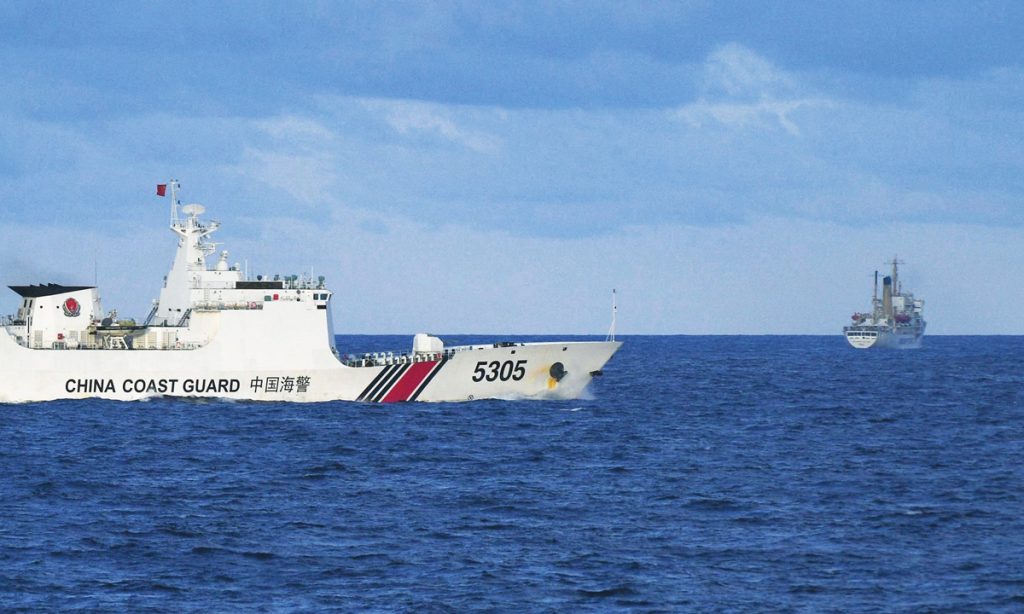
After several senior Philippine officials denied that the Marcos administration had negotiated with China to reach "arrangements" on the Ren'ai Jiao (also known as Ren'ai Reef), the Chinese Embassy in the Philippines raised five questions, emphasizing that China has consistently been committed to managing the situation at Ren'ai Jiao, maintaining dialogue with the Philippines in a responsible manner, and reaching internal understandings and arrangements on multiple occasions.
The Philippines has repeatedly denied recently that China and the Philippines had reached "agreements" on the South China Sea issue.
Philippine Defense Secretary Gilberto Teodoro stated that since Philippine President Ferdinand Marcos Jr took office in 2022, the Philippine Defense Department is "not aware of, nor is it a party to, any internal agreement with China."
Philippine National Security Adviser Secretary Eduardo Año also said that there is "no agreement whatsoever" in Ren'ai Jiao between the Philippines and China, saying that this "new model" announced by the Chinese side is nothing more than a new invention, according to the agency.
However, facts speak louder.
China has always been committed to properly managing maritime differences through dialogue and consultation with the Philippines and has made relentless efforts in this regard, the Chinese Embassy said in a statement published on its website on Saturday.
The "gentlemen's agreement" is a concrete outcome of such efforts. To follow up on the important consensus between the two heads-of-state to deescalate tension in the South China Sea, the Chinese side and the Philippine side through AFP WESCOM agreed on a "new model" for the management of the situation at Ren'ai Jiao early this year after multiple rounds of discussions.
Either the "gentlemen's agreement" or the "new model" is a confidence-building measure aimed at managing disputes, avoiding conflicts and maintaining peace, and has nothing to do with each other's sovereign positions, the embassy said.
During the discussion the AFP WESCOM has made repeated confirmation that the "new model" has been approved by all key officials in the Philippine chain of command, including the Secretary of National Defense and the National Security Advisor.
The communication and negotiation on this subject matter is kept on record in every detail by the Chinese side. Thanks to the "new model," frontliners of both sides had guidance to follow on how to interact with each other, which made the resupply mission on last February 2 a smooth one.
The AFP Spokesperson described this resupply mission as "flawless" in a post on social media X on the same day. Positive efforts of the frontliners in this regard are commendable, the embassy said.
China has always attached great importance to communication and dialogue with the Philippine DND and the AFP. In fact, on July 5, 2023, Chinese Ambassador to the Philippines had the honor to pay a courtesy call on Defense Secretary Gilberto C. Teodoro Jr. at Camp Aguinaldo, exchanged views with the latter on China-Philippines military relations, and maritime issues, among other things.
During the meeting, the Philippine side was briefed on the "gentlemen's agreement" on the management of Ren'ai Jiao. Readouts of the meeting were released respectively by the DND and the Chinese Embassy in the Philippines, the embassy spokesperson said.
The above are facts, not narratives, nor inventions. China is always committed to managing the situation at Ren'ai Jiao and maintaining dialogue and communication with the Philippines in a responsible manner, the spokesperson noted, adding it is regrettable that despite the internal understandings and arrangements, peace and tranquility was disrupted again and again at Ren'ai Jiao.
The Chinese Embassy put five questions to the Philippines: Why the Marcos administration repeatedly denies having negotiated with China to reach understandings and arrangements on Ren'ai Jiao?
Why does the Philippine Department of National Defense refuse to engage in dialogue and negotiation with China to properly handle maritime disputes?
The "new model" has been proven to be effective in managing differences and avoiding conflicts, why has the current Philippine government unilaterally abandoned it after being put into practice only once?
Who made the decision to betray the "new model"?
Does managing differences and avoiding conflicts go against the interests of certain forces?
China Coast Guard expels Philippine vessels that illegally intruded in waters off China's Huangyan Island
China Coast Guard expels Philippine vessels that illegally intruded in waters off China's Huangyan Island